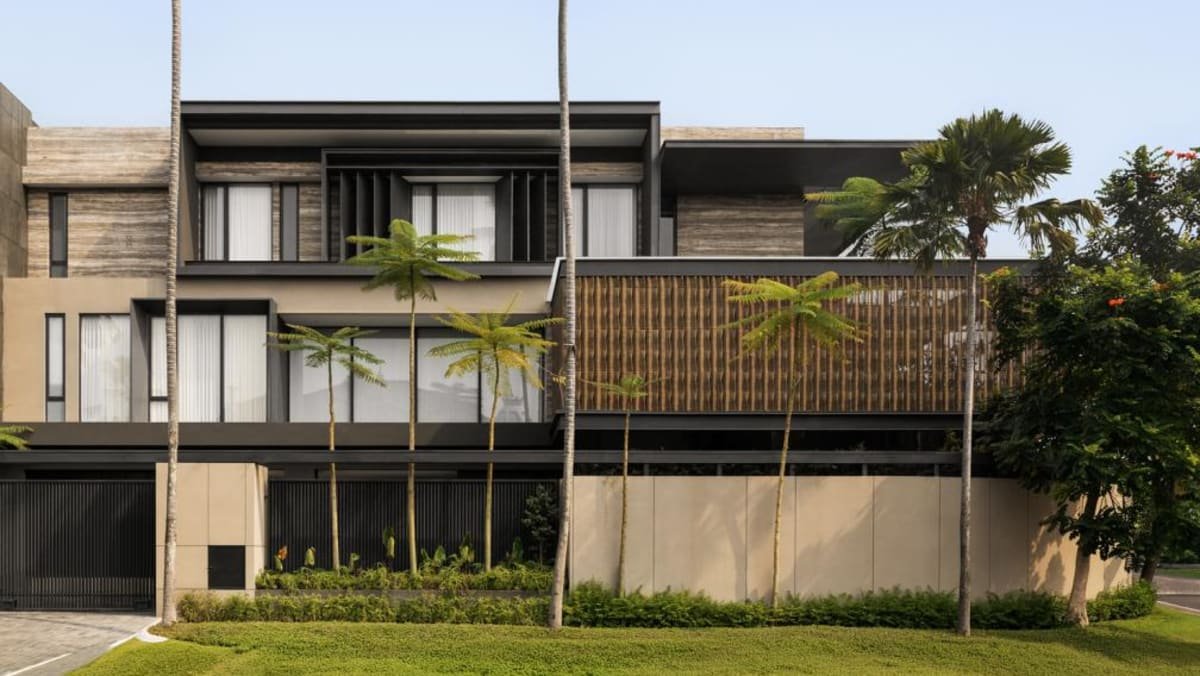
How Australian-inspired design comes to life in Surabaya, Indonesia
The owner wanted the openness and honesty of Australian architecture, but building in tropical Surabaya demanded a different response. Architect Giovanni Gunawan blended the best of both worlds in a home centred on privacy, family living and the climate.
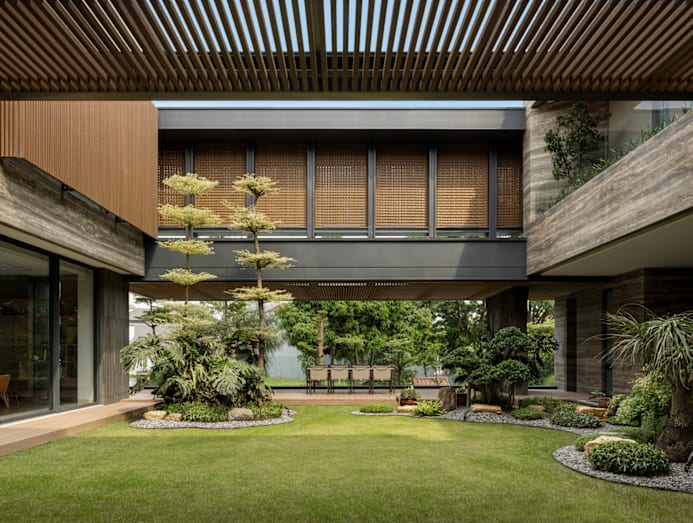
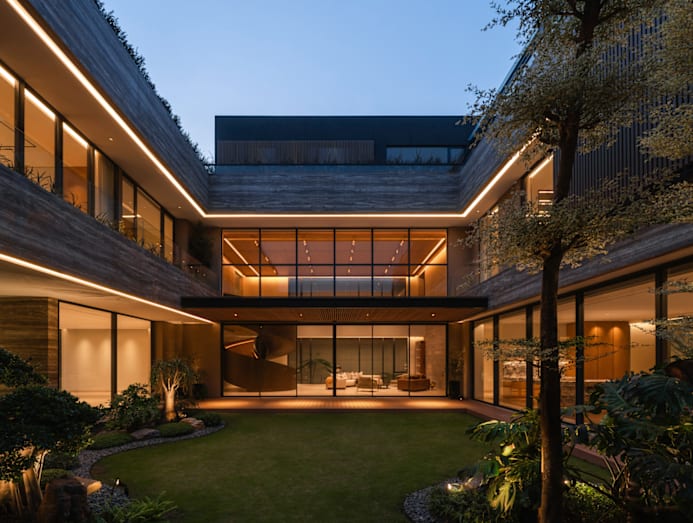
Inspired by Australian architecture, this house is organised around a landscaped courtyard that shields it from its busy surroundings. (Photo: Tristan Salim)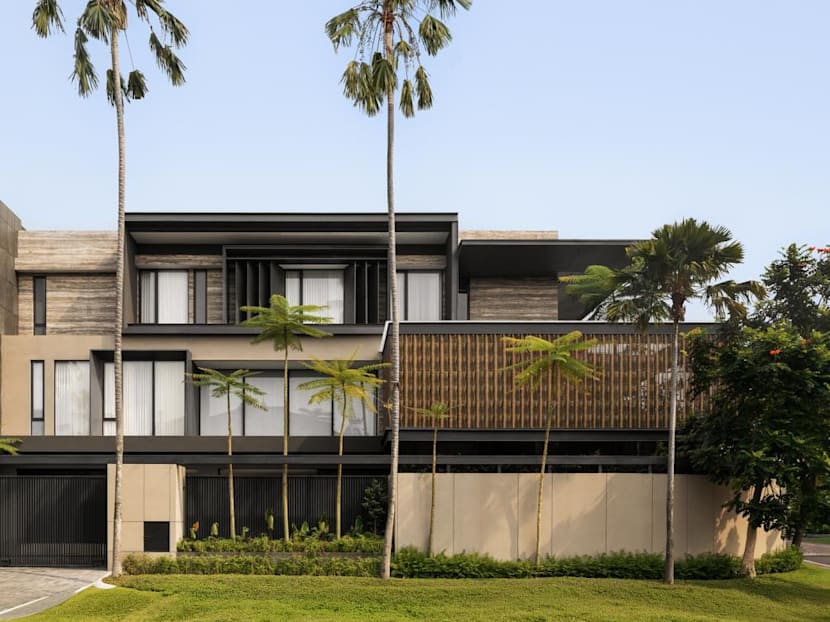
New: You can now listen to articles.

This audio is generated by an AI tool.

By
Read a summary of this article on FAST.
Get bite-sized news via a new
cards interface. Give it a try.
Click here to return to FAST
Tap here to return to FAST
FAST
Having lived in Australia and met his wife there, the owner of SE House knew he wanted the country’s architectural aesthetic to be the starting point when it came time to build his home. This was, however, easier said than done, as the site is located not Down Under, but in a residential community in western Surabaya, Indonesia.
Instead of wide, open spaces, the site is bounded by a busy road at the front and a security guardhouse to one side. The tropical climate – with its heat, humidity and heavy downpours – is also a far cry from the cooler, drier weather the owner had grown accustomed to.
It was therefore fortuitous that he engaged architect Giovanni Gunawan. A graduate of the Royal Melbourne Institute of Technology (RMIT), Giovanni brought a strong understanding of Australian design. Being Indonesian himself, he was also intimately familiar with the country’s climate and cultural norms, allowing him to seamlessly meld the two to fulfil his client’s brief.
“We had to do some negotiation. Even though the finished product is not 100 per cent what the owner wanted in the beginning, we translated it into something different that he still enjoys,” said Giovanni, who helms the practice KantorGG with his father.
Working in their favour was the plot’s square shape at 1,200 sq m, which allowed Giovanni to devise a C-shaped massing that turns inwards towards a central courtyard for maximum privacy. Totalling three-and-a-half storeys, the semi-detached house also caters to multi-generational living and entertaining – as requested by the client – through the careful planning of its layout and circulation.
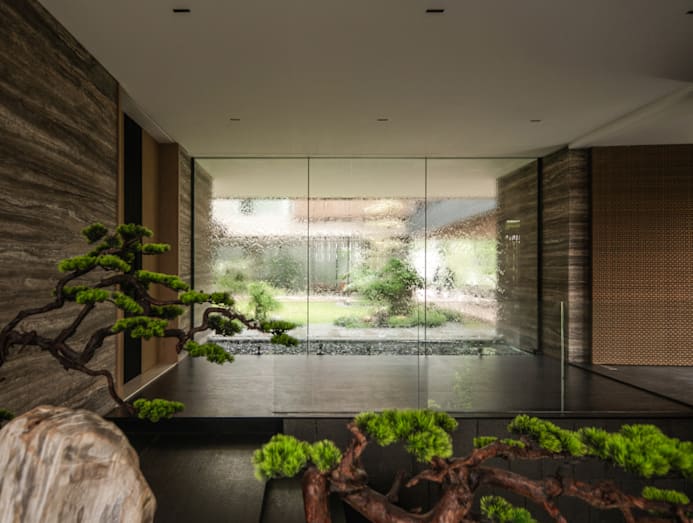
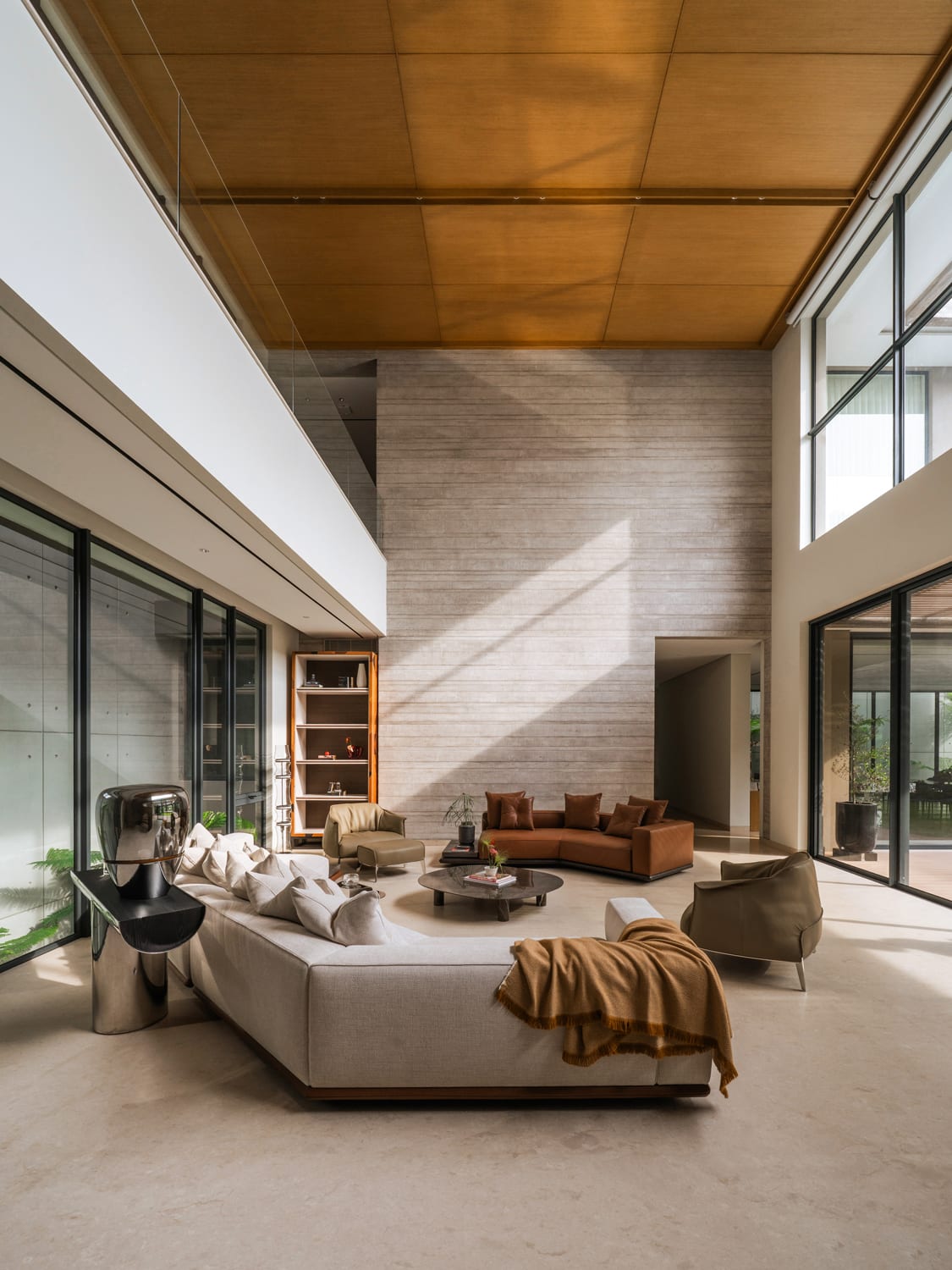
The Australian influence is perhaps most keenly felt in the material and colour palette. “The owner is attracted to the idea of honesty in the usage of materiality – that they should be used exactly like they are supposed to be,” explained Giovanni. Stones such as travertine and marble were therefore left in their natural state rather than polished to a high gloss.
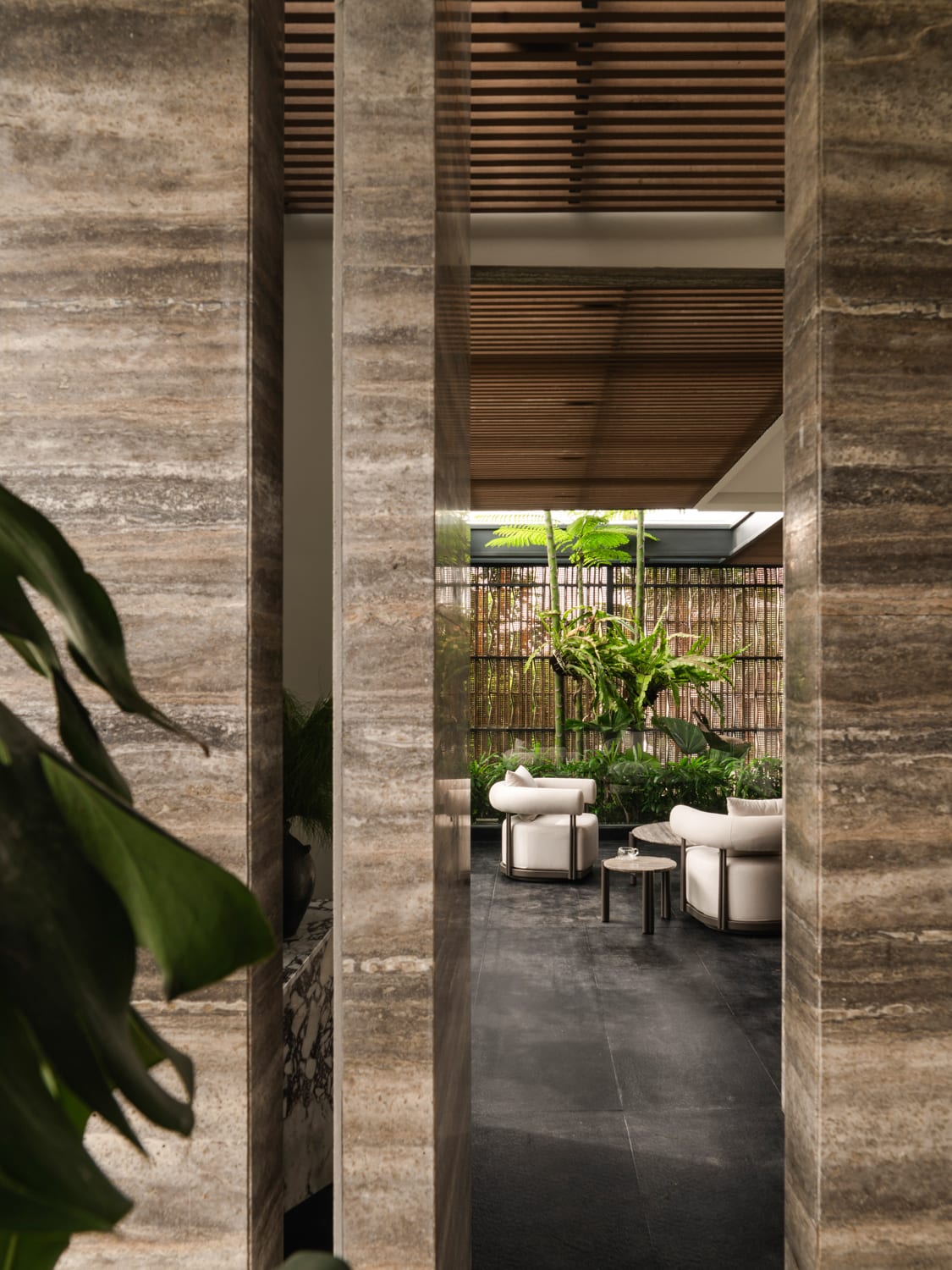
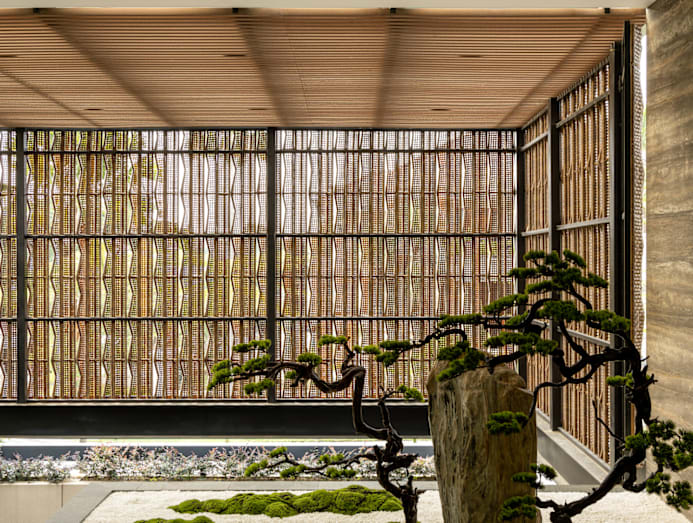
The selection of colours tended towards the warmer shades of brown, grey and cream. So precise was this approach that even when presented with the opportunity to use darker hues such as black, Giovanni opted to soften them for a lighter effect.
These were applied to give the house clean, minimalist lines with a contemporary feel. Woven rattan screens provide subtle accents throughout. Although synthetic, their porous nature allows for airflow without compromising privacy. “We wanted to create a modern twist in the use of the rattan, so the pattern was customised,” he revealed.
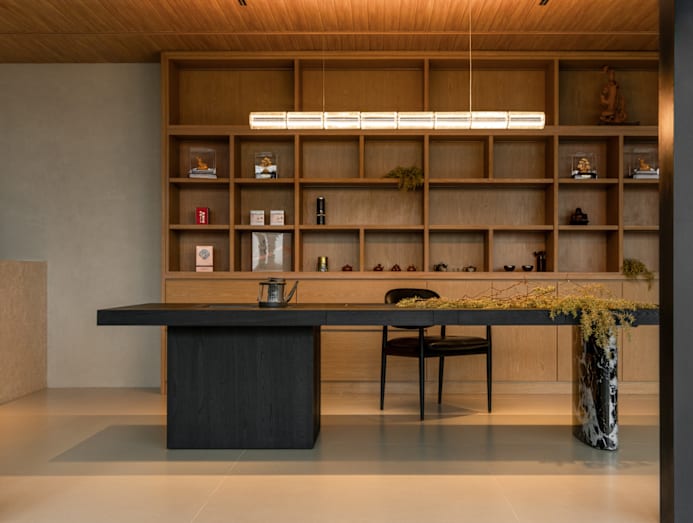
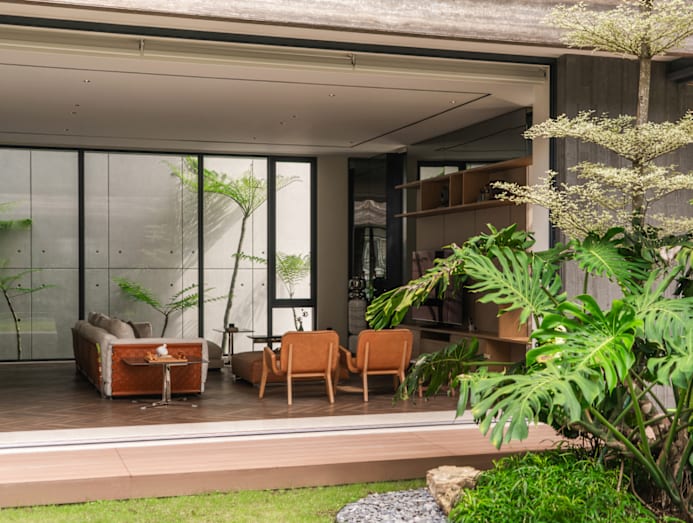
Since there are no external natural views to look out to, the open, relaxed quality of Australian design was conveyed by pivoting the living spaces towards a landscaped internal courtyard. To adapt it for the tropical climate, Giovanni made sure to have large overhanging canopies and various shading mechanisms. “The client has been really understanding on this,” he added.
Standing in front of the building, the most striking element is a cuboid that projects from the second floor. Instead of a solid wall, it has the rattan weave that makes up three of its sides, concealing a partially sheltered al fresco terrace within for entertaining guests. The space feels almost like an annexe, set apart from the rest of the house without feeling isolated.
The sense of privacy is further enhanced by the entrance, which has a dramatic glass wall with a water curtain flowing down it, playing peekaboo with the interiors. Beyond the perpendicular main door – also clad in woven rattan, albeit in a different pattern – the annexe sits to the right, while a short corridor to the left leads into the rest of the house.
“We sequenced the house very clearly from public to private using the depth of the house and the levels,” Giovanni pointed out. This was driven by the client’s brief to accommodate his parents when they visit, the children he hopes to have one day, and the occasional social gathering.
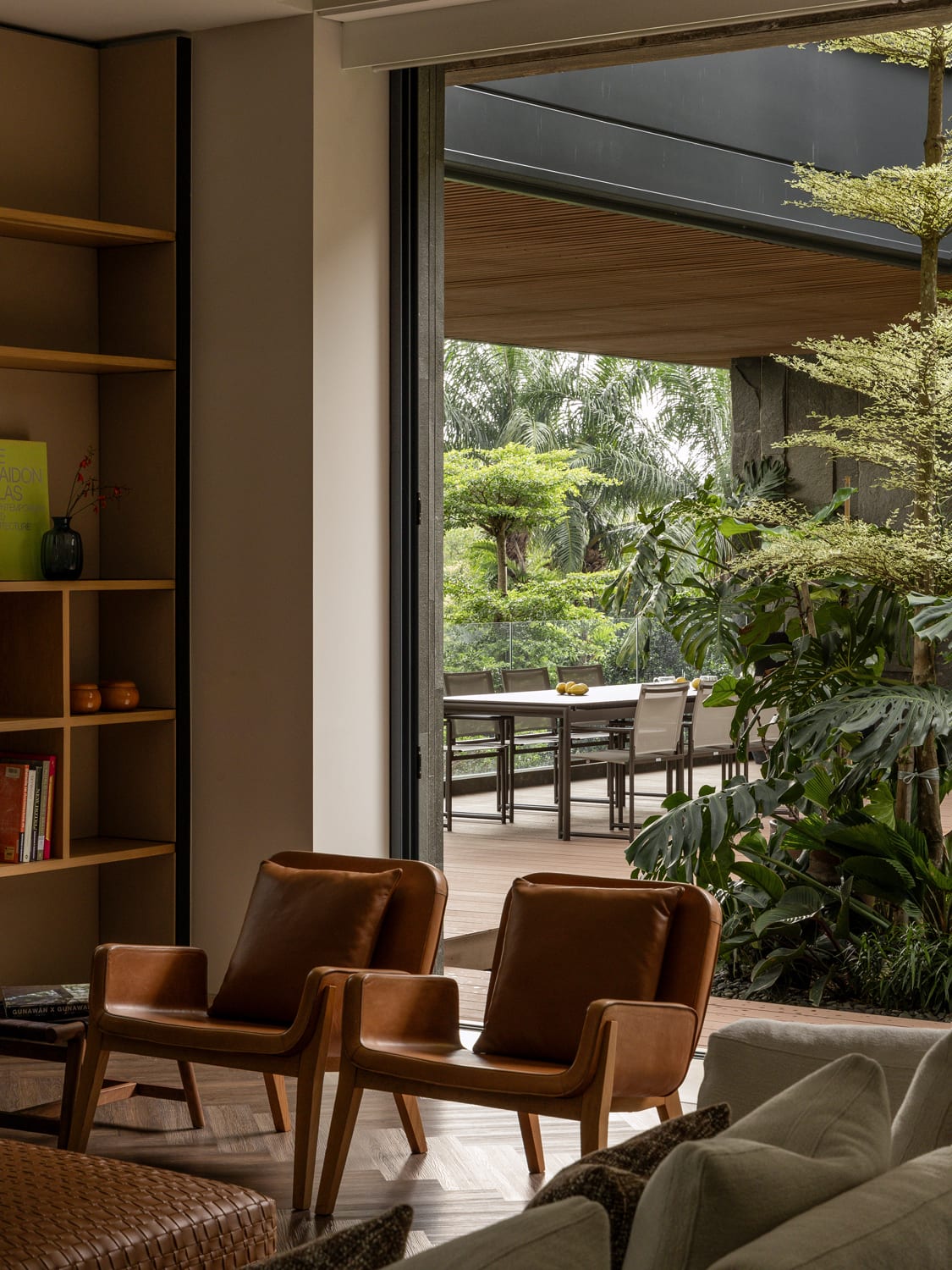
Consequently, Giovanni positioned the main living areas on the second floor, where they wrap around three sides of a Zen-like landscaped courtyard. The level comprises two living rooms, a show kitchen, dining area and gallery. Floor-to-ceiling sliding glass doors open onto the courtyard for greater connectivity to nature.
This elevates the residents above the busy roads and enables them to enjoy the breeze from a higher vantage point. On the exposed edge, a deck was installed for outdoor dining where a “barbie” can be enjoyed in true Australian fashion.
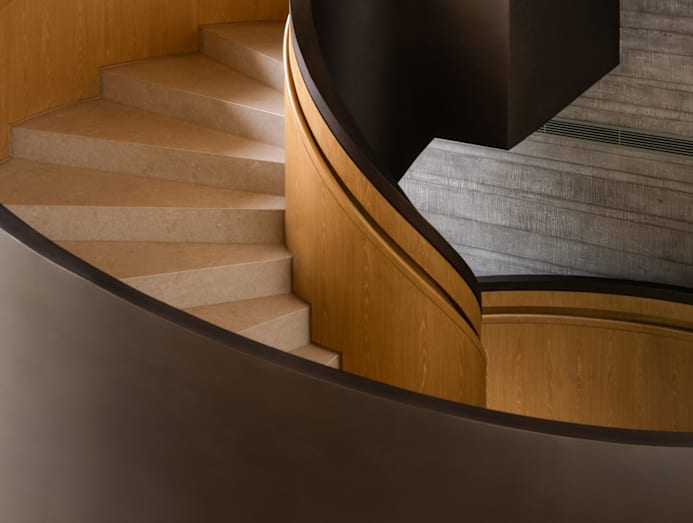
Another highlight of this level is the sculptural spiral staircase that rises majestically through the double-volume formal living room. Painted in bronze and with the steps in a cream-coloured marble, it winds up to a cantilevered corridor on the third floor, where the four bedrooms are located.
“It is a great backdrop for family events and photos. By being in the centre of the house, the residents use the staircase more often than the elevator,” said Giovanni.
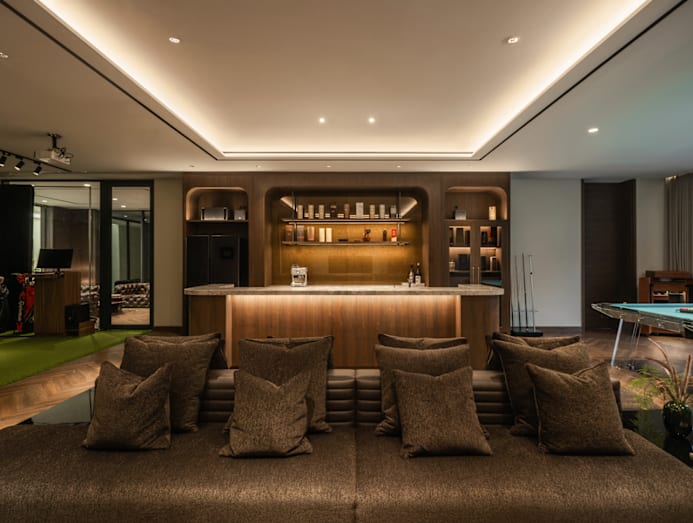
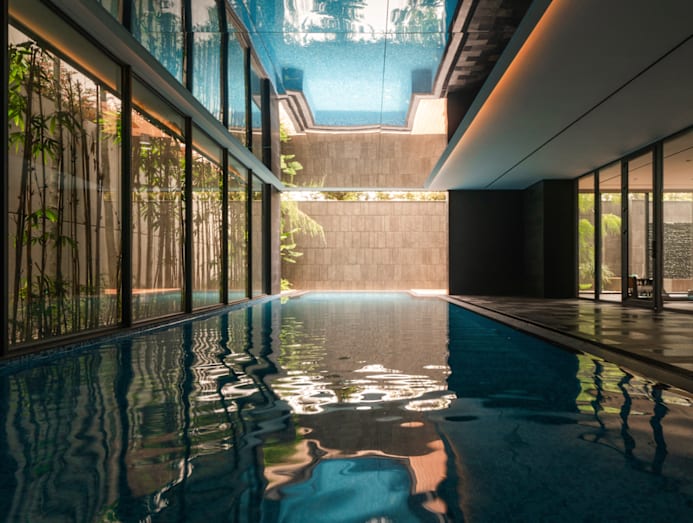
Other noteworthy spaces are found on the ground floor. While largely devoted to back-of-house functions, there is also a 16-metre-long swimming pool that flows parallel to the length of the gym before extending from beneath a mirrored ceiling into the garden. The mirrored ceiling was introduced to offset the relatively low three-metre ceiling height.
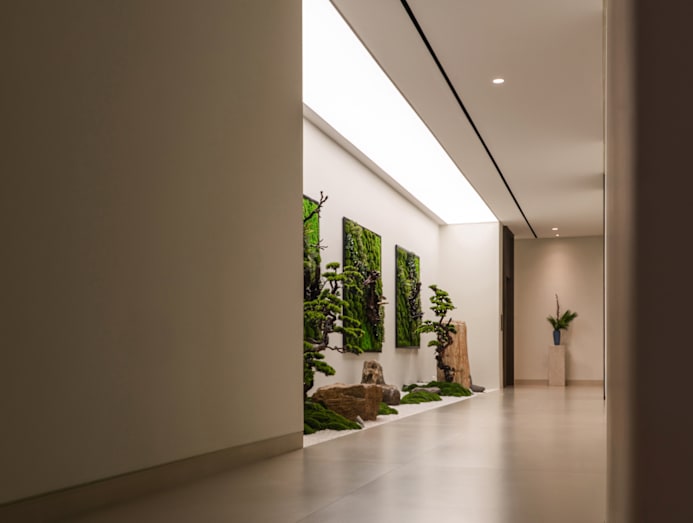
At the opposite end of the pool, a gallery draws inspiration from a Japanese Zen garden, expressed through a living moss installation and misting feature that invite pause and reflection amid the more active spaces on the level – including an entertainment room with a golf simulator and billiard table.
Up on the highest floor, the Japanese landscaping theme continues in a dedicated tea room. There, the owner’s mother enjoys performing the ceremony, finding serenity in its meditative steps.
Throughout the house, where possible, Giovanni made sure to integrate the Japanese bonsai collection that the client owns – from the front garden, to the courtyard and in the pockets of greenery that he carved out. “We try to incorporate things that the client loves into the house, but without making a complete change in the main philosophy of the design,” he explained.
On paper, SE House may seem like a mishmash of styles, but it is ultimately a compellin representation of how cross-cultural influences can coexist in a harmonious and liveable manner. Unsurprisingly, Giovanni is proud of the way things have turned out. “This project shows how a home can balance the owner’s personality with KantorGG’s creative touch, making it both personal and collaborative.”
Source: CNA/bt
Get bite-sized news via a new
cards interface. Give it a try.
Click here to return to FAST
Tap here to return to FAST
FAST
About The Author