The United States said on Wednesday it had signed a civilian nuclear cooperation agreement with Saudi Arabia, alongside a separate bilateral safeguards pact.
US Energy Secretary Chris Wright signed the agreements with Saudi Energy Minister Prince Abdulaziz bin Salman.
The US Energy Department said the agreements would deepen cooperation between Washington and Riyadh in the civilian nuclear energy sector.
“Together, these two agreements lay the legal foundation for a decadeslong, multi-billion-dollar partnership that advances several priority economic and strategic objectives, including nuclear nonproliferation,” the US Energy Department said in a statement.
Deal allows nuclear reactors and uranium enrichment
The agreement, known as a 123 Agreement, would allow Saudi Arabia to build nuclear reactors using US technology. It would also permit the kingdom to enrich uranium and reprocess nuclear waste.
The deal does not include an Additional Protocol that would allow the UN nuclear watchdog, the International Atomic Energy Agency, to conduct more intrusive inspections at short notice.
The US administration said the agreement complied with non-proliferation requirements under the Atomic Energy Act.
What happens next?
The agreement will now be submitted to Congress and will take effect unless lawmakers vote to block it within 90 legislative days.
A two-thirds majority would be required to override a presidential veto.
Several Democratic lawmakers have raised concerns that the agreement could increase proliferation risks and trigger a regional arms race.
“They are allowing Saudi Arabia, a belligerent and authoritarian nation, to develop nuclear weapons technologies while starting a war with Iran under the guise of preventing an Iranian nuclear bomb,” Democratic Senator Edward Markey told Reuters.
“This deal would make us all less safe,” he added.
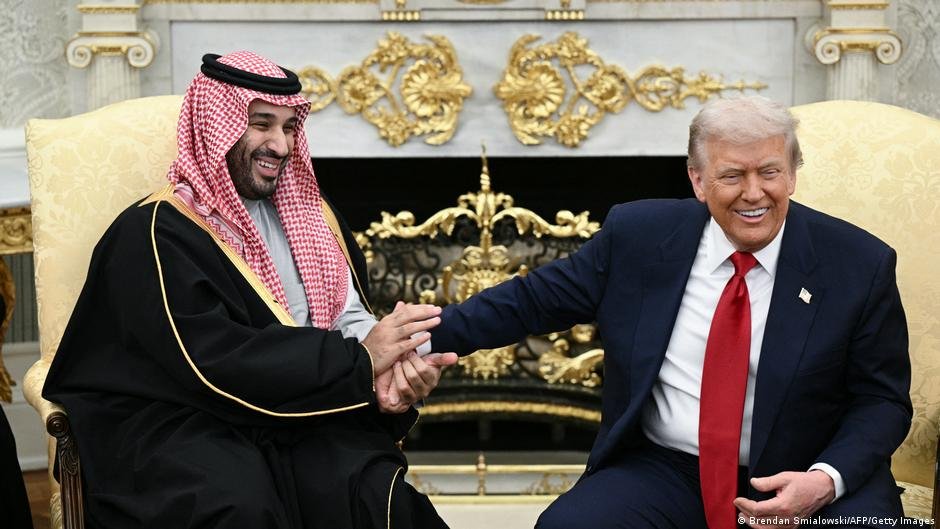
Saudi Crown Prince Mohammed bin Salman has previously said the kingdom does not want to develop a nuclear weapon but would do so if Iran acquired one.
Deal faces scrutiny over safeguards
Washington and Riyadh have discussed nuclear cooperation for years, with Saudi Arabia seeking access to US technology and American companies competing for major contracts.
The resulting pact, however, does not prevent Saudi Arabia from enriching uranium or reprocessing spent nuclear fuel, activities that can potentially produce material for nuclear weapons.
It also excludes an Additional Protocol allowing enhanced inspections by the UN nuclear watchdog. These omissions have raised concerns among lawmakers and US allies over proliferation risks and the possibility of a regional arms race.
However, like all signatories to the nuclear Non-Proliferation Treaty, Saudi Arabia has already committed to not developing an atomic bomb and consented to international inspections.
Edited by: Wesley Dockery