


Skip next section What you need to know
What you need to know
-
Germany posts 0.2% quarterly growth as exports strengthen
- Deutsche Bahn turns a profit in its core business
- Trust in German state falls to record low
Here is a roundup of some of the top headlines to come out of Germany on Thursday, July 30:
Tired of missing our real-time updates? Click here to add us as a Preferred Source on Google. Then tap the “Star” or “Preferred” to keep DW News at the top of your feed.
Skip next section READ — How deep is Germany’s auto industry cull?07/30/2026July 30, 2026
READ — How deep is Germany’s auto industry cull?
BMW joins VW, Porsche and Mercedes-Benz in cutting thousands of jobs, as Chinese rivals erode their market share.
DW recaps the major reforms German automakers are pursuing to safeguard their future.
Read more about job cuts in the German auto industry.
https://p.dw.com/p/5I2FBSkip next section Deutsche Bahn returns to profit in core business07/30/2026July 30, 2026
Deutsche Bahn returns to profit in core business
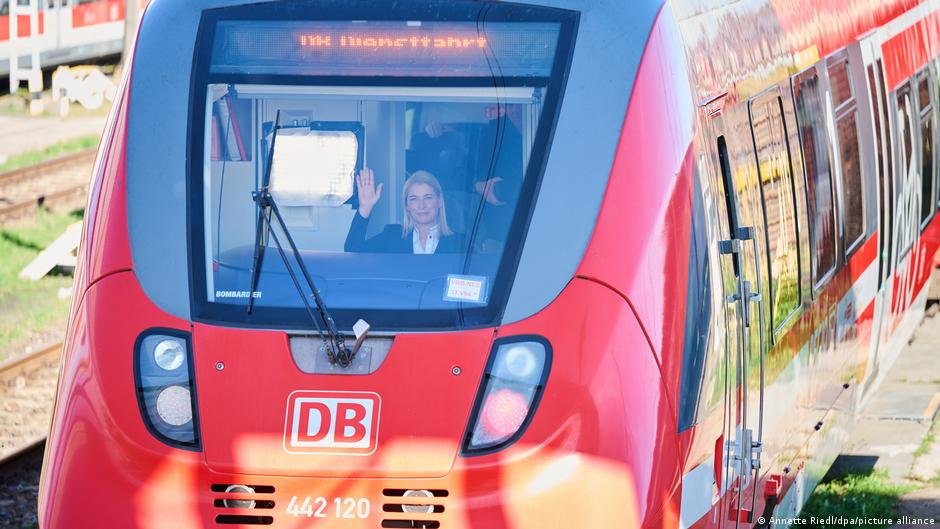
Deutsche Bahn has returned to profit in its core rail business for the first time in seven years, the state-owned company said Thursday, confirming earlier media reports (see entry below).
The rail operator reported a net profit of €147 million (about $169 million) in the first half of 2026, compared with a loss of €760 million during the same period last year.
Operating profit improved by €650 million to €415 million.
“For the first time in seven years, our rail business is back in the black,” Deutsche Bahn chief executive Evelyn Palla said in a statement.
However, Palla said she would only be satisfied “when the quality of day-to-day rail services is also up to scratch.”
Rising passenger numbers also helped increase revenue by almost 2% to €13.6 billion, as people boarded trains rather than drive amid high gas prices spurred by the war in the Middle East.
Deutsche Bahn attributed the improved results to its ongoing restructuring program, which includes cost-cutting measures and job reductions among senior management and internal service providers.
The company has struggled in recent years with poor punctuality, aging infrastructure and heavy financial losses. It recorded a net loss of more than €1 billion in 2025.
In the first half of this year, just 59% of long-distance trains arrived on time, 4 percentage points less than last year. The figure does not include trains that are canceled. A train is considered on time if it pulls in within 6 minutes of its scheduled arrival time.
To view this video please enable JavaScript, and consider upgrading to a web browser that supports HTML5 video
https://p.dw.com/p/5I0v7Skip next section Fire engulfs historic castle in eastern Germany07/30/2026July 30, 2026
Fire engulfs historic castle in eastern Germany
A major fire is raging at the historic Wallhausen Castle near Sangerhausen in the eastern German state of Saxony-Anhalt.
Emergency officials said the roof was fully ablaze, and the fire had spread to the first and second floors of the building.
About 124 emergency personnel from 12 fire departments were deployed to tackle the blaze. It remained unclear how long the operation would continue.
No one has been injured, according to police.
Guests and staff evacuated the castle, which also operates as a hotel, before the fire spread further.
The fire broke out at about 3:10 a.m. The cause remains unknown, and police have not yet provided an estimate of the damage.
The heritage-protected Renaissance castle was built between 1606 and 1613 by the von der Asseburg noble family.
https://p.dw.com/p/5I0qLSkip next section Trust in German state falls to record low07/30/2026July 30, 2026
Trust in German state falls to record low
Only 17% of people in Germany now believe the state is capable of fulfilling its responsibilities, according to a new survey by the DBB civil service federation.
Public-sector employees nevertheless continue to enjoy a strong reputation, with respondents blaming politicians rather than government workers for the loss of confidence.
“The results of our survey are a catastrophe and a wake-up call for the government,” DBB chair Volker Geyer said.
“Confidence in the state’s ability to act has fallen to a new low. Politicians must act to stop this downward spiral.
Geyer said people expected reforms that improve their daily lives, stimulate economic growth, strengthen social security systems and make the state function more effectively.
Respondents identified reforming and stabilizing social security, boosting growth, protecting jobs and improving infrastructure as their highest priorities.
https://p.dw.com/p/5I0BGSkip next section Rhine water levels approach record low07/30/2026July 30, 2026
Rhine water levels approach record low
Water levels on Germany’s Rhine River have fallen close to record lows amid prolonged heat and dry weather, raising concerns about mounting costs for industry.
The country’s inland waterways agency said on Thursday that vessels were continuing to operate, although freight ships were carrying only a fraction of their normal loads.
At Kaub near Koblenz, a crucial bottleneck for Rhine shipping, the navigable water depth stood at 29 centimeters on Thursday. That is close to the record low of 25 centimeters recorded in 2018.
Cargo vessels can still sail when water levels are low, but they must carry lighter loads to avoid running aground.
The disruption is placing additional pressure on German industry just as the economy shows signs of recovery.
North Rhine-Westphalia Economy Minister Mona Neubaur warned that the low water levels posed a challenge for businesses dependent on the river.
“The Rhine is not only a lifeline, it is also one of our most important trade routes,” the Green Party politician told the Rheinische Post newspaper.
“We are therefore monitoring the current situation very closely,” she added.
Neubaur rejected calls from business groups to deepen the Rhine’s shipping channel along its entire length.
To view this video please enable JavaScript, and consider upgrading to a web browser that supports HTML5 video
https://p.dw.com/p/5I04VSkip next section Germany records nearly 10,000 heat-related deaths07/30/2026July 30, 2026
Germany records nearly 10,000 heat-related deaths
Thousands of people have died as a result of high temperatures in Germany so far this summer, according to estimates from the Robert Koch Institute.
At least 9,800 heat-related deaths were estimated through July 19, the public health institute said in its weekly report.
That is the highest figure since comparable estimates began in 2016 and already exceeds the previous peak of about 8,900 deaths recorded in 2018.
Most heat-related deaths occurred among people ages 75 and older.
More women than men died during periods of extreme heat, although the institute said this largely reflects the higher proportion of women in older age groups.
Heat rarely causes death directly. In most cases, high temperatures worsen existing conditions such as cardiovascular, lung or kidney disease.
Heat is therefore usually not listed as the cause on death certificates and does not appear directly in official cause-of-death statistics.
Researchers instead estimate heat-related mortality by comparing the number of deaths during hot summer weeks with the number expected during periods of more typical temperatures.
To view this video please enable JavaScript, and consider upgrading to a web browser that supports HTML5 video
https://p.dw.com/p/5HzpASkip next section German economy grows by 0.2% in second quarter07/30/2026July 30, 2026
German economy grows by 0.2% in second quarter
Germany’s economy expanded by 0.2% in the second quarter, beating expectations for a 0.1% rise.
Preliminary figures from the federal statistics office show growth was driven mainly by stronger exports than in the previous three months.
The latest reading follows an upward revision to first-quarter growth, which is now estimated at 0.4%, up from 0.3%.
Despite the overall increase, household spending remained subdued during the quarter.
Business investment also declined from the first quarter.
The data suggest Germany’s economy continued to grow through the first half of the year, supported by overseas demand despite weakness in domestic activity.
https://p.dw.com/p/5HzWuSkip next section Deutsche Bahn reportedly returns to profit in core business07/30/2026July 30, 2026
Deutsche Bahn reportedly returns to profit in core business
German rail operator Deutsche Bahn has reportedly returned to profit in its core business for the first time in seven years, marking a sharp turnaround for the crisis-hit rail operator.
The state-owned company recorded a profit in the hundreds of millions of euros between January and June, the Bild newspaper and Der Spiegel news magazine reported Wednesday night.
Deutsche Bahn had posted losses of around €760 million ($870 million) in the first half of 2025.
The reports said the railway carried around 960 million passengers during the first six months of 2026, a record, and 17 million more than in the same period last year. The company was initially unavailable for comment.
Deutsche Bahn reportedly attributed much of the rise in passenger numbers to rising fuel prices. Commuters in particular switched from cars to regional trains as petrol became more expensive while rail fares remained stable.
Demand for long-distance services has also risen significantly since April.
Discount offers are also likely to have contributed to the growth. Around 600,000 people used the last-minute ticket, while 200,000 traveled with the family ticket.
Deutsche Bahn CEO Evelyn Palla is due to present the company’s first-half results on Thursday.
The operator has recently faced criticism over poor punctuality, deteriorating infrastructure, and heavy financial losses. It recorded a net loss of more than EUR1 billion in 2025.
To view this video please enable JavaScript, and consider upgrading to a web browser that supports HTML5 video
https://p.dw.com/p/5HzFSSkip next section Germany’s top court weighs private WhatsApp dispute07/30/2026July 30, 2026
Germany’s top court weighs private WhatsApp dispute
Germany’s highest civil court is considering whether forwarding private WhatsApp messages without permission can violate European data protection law.
The Federal Court of Justice (BGH) began hearing the case in Karlsruhe after two former friends became embroiled in a dispute over private WhatsApp messages concerning one woman’s employer.
The messages were sent about three years ago. After the friendship broke down, one woman forwarded them to the partner of the other’s boss.
The employee was subsequently dismissed and is now seeking €7,500 ($8,582) in damages from her former friend.
The BGH is considering whether the disclosure breached the European Union’s General Data Protection Regulation, or GDPR, and whether it infringed the claimant’s personal rights.
The Frankfurt Regional Court initially awarded damages to the claimant, finding that forwarding the messages amounted to unlawful processing of personal data.
It ruled that the GDPR’s “household exemption,” which excludes activities that are exclusively personal or family-related, did not apply.
To view this video please enable JavaScript, and consider upgrading to a web browser that supports HTML5 video
https://p.dw.com/p/5HzFoSkip next section Welcome to our coverage07/30/2026July 30, 2026
Welcome to our coverage
Richard Connor | Louis Oelofse Editor
Guten Tag from the DW newsroom in Bonn.
You join us as Germany’s national rail operator Deutsche Bahn has reportedly returned to profit in its core business for the first time in seven years.
The beleaguered business suspects that rising fuel costs are behind the increase, with more commuters making the switch from cars to regional trains.
Meanwhile, Germany’s highest civil court is considering whether forwarding a friend’s private WhatsApp messages without permission can violate EU data protection law.
Stay with us here for these stories and more of the things that Germany is talking about today.
https://p.dw.com/p/5HzFJShow more posts







