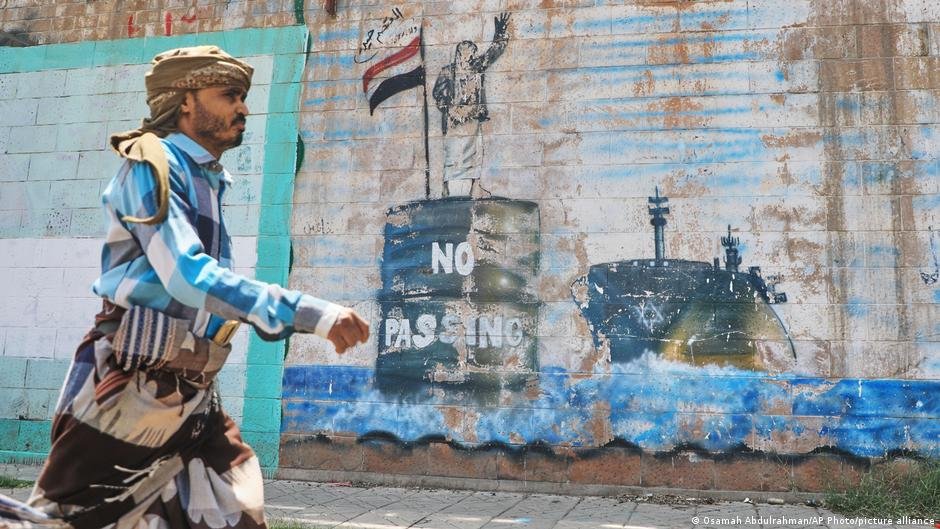
Iranian-backed Houthi rebels on Monday announced they had captured Greater and Lesser Hanish Island in the southern Red Sea.
The move bolsters the group’s ability to choke traffic in another key global maritime shipping route as the ripple-effect of the war in Iran grows.
The strategic advance comes as Saudi-backed Yemeni forces try to regain territory recently lost near the Bab el-Mandab Strait, an important alternative to the Strait of Hormuz — which Iran has held closed since US President Donald Trump began bombing the Islamic Republic on February 28.
The closure of the Hormuz Strait, through which roughly one-fifth of the world’s oil passed before the US began hostilities, has led to a global economic and energy emergency, driving up prices around the world and forcing petro-monarchy Saudi Arabia to move its oil exports through Bab el-Mandab.
But the Houthis have declared a maritime blockade on Saudi Arabia and last week seized strategic Mayun Island and the Red Sea port of Mokha, cutting off the alternative route.
The capture of Greater and Lesser Hanish now puts even more pressure on Saudi shipments and thus global oil supplies and prices.
Beyond putting the squeeze on Saudi Arabia — the Houthis’ proxy enemy for backing the internationally recognized government in the Yemen’s reignited civil war — it could also provide Iran added leverage in defending itself against the US.
To view this video please enable JavaScript, and consider upgrading to a web browser that supports HTML5 video
Houthi offensive continues to escalate as Iran war expands
The Houthis pressed on with their offensive Monday, launching missile and drone attacks on Saudi military targets.
A spokesman for the group said the strikes had caused “significant damage” and had come in response to “more than 300 [Saudi] airstrikes in [Yemen over] the past five days.”
Despite being a longtime backer of the Houthis as part of its anti-Israel “axis of resistance,” Tehran has denied any involvement in Yemen‘s revived civil war.
“Iran does not interfere in Yemeni affairs,” said Tehran’s Foreign Ministry on Monday, with spokesman Esmaeil Baqaei telling reporters the Houthis are “entirely independent actors who make their decisions based on their own interests.”
Yemen’s civil war — dormant for four years until the conflict in Iran broke out — began in 2014, when Houthi rebels seized large parts of northern Yemen, including the capital Sanaa, and forced the government to flee to Aden in the south.
In 2015, Saudi Arabia led a military coalition aiding the government, launching wave after wave of airstrikes as the conflict escalated into one of the worst humanitarian disasters in the world.
To view this video please enable JavaScript, and consider upgrading to a web browser that supports HTML5 video
Concerning situation for US and its Saudi, Gulf State allies
On Monday, Admiral Brad Cooper of US Central Command (CENTCOM) was in Jeddah to discuss “the latest developments in the region” with Saudi Crown Prince Mohammed bin Salman.
US news site Axios reports that Cooper has been in the kingdom since Thursday, dealing with urgent coordination meetings as the situation in the Red Sea escalates.
US media outlets reported last week that President Trump had rejected a request by the crown prince for the US to directly intervene.
Despite turning down the request to unleash US firepower, Trump reportedly agreed to provide intelligence sharing and targeting assistance.
To view this video please enable JavaScript, and consider upgrading to a web browser that supports HTML5 video
Iran blames Saudi Arabia for stalling Hormuz talks
Iran on Monday accused Saudi Arabia of delaying talks aimed at reopening the Strait of Hormuz.
Foreign Ministry spokesman Baghaei called a meeting set to take place in Oman, a “real opportunity” to restore security in the region and added that an agreement between Iran and Oman on opening the passage had been finalized and would be announced later.
Saudi Arabia reportedly has concerns over the lasting implications of a deal for the Strait of Hormuz and how it might negatively impact Gulf Cooperation Council (GCC) countries.
Tehran says Riyadh is using Yemen as a “pretext” to delay talks on how the Strait will be governed now that the status quo has been upended by the US.
Currently, the only secure routes allowing Saudi Arabia to deliver its oil to Asian markets are via the Suez Canal or around South Africa’s Cape of Good Hope.
On Monday, China’s Foreign Ministry called attacks on Saudi energy infrastructure “unacceptable,” saying Beijing is “deeply concerned” about further escalation.
To view this video please enable JavaScript, and consider upgrading to a web browser that supports HTML5 video
Edited by: Kieran Burke
If you rely on our team for trusted reporting, please take a moment to select us as your Preferred Source on Google, so you’ll always see our verified news first.