In the Gambian coastal town of Tanji, prolonged power outages are increasingly disrupting daily life. Faced with spoiling fish and empty coolers, the livelihoods of many people are at risk.
Image: Muhamadou Bittaye/AFP
In the Gambian coastal town of Tanji, Sirah Darboe-Manneh cleans freshly caught fish — but her coolers remain empty. Due to ongoing power outages, there is a shortage of ice to keep the daily catch fresh. Since June, the small West African country of Gambia has been experiencing prolonged blackouts — during the hottest time of the year.
Image: Muhamadou Bittaye/AFP
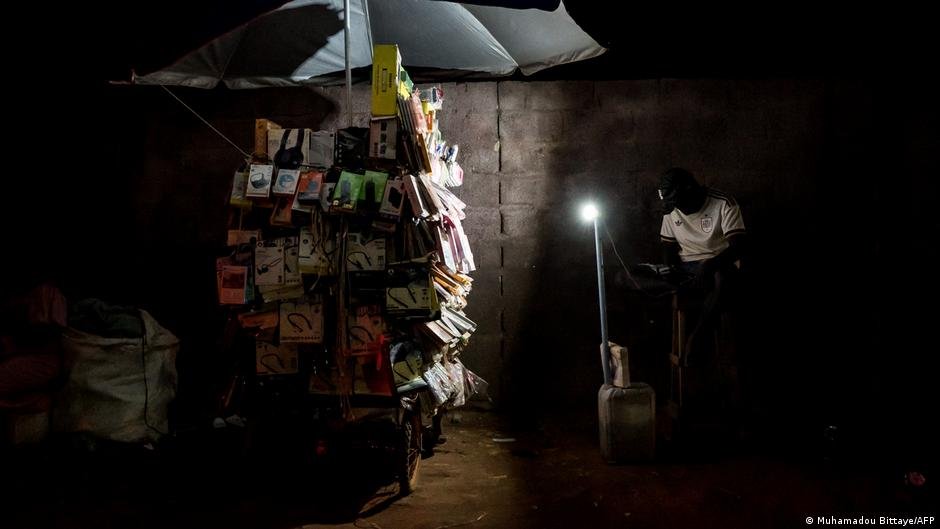
Last week saw two nights of spontaneous protests and chaotic scenes. Demonstrators blocked roads and demanded the resignation of President Adama Barrow — just months before his planned candidacy for a third term. The power outages have at times lasted between 12 and 48 hours, plunging the people into oppressive darkness at night.
Image: Muhamadou Bittaye/AFP
Shops have been forced to close and hospitals must rely on generators, some of which have also failed. People are desperately trying to keep food refrigerated and charge their mobile phones. In some regions, the water supply was also interrupted for up to 24 hours. In Tanji, Gambia’s largest fishing port, the stench of rotting fish is becoming an increasing problem.
Image: Muhamadou Bittaye/AFP
“Customers are not forthcoming. They are not buying fish anymore because they don’t have a place to keep it,” 31-year-old fishmonger Darboe-Manneh told AFP. The mother of six has barely any money for her children’s school supplies. At the same time, the price of ice has more than doubled, as suppliers struggle to produce enough due to the electricity shortage.
Image: Muhamadou Bittaye/AFP
In Sukuta, western Gambia, Amadou Gaye runs an electric mill where millet is ground for porridge and the local steamed grain dish, chere. But due to the power outages, it often stands idle these days. “People depend on millet for livelihood. We depend on electricity for livelihood,” said the 40-year-old.
Image: Muhamadou Bittaye/AFP
Faced with growing discontent, President Barrow has promised to improve the country’s electricity supply. A new 24-megawatt power plant will be commissioned by the end of October, and a contract has been awarded for a 50-megawatt solar power plant in Soma. A specially established task force will also work daily on short-term solutions.
Image: Muhamadou Bittaye/AFP
Gambia’s energy provider, the National Water and Electricity Company, has attributed the power outages to high consumption during periods of extreme heat, restrictions on electricity imports and a technical malfunction. President Barrow also acknowledged debts to the Senegalese power company Senelec, which are complicating efforts to stabilize the supply.
Image: Muhamadou Bittaye/AFP7 images1 | 77 imageshttps://p.dw.com/p/5MmqW