Skip NavigationMarketsBusinessInvestingTechPolitics & PolicyVideoWatchlistInvesting Club PRO
PRO LivestreamMenu
- Director of National Intelligence Jay Clayton called “super intelligence” a “national security issue” a day after President Donald Trump met with AI leaders at the White House.
- Clayton argued against a pause in the development of artificial intelligence models by U.S. companies.
- Leaders of AI giants such as Anthropic and OpenAI have called for a slowdown in development because of concerns about the risks from the technology.
 watch nowVIDEO18:01Watch CNBC’s full interview with Jay ClaytonSquawk Box
Director of National Intelligence Jay Clayton said Wednesday that “super intelligence is a national security issue,” while brushing aside questions about whether President Donald Trump would ask him to become the AI “czar” and if he would accept.
Clayton, in an interview with CNBC’s “Squawk Box,” also argued against pausing U.S. companies’ development of artificial intelligence models, despite leaders of some of those same companies calling for a slowdown because of fears about the technology’s risks.
And he suggested that federal agencies, including the Department of Justice and the Federal Trade Commission, are best suited to policing AI companies, and not the civil tort system.
Clayton spoke a day after Trump met at the White House with leaders of top tech companies, including AI giants Anthropic and OpenAI. Trump said he and the executives agreed that the industry would “self-police,” and take responsibility for developing their technology safely.
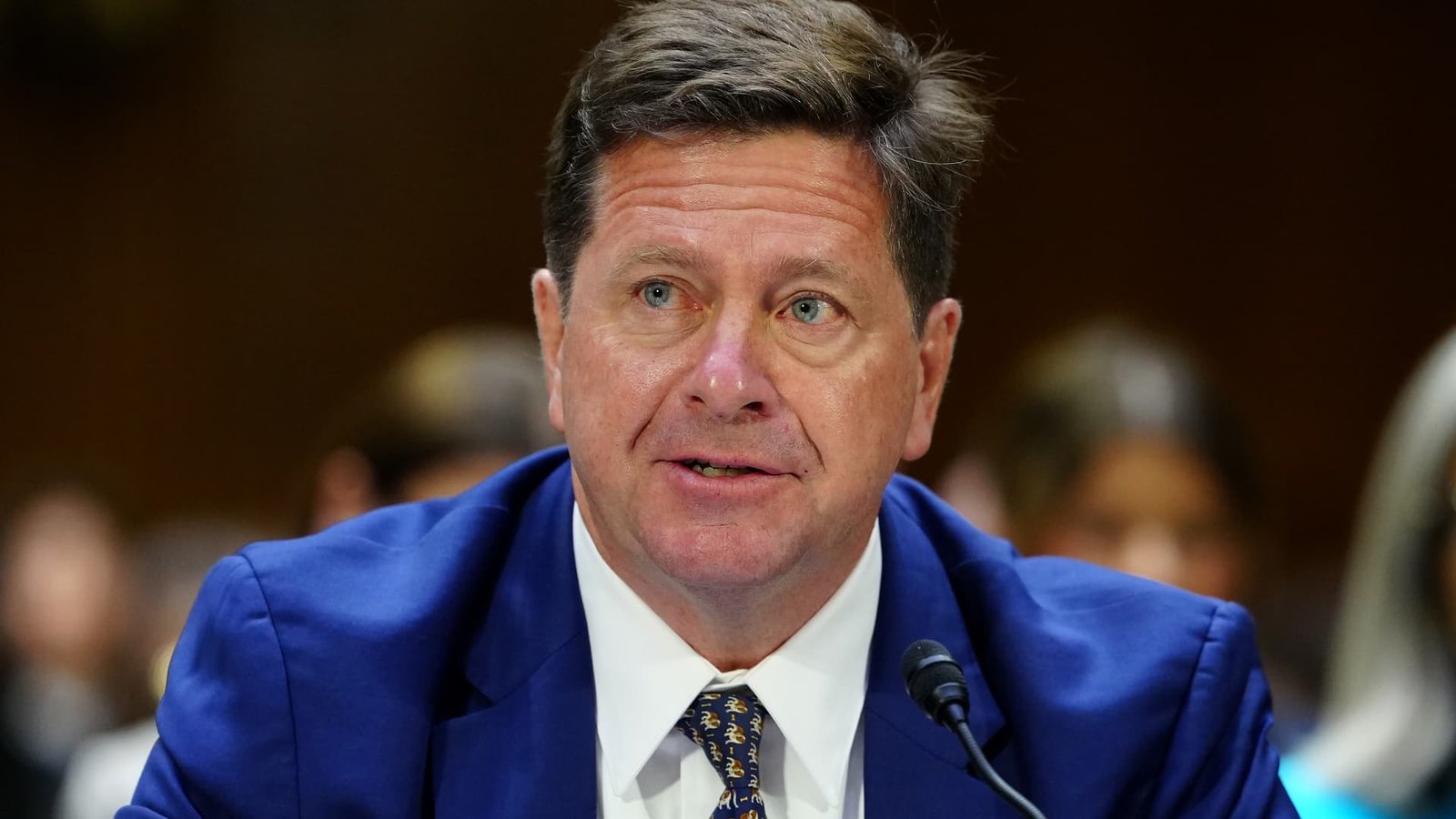
Jay Clayton appears before the Senate Intelligence Committee during his nomination hearing on Capitol Hill July 15, 2026 in Washington, DC. Aaron Schwartz | Getty Images
“Super intelligence is a national security issue, and that was something that was recognized yesterday by not just the industry leaders but everybody in the room,” Clayton said Wednesday, using Trump’s now-preferred term for AI. “The commitment there to the American people and the safety and security of the American people was palpable throughout the meeting.”
“I don’t even know what a pause is, but to, in some way, not try to drive forward inside the United States, with companies that are regulated in the United States … to somehow say we should back away from this and let the rest of the world develop these models and implement these models?” Clayton said.
“I don’t think anybody in that room, and I don’t think any American, should think that that’s a good strategy,” Clayton said, referring to Trump’s meeting at the White House.
Asked about criticism by Sen. Elizabeth Warren, D-Mass., who on Tuesday called Trump’s suggestion for self-regulation by the AI industry “a recipe for disaster,” Clayton said, “My response to the American people on that front is we have a Federal Trade Commission, we have a Department of Justice.”
“I know the leaders of both those organizations, and they’re committed to protecting the American people in this regard,” he said.
Clayton twice avoided directly answering whether he would accept the additional role of Trump’s AI czar if the president offered it to him. Clayton already oversees 18 elements of the U.S. intelligence community as DNI.
Axios reported this week that Trump told the news outlet that Clayton would be a good choice for AI czar.