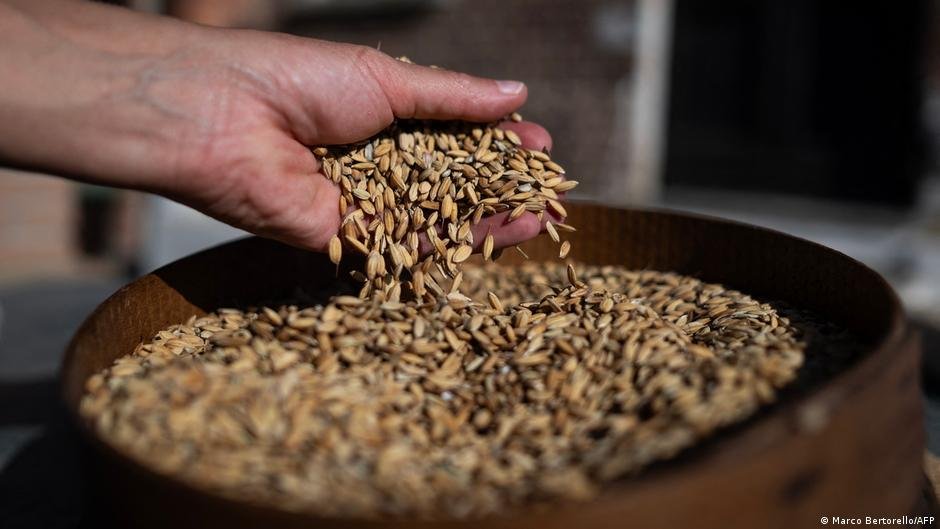
In northern Italy, farmer Alice Cerutti is transforming rice paddies into wetlands. Instead of maximizing yields, she prioritizes biodiversity and demonstrates how agriculture and nature conservation can go hand in hand.
Image: Marco Bertorello/AFP
Centuries ago, Benedictine monks in northwestern Italy transformed wetlands into rice paddies. Alice Cerutti, a farmer in Italy’s Varcelli Plain, has restored a third of this area to their natural state, cultivating woods and wetlands that break up the agricultural landscape.
Image: Marco Bertorello/AFP
Golden rice fields define the Vercelli Plain, an area between Milan and Turin in Northern Italy. Cerutti told French news agency AFP that she and her team have planted more than “10,000 native plants” to restore woods and wetlands, “including oaks, alders, ash trees, and hornbeams. It’s amazing how quickly nature responds.”
Image: Marco Bertorello/AFP
Cerruti, 43, said that since planting the first trees, the number of butterflies, dragonflies and other insects has increased significantly. She took over her family’s farm, Cascina Oschiena, in 2012. In fields surrounding the woods, she grows red and black rice as well as heritage varieties that are more resilient and produce smaller but higher-quality harvests.
Image: Marco Bertorello/AFP
Cerutti grows her Carnaroli Classico and Arborio Classico without using “a single gram of chemical fertilizer,” she told AFP. Instead, she relies on green manure and legumes. Between rice harvests, Cerutti allows donkeys and as many as 1,200 sheep to graze so their droppings can naturally fertilize the soil.
Image: Marco Bertorello/AFP
Italy is Europe’s largest rice producer, but cheap imports, rising costs and droughts threaten the industry. Coldiretti, Italy’s largest agricultural organization, warns that heat could wipe out 25% of this year’s crop. To save water, growers in the Po Valley are turning to direct seeding in dry soil, breaking with centuries of tradition.
Image: Marco Bertorello/AFP
Flooding rice fields helps replenish groundwater, agronomist Giovanni Molina told AFP. Growing rice in dry soil may seem to save water, but could turn the fertile Po Valley into a desert over time. Cerutti, who exports rice to the UK, Dubai and the US, is also feeling the effects of rising temperatures.
Image: Marco Bertorello/AFP
Heritage rice varieties are more resilient to drought and extreme heat. Carnaroli Classico, in particular, benefits from its fine awns, which may help protect it from temperature extremes. Biodiversity-friendly farming practices, such as flooding fields early, also help crops withstand drought, Cerutti told AFP.
Image: Marco Bertorello/AFP
Cerutti’s farm, designated an EU protected area, aims to offset lost income from reduced rice production through educational programs for schools and scientists, as well as guest accommodations. Many fellow farmers thought she was crazy, she told AFP, but restoring nature brings her joy.
Image: Marco Bertorello/AFP8 images1 | 88 imageshttps://p.dw.com/p/5OEMX