Democrats turn sights to 2028 after US midterms triumph
The first debate is scheduled for June next year.
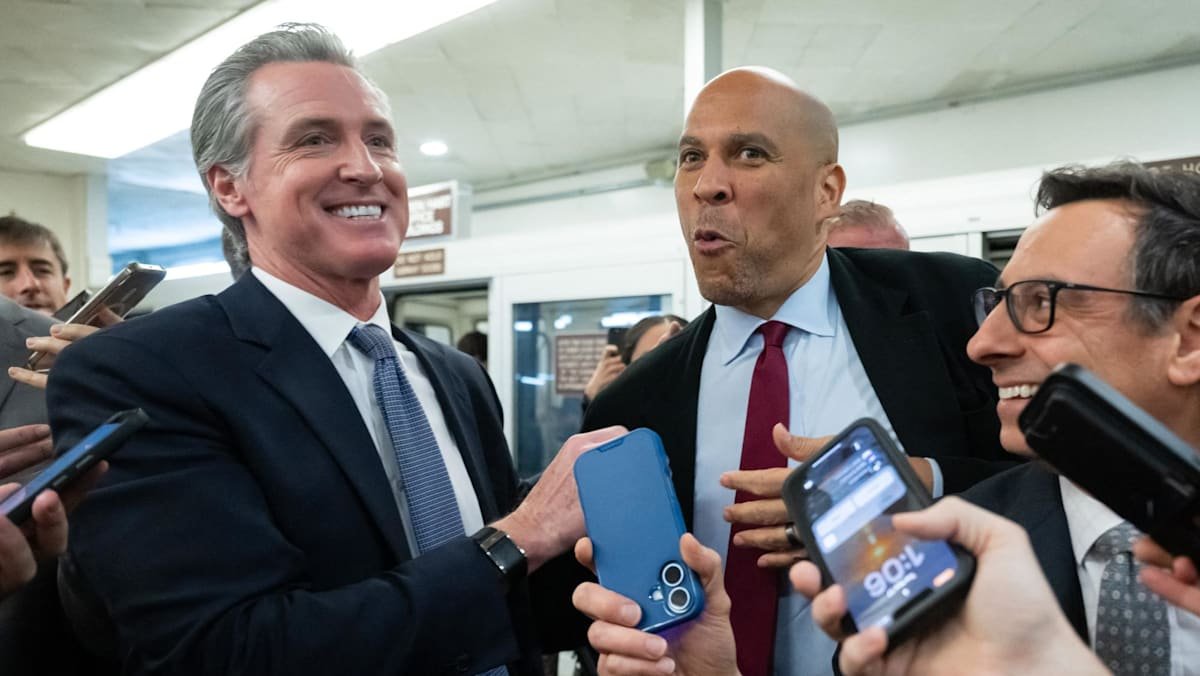
California Governor Gavin Newsom jokes with US Senator Cory Booker (R), Democrat of New Jersey, as he speaks with the media between meetings at the US Capitol in Washington, DC, Nov 17, 2026. (Photo: AFP/Saul Loeb)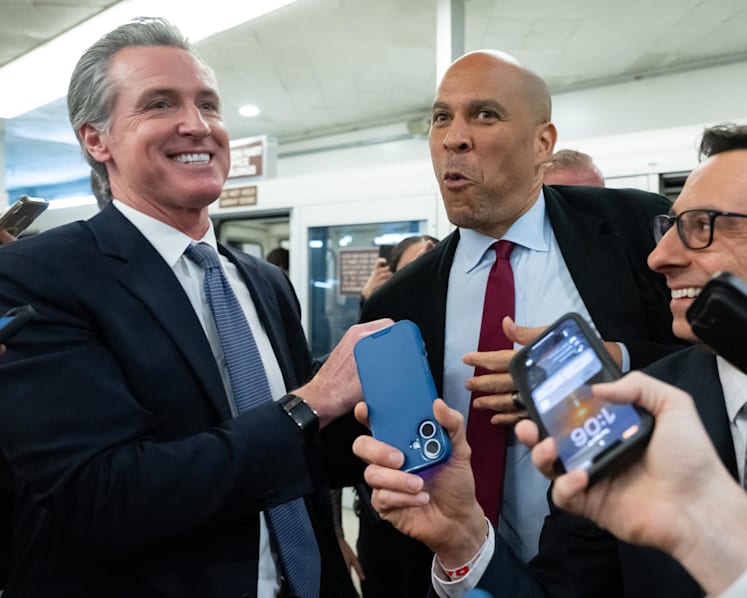
Read a summary of this article on FAST.
Get bite-sized news via a new
cards interface. Give it a try.
Click here to return to FAST
Tap here to return to FAST
FAST
WASHINGTON: Democrats fired the starting gun Monday (Nov 23) on the race to win back the White House, announcing plans for 12 debates to pick their standard bearer for 2028 as the party looks to build on its sweeping midterm election victory.
The first debate is scheduled for June next year, setting the stage for what could be a crowded contest to select a challenger to the Republicans, who must find a successor to term-limited US President Donald Trump.
The announcement comes as Democrats celebrate their biggest majority in the House of Representatives since the early 1990s, with their victories this month transforming the balance of power in Washington and raising expectations for the next two years.
“Democrats are on offence after our historic victories in the midterms, and the DNC is keeping our foot on the gas as we head into the 2028 cycle,” Democratic National Committee chairman Ken Martin said.
The party will hold five debates in 2027 and seven in 2028, the final one scheduled for March of that year.
The televised showdowns will help voters choose the party’s presidential nominee through a series of state-by-state primary elections and caucuses, in which supporters select the candidate they want to face the Republican nominee in November 2028.
CROWDED FIELD
Under new rules announced Monday, candidates seeking a place on the debate stage must pledge to denounce spending on their behalf by outside political groups, including those that do not disclose their donors.
The requirement is intended to curb the influence of wealthy donors and so-called “dark money” in Democratic nomination contests, a longstanding demand of the party’s progressive wing.
No major Democrat has formally entered the race, but manoeuvring is already underway among politicians seeking to become the party’s next leader.
Gavin Newsom, Josh Shapiro and Andy Beshear – the governors of California, Pennsylvania and Kentucky, respectively – are among those attracting attention as possible contenders.
Other names being discussed include former vice president Kamala Harris, defeated by Trump in 2024, former transportation secretary Pete Buttigieg and New York congresswoman Alexandria Ocasio-Cortez, a leading figure on the party’s left.
Senator Jon Ossoff of Georgia – seen as one of the party’s rising stars – have also been mentioned as potential candidates, along with Senator Cory Booker of New Jersey.
The sprawling field reflects a party debating its direction after Trump’s reelection in 2024, with moderates and progressives offering competing visions of how to recapture the presidency.
But Democrats enter the contest buoyed by an extraordinary midterm performance that handed them control of both chambers of Congress.

HISTORIC MAJORITY
The party has secured at least 258 seats in the 435-member House, its largest majority since 1992, with several races still outstanding.
Democrats will also control 56 seats in the 100-member Senate when the new Congress convenes in January.
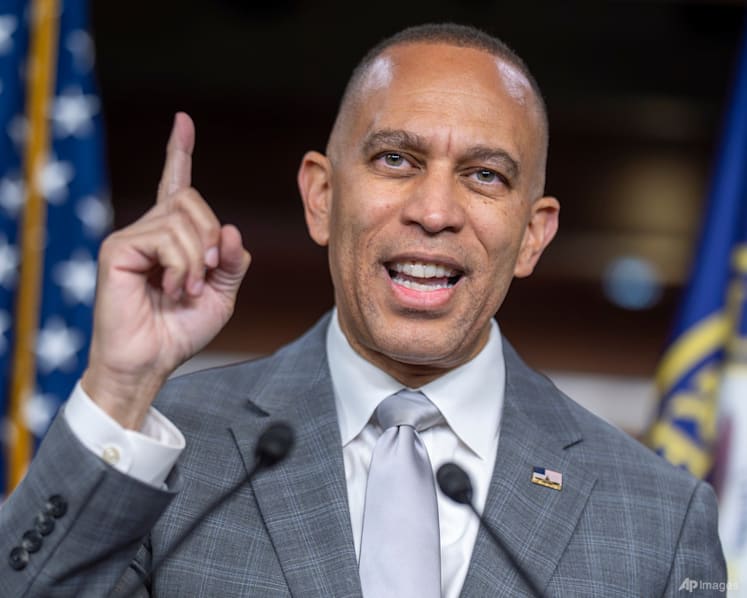
Hakeem Jeffries, who was nominated last week to lead the House Democrats, is poised to become the first Black speaker when lawmakers formally elect their leader on Jan 3.
The election has also strengthened the Congressional Black Caucus, whose membership is expected to grow despite Republican efforts to redraw congressional districts following a Supreme Court ruling weakening voting rights protections.
Black lawmakers are set to occupy several prominent House leadership positions and committee chairmanships, while the incoming Senate will have seven Black members, including three women – both historic highs.
Democrats have promised an ambitious legislative program focused on lowering living costs, reversing Republican healthcare cuts and investigating alleged corruption within Trump’s administration.
But their new congressional strength comes with limitations, as Trump retains the power to veto legislation, while most major bills require 60 votes to overcome procedural obstacles in the Senate.
Source: AFP/fs
Sign up for our newsletters

Get the CNA app
Stay updated with notifications for breaking news and our best stories
Get WhatsApp alerts
Join our channel for the top reads for the day on your preferred chat app

Get bite-sized news via a new
cards interface. Give it a try.
Click here to return to FAST
Tap here to return to FAST
FAST