https://p.dw.com/p/5PmXePrefer DW on Google
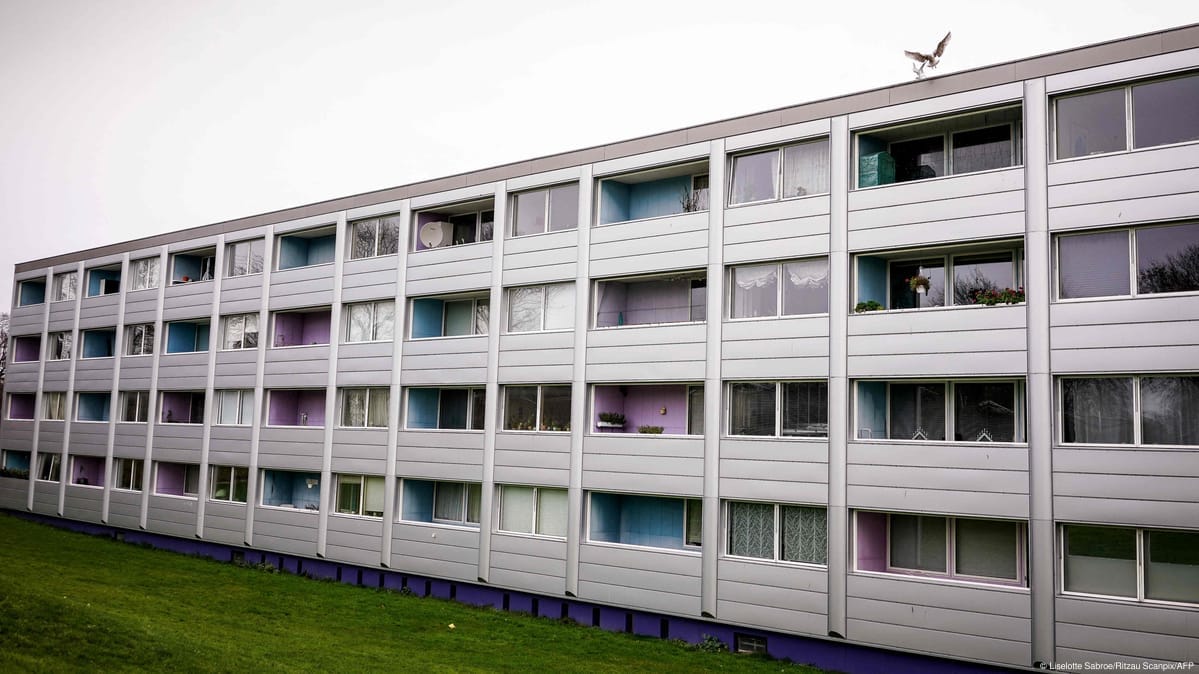
Denmark’s Supreme Court on Monday ruled in favor of a housing association that terminated 91 leases in order to prevent the label “hard ghetto” being applied to their housing complex. The decision align’s with Copenhagen’s hardline approach to immigration.
The court on Monday upheld Denmark‘s 2018 “ghetto law,” which allows for the relocation of “non-Western” residents from minority-heavy neighborhoods in order to foster integration. The Danish court ruling diverges from a top EU court decision last year that found application of the law could amount to discrimination.
The Danish laws requires social housing estates to rebuild, renovate and adjust their social mix if these become minority heavy, stipulating that 60% of apartments be rented to “Westerners” at market value by 2030.
To view this video please enable JavaScript, and consider upgrading to a web browser that supports HTML5 video
Denmark’s hardline immigration policies making it a role model in the EU
Denmark’s pioneering role in spearheading tougher immigration rules has made it a model for some in the EU. Denmark was also one of five countries that last week announced its intent to set up an asylum seeker deportation hub in Rwanda.
Danish Housing Minister Jacob Mark welcomed Monday’s decision, saying it “strengthens security, social cohesion and integration.”
The court’s decision upheld a 2022 lower court ruling against seven tenants who fought their evictions in Nojsomhed, Helsingor, just north of Copenhagen.
In Monday’s ruling, the law was found to be non-discriminatory when it comes to the eviction of “immigrants and descendants from non-Western countries” as it is not broadly based on ethnicity. The EU ruling focused on this particular aspect, saying the law would be discriminatory if criteria were race based, while ultimately allowing national courts to have the last say in the matter.
“The Supreme Court notes that applying the criterion of the law involves dividing people into two groups [immigrants and descendants from non-Western countries, and all other persons]. Both groups include a very large majority of different ethnic origins, and there will simultaneously be persons with the same ethnic origin in both groups,” read the Danish court’s ruling.
To view this video please enable JavaScript, and consider upgrading to a web browser that supports HTML5 video
Who is a ‘non-Western’ resident?
Tenants’ associations estimate that 11,000 people across Denmark will have to be relocated to comply with the law.
The housing association in question issued a written statement saying that it was aware that the evictions would impact those affected, adding that it undertook measures to insure that residents found new homes.
According to Statistics Denmark’s definition, “non-Western” countries include every country other than the 27 member states of the European Union, as well as Andorra, Australia, Britain, Canada, Iceland, Liechtenstein, Monaco, New Zealand, Northern Ireland, Norway, San Marino, Switzerland, the United States and the Vatican.
To view this video please enable JavaScript, and consider upgrading to a web browser that supports HTML5 video