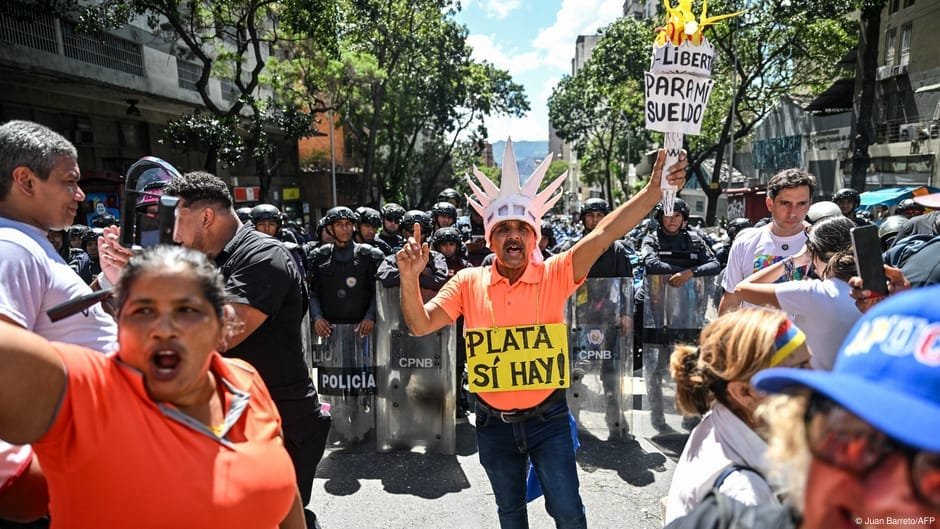
Workers and retirees have taken to the streets in Caracas, Venezuela’s capital. They are demanding higher wages and better pensions. The country is struggling with triple-digit inflation and a crushing national debt.
Image: Juan Barreto/AFP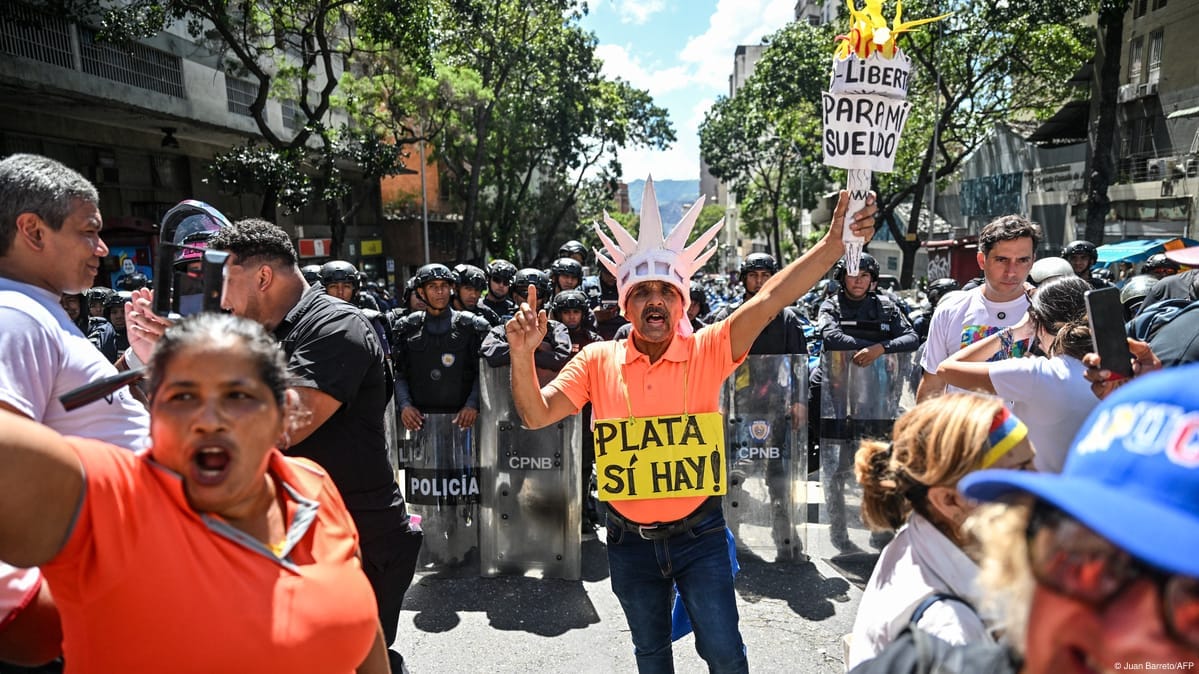
Teachers, retirees, caregivers and union members marched through the streets of Caracas on Tuesday, all united by a single demand: a living wage. What began as a protest against low wages and pensions has long since become a manifestation of a profound social and economic crisis.
Image: Juan Barreto/AFP
The situation is particularly dire for older people, who complain that their income is barely enough to cover food, medication or visits to the doctor. After a long working life, they find themselves in a situation that no longer allows them to live out their later years with dignity, with many even living in extreme poverty.
Image: Juan Barreto/AFP
Protesters headed for the Miraflores Presidential Palace, the seat of government of incumbent President Delcy Rodriguez. Security forces blocked their path, preventing the protest march from reaching the palace. The workers and retirees want to take their demands to the very place where decisions about their economic future are made.
Image: Juan Barreto/AFP
Since March 2022, the statutory minimum wage in Venezuela has remained unchanged at 130 bolivars (about 13 US cents) per month. Inflation and currency depreciation have drastically eroded its real value. The base salary is no longer nearly enough to cover daily expenses. Even food has become a burden given the dwindling purchasing power.
Image: Moisés Quintero/JNA Press/IMAGO
Workers mobilized by the pro-government union CBST also marched through downtown Caracas. Union representatives support the government’s economic and labor policies. They cite stability, economic development and the preservation of manufacturing facilities in the country as their reasons.
Image: Jesus Vargas/Anadolu/picture alliance
One marcher held a portrait of late Venezuelan President Hugo Chavez at the CBST march. Behind the social hardship lies a severe financial crisis. This week, the Venezuelan government put the total debt at $237.5 billion. At the end of 2025, the debt stood at 242% of GDP. The government has attributed the economic problems to sanctions and declining oil revenues.
Image: Maxwell Briceno/AFP
In April, the government announced a monthly minimum income of $240 and an increase in pensions to $70. For many workers, these measures are not enough. They argue that one-time payments and allowances are no substitute for adequate base salaries. Furthermore, they say that long-term social security entitlements remain insufficiently guaranteed.
Image: Maxwell Briceno/AFP
The government is relying primarily on Venezuela’s oil industry to drive economic recovery, with daily production expected to rise to 2.9 million barrels by 2036. Investments of approximately $160 billion are planned. Economic output is expected to more than double within five years. However, these ambitious plans depend on a successful debt restructuring.
Image: Maxwell Briceno/AFP
“Sustainability, completeness, good faith, and transparency” are the guiding principles of the planned debt restructuring, according to economic adviser Calixto Ortega. While the government seeks investment and international aid, many people still struggle to make ends meet.
Image: Maxwell Briceno/AFP9 images1 | 99 imageshttps://p.dw.com/p/5Pt8L