The United States has withdrawn most of the troops deployed to Nigeria for a special operation against “Islamic State” (IS) fighters in May, the US military has confirmed, but it continues to share intelligence with Nigerian forces.
“We have withdrawn much of our forces that were just there for that operation,” said General Dagvin Anderson of US Africa Command (AFRICOM), speaking at a conference of African defense chiefs in Luanda, Angola, on Thursday.
“But [we] are continuing the partnership that Nigeria has asked for to help continue with the intelligence sharing and the understanding that’s necessary to be able to prosecute these difficult tasks,” he said.
What were US troops doing in Nigeria?
In May, US and Nigerian forces killed nearly 200 IS fighters in the Lake Chad region in the northeast of the country. Among those killed were Abu-Bilal al-Minuki, the jihadi group’s global second-in-command.
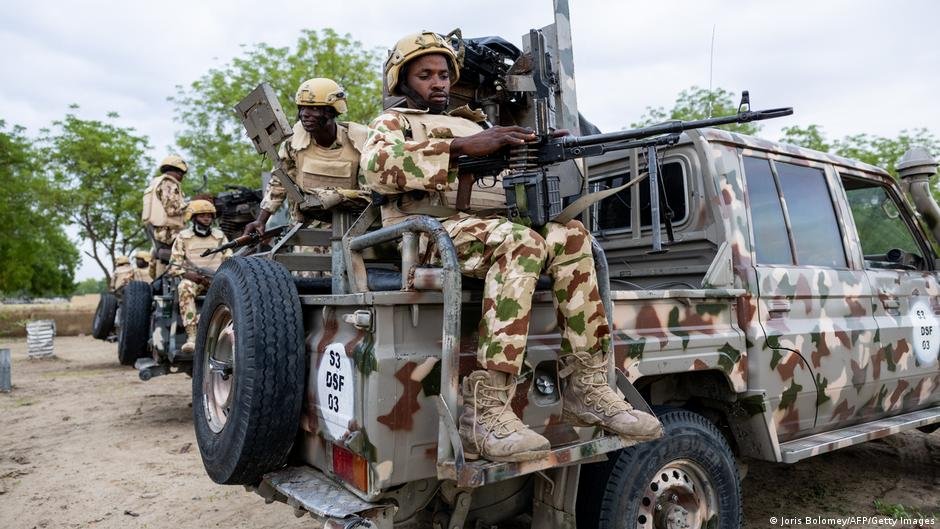
Nigerian Defense Minister Christopher Musa told the AFP news agency that US combat troops had deployed specifically for that operation, which also disrupted broader IS communications and operations.
“They came in, did that, did their work, and took off,” Musa said.
Anderson said the Nigerian military had continued to be “very active” since the operation, saying: “They continue to prosecute targets themselves.”
Roughly 200 non-combat US troops also deployed to Nigeria earlier this year for broader training and technical assistance. It wasn’t immediately clear whether any of those personnel were among those withdrawn.
To view this video please enable JavaScript, and consider upgrading to a web browser that supports HTML5 video
Nigeria battling IS insurgency
Nigeria has been battling an Islamist extremist insurgency in the northeast of the country since 2009, first by Boko Haram, then its offshoot and rival, the Islamic State West Africa Province (ISWAP).
Since last year, the groups have stepped up attacks on villages, police stations and workers such as fishermen and loggers, as well as military bases, killing several senior army officers.
The upsurge in attacks prompted President Bola Tinubu to declare a nationwide state of emergency in 2025 and US President Donald Trump to threaten Nigeria with military intervention.
On Christmas Day, Trump ordered a US strike on militants, claiming they had been targeting Christians in the country.
AFRICOM’s General Anderson was speaking on the sidelines of a three-day conference in Angola which was attended by military leaders from 35 African nations, plus representatives from the US and Brazil.
Edited by: Sean Sinico
Don’t let the algorithm hide the news. If you rely on our team for trusted reporting, please take a moment to select us as your Preferred Source on Google by clicking here and hitting the “star” or “preferred” button, so you’ll always see our verified news first.