Syndicate linked to S$51 million in scam losses sold chat accounts to criminals; financier jailed
The syndicate began with one SMS modem and expanded with multiple members, with the group shifting into an empty office space where it stored its 27 SMS modems and 24,000 SIM cards.
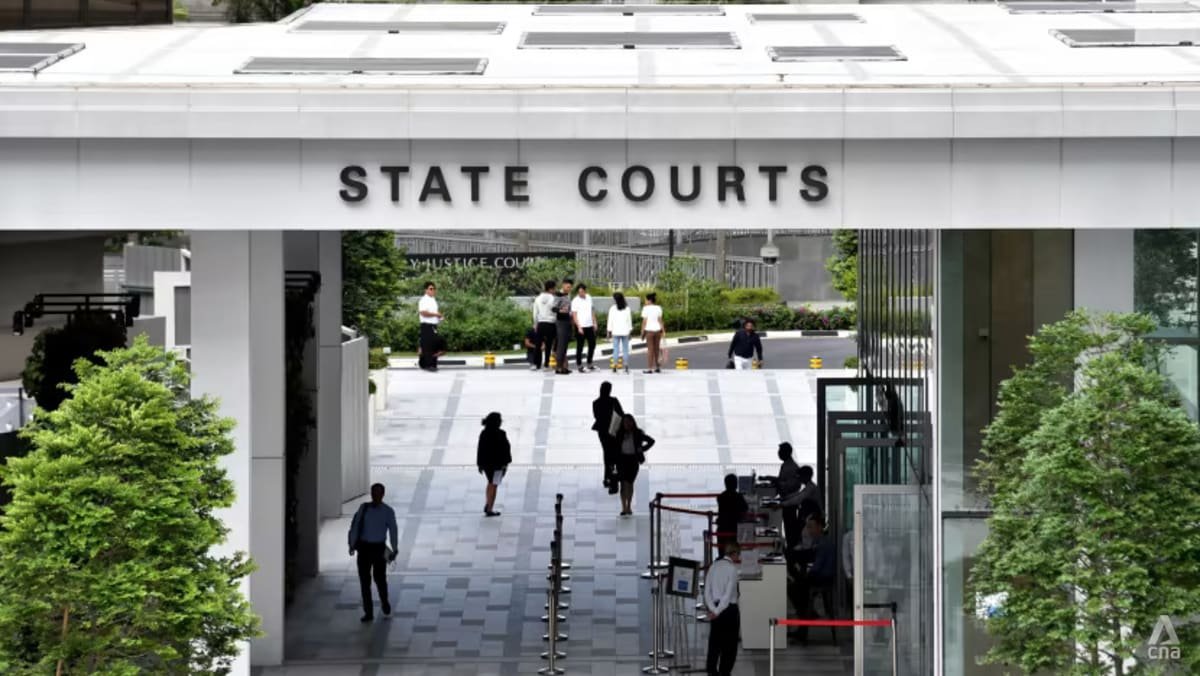
File photo of the State Courts in Singapore.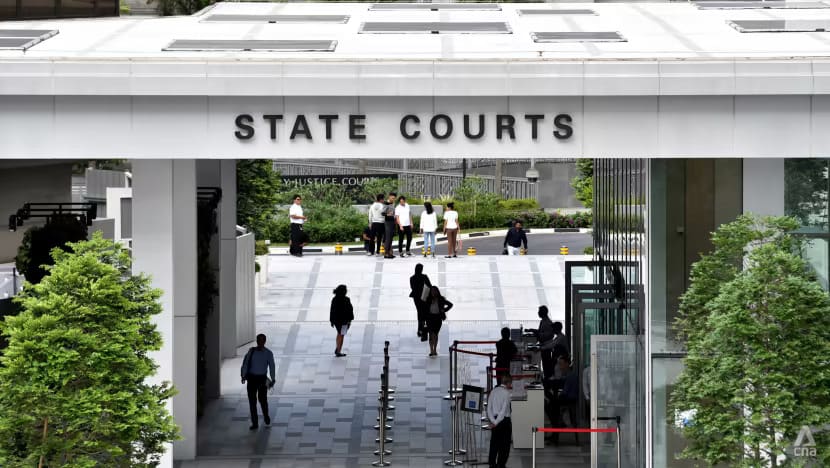
New: You can now listen to articles.

This audio is generated by an AI tool.

Read a summary of this article on FAST.
Get bite-sized news via a new
cards interface. Give it a try.
Click here to return to FAST
Tap here to return to FAST
FAST
SINGAPORE: A man “invested” S$40,000 (US$30,900) to fund the operations of a syndicate that sold chat accounts to customers including criminals and received over S$92,600 from the illicit activities.
When the police moved in and raided the syndicate’s headquarters in an empty office space about a car repair workshop, they seized 24,000 SIM cards that were linked to almost 2,400 police reports by scam victims.
The victims had reportedly lost a total of S$51 million to a variety of scams such as job scams, investment scams and government official impersonation scams.
Ronnie Low, a 50-year-old Singaporean, was sentenced to four years’ jail and fined S$52,000 on Tuesday (Jul 14). If he cannot pay the fine, he will have to serve another five months’ jail.
Low pleaded guilty to three charges which include being a member of an organised criminal group and engaging in a criminal conspiracy to acquire benefits of criminal conduct.
Another two charges were taken into consideration.
THE CASE
In mid-2022, co-accused Alvin Kok Jun Keat chanced upon an SMS modem when looking for ways to earn fast cash.
This device receives SMS messages sent to pre-registered SIM cards inserted into the modem. The messages can then be accessed through a connected computer.
The 31-year-old Singaporean devised a business plan around this modem and the setting up of anonymous accounts in chat applications WhatsApp and WeChat.
Kok would then sell the chat accounts to customers who could conceal their identities when using the accounts anonymously for criminal purposes including scams.
The customers that the syndicate later drew were mostly based overseas from countries like Malaysia, Myanmar and Cambodia.
Kok imported an SMS modem from China and looked for pre-registered SIM cards on Telegram for the business.
He hired an unidentified person to advertise the services on Telegram, charging US$30 for 30 days’ use of a WhatsApp account, or US$10 for a WeChat account. All payments were to be made to a cryptocurrency wallet.
Several other men were roped into the syndicate and its “business”, which shifted to using software to allow customers to receive concurrent links to access one-time passwords needed to activate the chat accounts.
Kok moved the operations to a rented condominium in Gerald Drive before shifting again to an empty office space in Toh Guan Road.
Low was roped into the criminal enterprise by his friend, 47-year-old Tan Shay Howe, who had come to learn of the illegal business in December 2022.
Tan introduced Low to Kok in October 2023, as Kok was looking for investors.
Kok told Low that the business was profitable, guaranteeing that he would receive S$15,000 to S$20,000 per month.
He asked for S$100,000, but Low invested only S$40,000. At the same time, Tan invested S$25,000 for a cut in the profits.
On May 29, 2024, the Anti-Scam Command raided the syndicate’s office and seized 24,000 SIM cards, 27 SMS modems and other electronic items.
Investigations revealed that the syndicate generated S$887,477 in profits between November 2023 and May 2024.
Between January 2024 and May 2024, the seized SIM cards were linked to a total of 2,393 police reports made by 2,393 victims in a variety of scams.
Of the total losses of S$51 million, the largest figure was from investment scams, which led to S$24 million in losses, followed closely by job scams.
The court heard that Low had been told by other members that the business was illegal, and that their customers were likely using the accounts for scams.
He knew how the syndicate ran and that it facilitated scams through the provision of one-time passwords to its customers.
He also knew that the business was paid for in cryptocurrency, which cannot be traced to people or sources.
Low made about S$92,651 from the group’s illegal activities, spending at least S$6,000 on personal expenses such as food and drinks.
SENTENCING ARGUMENTS
Deputy Public Prosecutor Jordon Li sought a jail term of at least 52 months and two weeks, and a fine of S$52,000.
He said at least S$1.1 billion had been lost by scam victims in 2024, and that criminal syndicates are increasingly using local SIM cards to perpetrate scams.
Low was a financier of an elaborate and highly successful illegal business profiting from the sale of chat accounts using SIM cards registered in the names of other people, said Mr Li.
He said Low knowingly and willingly participated as a member of the syndicate for around seven months and received “the lion’s share” of the profits despite not doing much.
This shows the role Low occupied and the level he was at within the group – at the top of the hierarchy, said Mr Li.
Defence lawyers Adrian Wee and Lynette Chang of Lighthouse Law sought 39 months’ jail and a fine of S$52,000.
Mr Wee said the approach had to be principled and that the prosecution could not say one offender was a key player because of what he did, then say that another offender was a key player because he did not do much but received profits.
“If not, everyone is a key player,” said Mr Wee. “If everyone is special, no one is.”
He said his client’s role never extended beyond that of a “passive financier” while Tan went from financier to owner, operator and landlord of the business.
During most of the time, Low was in Dubai and had no involvement in business operations, said Mr Wee.
The judge said that while Low was not involved in the operations of the syndicate, he noted that Low had financed the illegal enterprise.
It was through this that the group managed to scale up its operations, he said.
Tan had been jailed for three-and-a-half years and two weeks and fined S$11,000 in August 2025.
After the prosecution appealed, his jail term was increased to four years, four months and two weeks in April this year.
For being part of a locally linked organised criminal group, Low could have been jailed for up to five years, fined up to S$100,000, or both.
For engaging in a criminal conspiracy to acquire benefits of criminal conduct, Low could have been jailed for up to 10 years and fined up to S$500,000.
Source: CNA/ll(zl)
Sign up for our newsletters

Get the CNA app
Stay updated with notifications for breaking news and our best stories
Get WhatsApp alerts
Join our channel for the top reads for the day on your preferred chat app

Get bite-sized news via a new
cards interface. Give it a try.
Click here to return to FAST
Tap here to return to FAST
FAST