Why are oil prices rising again?
Around two weeks after the resumption of US and Iranian attacks in the Gulf region, the price of Brent crude reached $100 (€87.8) on July 23.
This marked a nearly one-third increase from last month’s low but is still below the $126 peak reached in April at the height of the conflict.
The latest oil price surge was fueled by a major escalation in the Red Sea that could further set back efforts to export Gulf oil through alternative southern routes as the Strait of Hormuz remains effectively shut.
The Iran-backed Houthi rebels based in Yemen entered the conflict on Wednesday (July 22), claiming responsibility for attacks on two Saudi oil tankers, and have threatened to further disrupt commercial traffic in the Red Sea.
The Red Sea route had become a relief valve, allowing Saudi Arabia and the United Arab Emirates (UAE) to continue partial oil exports via pipelines to ports outside the Gulf.
Overnight into Thursday, the United States carried out its 12th night of strikes on Iran, targeting missile and drone storage facilities and air defense systems that it says Tehran uses to strike ships and its Gulf neighbors.
Iran, meanwhile, shows no signs of backing down.
What does the Red Sea escalation mean for oil markets?
Energy analysts think the Red Sea blockade, if fully enacted, would be a double blow to the global energy sector after the Hormuz crisis.
Bab el-Mandeb, a narrow strait at the southern end of the Red Sea, is seen as particularly vulnerable to a Houthi blockade.
Around 2.5 million barrels of Saudi oil were moving through Bab el-Mandeb before the Houthi attacks, according to Jorge Leon, senior vice president and head of geopolitical analysis at Rystad Energy.
The Red Sea route allowed Saudi and the UAE to export around 6.8 million barrels of crude oil per day — about half of the usual volumes through the Strait of Hormuz.
To view this video please enable JavaScript, and consider upgrading to a web browser that supports HTML5 video
Saudi Arabia has also utilized pipelines through Egypt to export oil via one of the North African nation’s Mediterranean ports.
Leon said the oil market is “increasingly dependent” on the Red Sea route and warned of a “significant rebound in oil prices” if both routes are inaccessible.
On Tuesday, ahead of the Houthi strikes, Goldman Sachs warned that oil prices could spike to $120 per barrel by the fourth quarter if Hormuz remains closed. The bank’s base case is for Brent crude to settle at around $80.
How quickly will higher oil prices hit consumers?
On Thursday, average US gas prices reached $4.09, from $3.92 a month earlier, according to data from the American Automobile Association.
Asked about the rebounding oil price during an event near Atlanta, Georgia, on Wednesday, US President Donald Trump said: “It’s going to come down, maybe lower than when we even started — but just give me a little time.”
On Wednesday, Germany’s largest auto club ADAC said a liter of gasoline had climbed to nearly €2.15, a rise of 33 cents since the recent low, shortly after the interim peace deal was agreed. Diesel prices climbed further to nearly €2.18, versus €1.73 a month ago.
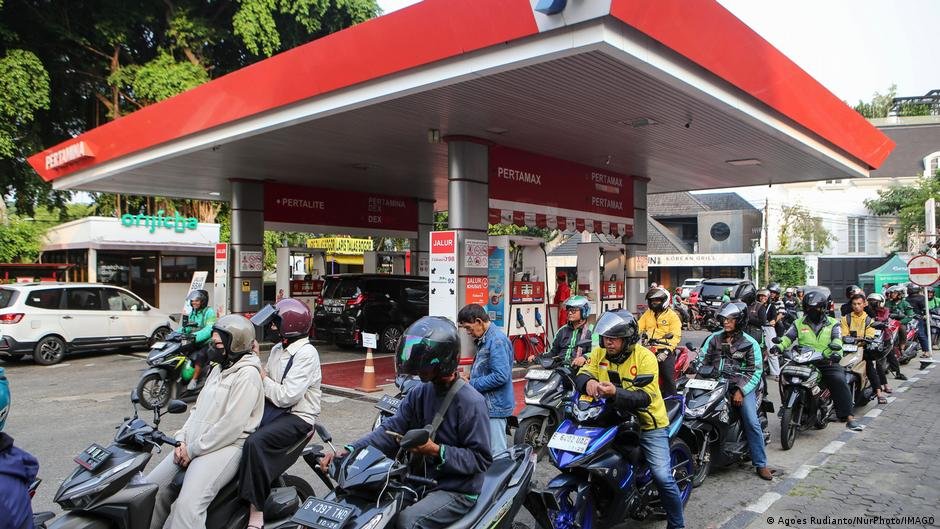
A similar picture is emerging globally, with noticeable increases reported in Pakistan and the Philippines. Across India, prices are mostly unchanged for now, as national oil companies absorb the additional costs.
What could push fuel prices even higher?
A lengthy blockade of two of the world’s most strategic maritime chokepoints would raise the odds of a new shock to global oil supplies.
Shipping companies could still reroute via southern Africa, but this adds up to four weeks to a voyage and hikes fuel costs by more than $1 million per trip, which are then passed on to consumers and businesses.
War-risk insurance premiums for the Red Sea have also surged since the Houthi threat.
To view this video please enable JavaScript, and consider upgrading to a web browser that supports HTML5 video
During the first weeks of the Iran war, the US and several other countries released millions of barrels of oil from their strategic oil reserves to help offset rising prices.
With these emergency supplies now significantly lower, some energy analysts warn that refilling efforts will be more expensive at current rates and could further spike oil prices.
June Goh, senior oil analyst at Sparta Commodities, warned in a research note this week that the US could put export curbs on crude oil or refined products to prioritize domestic consumers.
The US, the world’s largest oil exporter, hiked global deliveries during the war, which reached 5.6 million barrels per day in April, according to the US Energy Information Administration.
Meanwhile, the world’s largest oil importer, China, cut its purchases to near-decade lows in the first months of the war, partly due to lower demand and huge reserves.
With large commercial stocks slowly depleting, several analysts expect Beijing to ramp up imports in the second half of the year, which could further pressure prices.
Edited by: Tim Rooks