16 minutes agoShareSaveAdd as preferred on GoogleMakuochi OkaforBBC Africa, Lagos

 Chukwunaeme Obiejesi
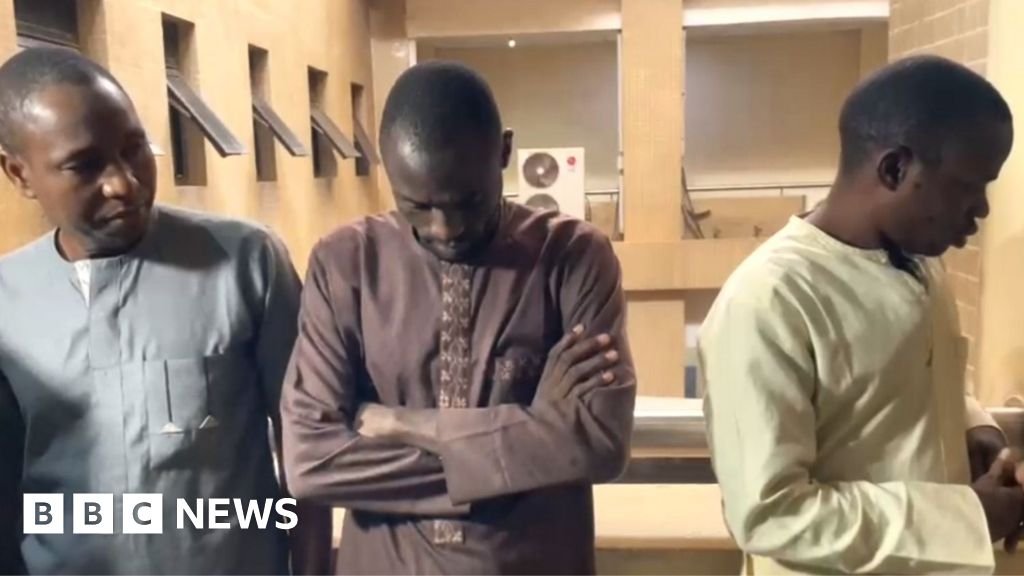
Three men in Nigeria have been sentenced to life in prison after pleading guilty to offences linked to the kidnapping of dozens of pupils and teachers in the south-western state of Oyo.
They admitted to concealing information about those behind the attacks and confessed to being members of an affiliate of the Islamist militant group Boko Haram.
The convictions come nearly two weeks after the authorities announced the rescue of 44 pupils and teachers abducted during co-ordinated attacks on three schools in Oyo’s Oriire district in May.
The abductions triggered protests from parents, teachers’ unions and rights organisations, all calling for stronger measures to protect schools.
Mass abductions by armed groups have become a common tactic across Nigeria in recent years – often requesting ransoms for the release of the captives. They tend to focus on soft targets such as schools, churches, mosques and remote villages.
Abdulrazak Umar – also known as Abu Khalifa or Abu Khalid – Yunusa Musa and Shamsu Adamu Sani, appeared at the High Court in the capital, Abuja, for the sentencing hearing.
They pleaded guilty to conspiring with other suspects between January and May 2026 to kidnap schoolchildren and teachers in Oyo state and knowingly withholding information about those responsible despite being aware of the plot.
Umar also admitted to providing training and instructions to jihadists through a WhatsApp group, as well as being involved in illegal mining.
The Oriire abductions in May drew particular concern because jihadist violence in Nigeria has historically been concentrated in the north-east of the country, where Boko Haram has been based for years.
Following the mission to rescue the Oriire abductees earlier in July, the authorities said they had made several other arrests, including a person considered to be one of the kidnapping kingpins.
Rachael Folawe Alamu, headteacher at Oriire’s Community Grammar School, spoke about the ordeal she and other teachers and students had faced during their 56 days in captivity deep in the bush, being frequently moved by the kidnappers at night often walking for several hours.
“We were in the forest in the open, most of the time, under the sun and under the rain with the children,” she said last week, three days after being rescued by the military.
She described how two of her male colleagues had been killed by the kidnappers – a teacher from her own school not long after their abduction and a teacher from the Baptist Nursery and Primary School in June.
“They killed them purposely because they thought it would force the hand of the government to provide them whatever they wanted,” she said at a briefing to journalists.
Nigeria faces an array of security challenges including criminal gangs – known locally as “bandits” who loot and kidnap for ransom – an Islamist insurgency, clashes over land and separatist unrest.
The continuing insecurity has become a major political issue ahead of the 2027 elections.

Go to BBCAfrica.com for more news from the African continent.
Follow us on Twitter @BBCAfrica, on Facebook at BBC Africa or on Instagram at bbcafrica