UN urges evacuation of 6,000 sailors stranded in Hormuz strait
The International Maritime Organization has said there are at least 6,000 seafarers on hundreds of vessels who are stranded in the Strait of Hormuz, unable to evacuate during the ceasefire.
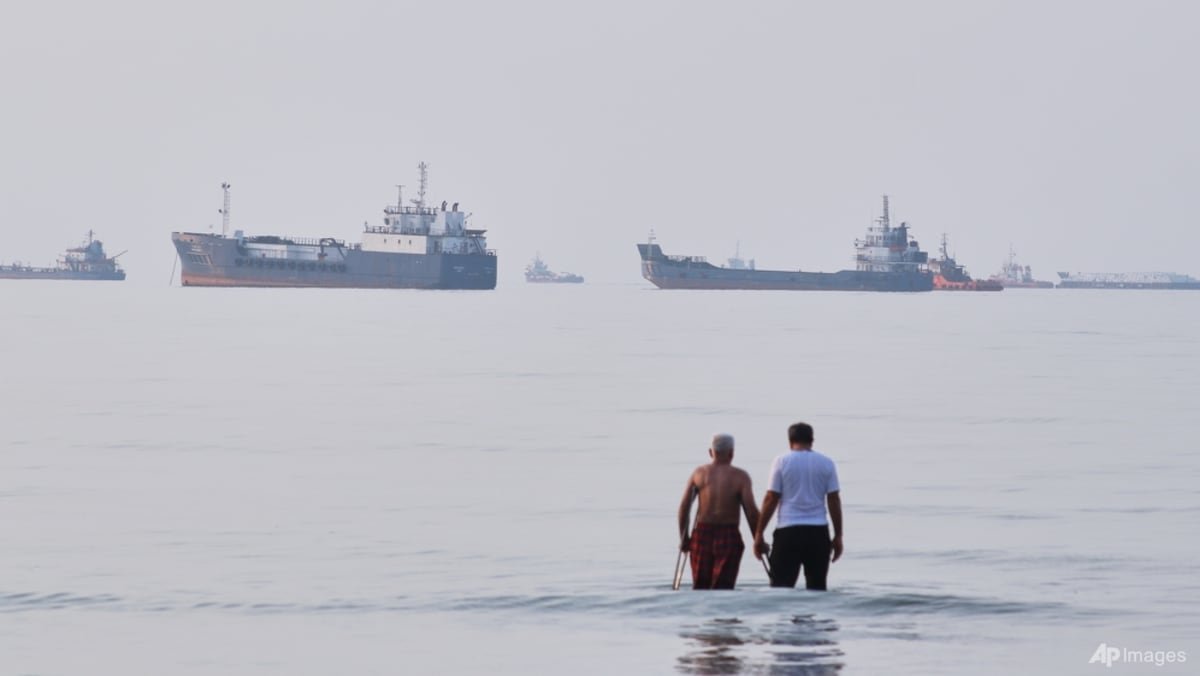
Two men wade in the waters of the Strait of Hormuz with vessels anchored in the background, off Bandar Abbas, Iran, on Jul 12, 2026. (File photo: AP/ISNA/Razieh Poudat)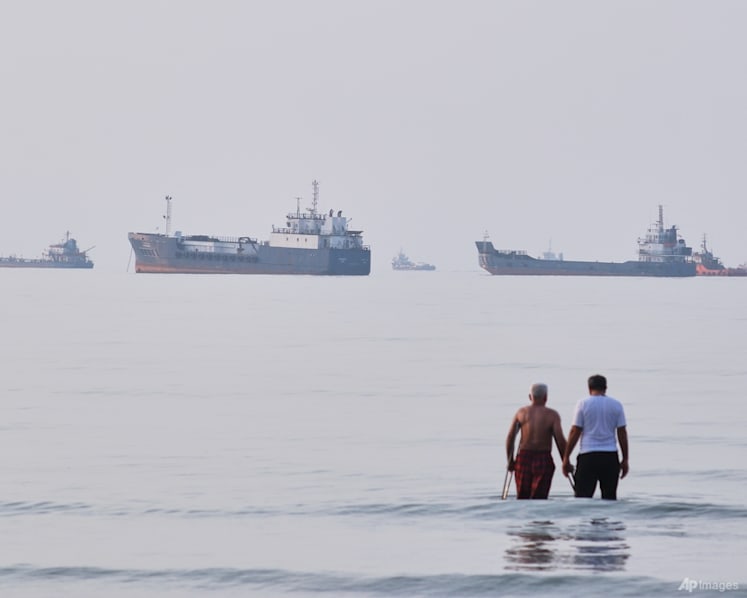
Read a summary of this article on FAST.
Get bite-sized news via a new
cards interface. Give it a try.
Click here to return to FAST
Tap here to return to FAST
FAST
GENEVA: The United Nations on Friday (Jul 24) urged countries involved in the Middle East war to help evacuate and repatriate around 6,000 sailors stranded in the Strait of Hormuz.
UN human rights chief Volker Turk called for urgent action to remedy the plight of thousands of stranded seafarers, who are facing “a dire humanitarian and human rights crisis” in the waterway, his spokeswoman Shabia Mantoo said.
The International Maritime Organization has said there are at least 6,000 seafarers on hundreds of vessels who are stranded in the strait, unable to evacuate during the ceasefire.
“Parties to the conflict should urgently work to facilitate safe passage for stranded seafarers to safely evacuate and disembark, as well as ensure the delivery of critical supplies,” Mantoo told a press conference in Geneva.
“Attacks against civilian vessels are unacceptable and must stop. They are protected under international humanitarian law.”
Turk is urging states, ship owners and all other relevant actors to “urgently ensure the protection of stranded seafarers”, including through consular assistance and providing essential supplies, “and by facilitating evacuations and repatriations”, Mantoo added.
The United States launched fresh strikes on Iran on Friday after Tehran-backed Houthi rebels attacked oil tankers in the Red Sea, marking an escalation that pushed crude prices past US$100 a barrel.
The US military insisted that the Strait of Hormuz – through which one-fifth of the world’s oil passed before the war – was “open for transit” after Iran pressed on with attacks on tankers using the route in a bid to strongarm them into paying for safe passage.

Source: AFP/rk
Sign up for our newsletters

Get the CNA app
Stay updated with notifications for breaking news and our best stories
Get WhatsApp alerts
Join our channel for the top reads for the day on your preferred chat app

Get bite-sized news via a new
cards interface. Give it a try.
Click here to return to FAST
Tap here to return to FAST
FAST