The Wim Wenders Foundation has announced on Wednesday that the 1975 film “Falsche Bewegung” (“The Wrong Move”), at the center of a headline-grabbing dispute between the German filmmaker and actress Nastassja Kinski, is being withdrawn from circulation for the time being.
German actress Nastassja Kinski has been trying for years to get filmmaker Wim Wenders to remove a scene from the movie. In the brief scene, her co-star Rüdiger Vogler (then over 30 years old) visits the 13-year-old in her bedroom, where she is lying on a bed wearing only panties. The man undresses down to his underwear and lies on top of her; he slaps her and then caresses her face.
“Although I didn’t know much at the age of 13, I could already tell that it wasn’t right,” Kinski recently told the German daily Süddeutsche Zeitung newspaper.
The acclaimed German director first reacted publicly to Kinski’s demands in 2024, stating that he understood her “current perceptions and feelings,” adding that he would not film the scene that way today.
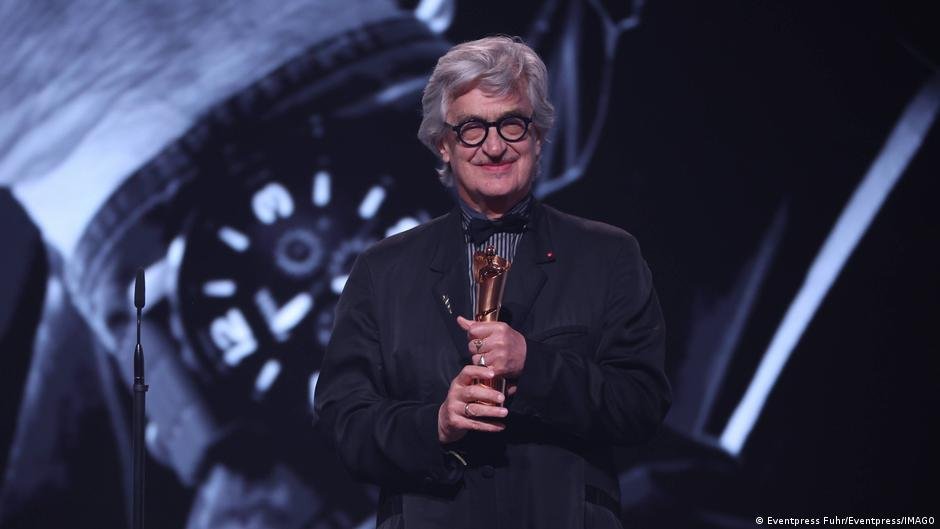
Through his acceptance speech for the Honorary Prize for Lifetime Achievement at the German Film Awards ceremony held in Berlin on May 29, Wenders turned the dispute into a wider public debate.
In his speech, he repeated that such a scene would not be done that way today, but noted that it also raised a larger question for him: How should one deal with films that were created in a different era?
“I can’t blame the 29-year-old young man I was then, 50 years ago, who made a film of his time; wanting, in a way, to capture the zeitgeist,” said Wenders, who also later collaborated with Kinski as the star of his acclaimed “Paris, Texas” (1984) and in “Faraway, So Close!” (1993).
Stating that he was aware that the scene causes pain to an actress “whom I deeply admired, and still do,” Wenders added that he remained hesitant to edit the film retroactively.
It is, he noted, a moral question, one that he didn’t want to deal with on his own. Wenders rather called on the German Film Academy to initiate a discussion regarding his dilemma, adding that he hoped younger filmmakers would contribute to the conversation.
Asked to comment on the debate, a press spokesperson told DW that the German Film Academy didn’t have a statement on the issue yet.
Should films be revised after completion?
For Wenders, altering completed films can create difficult precedents for archives, restorations and cultural history.
But several films have already been re-edited after their release, whether to make them shorter for commercial success in cinemas, more suitable for certain markets, or simply because the filmmaker determined it was better that way.
In his speech, Wenders referred to how Stephen Spielberg regretted modifying “ET: The Extra Terrestrial” for the 20th anniversary reissue of the sci-fi blockbuster. In the revised version, federal agents who were originally shown carrying guns were holding walkie-talkies instead.
“That was a mistake,” Spielberg said at a US Time magazine forum in 2023. “I never should have done that. ‘ET’ is a product of its era. No film should be revised based on the lenses we now are either voluntarily or being forced to peer through.” He realized that movies are “a signpost of where we were when we made them and what the world was like.”
From “Aladdin” (1992) to “Lilo and Stitch” (2002), many classic Disney movies have been edited in reissue editions or in the versions streamed on the Disney+ platform, to adapt to the sensitivities of modern audiences.
Even auteur filmmakers have revised their already released films. Ridley Scott re-cut his 1982 sci-fi hit “Blade Runner” in 2007; George Lucas made changes to his original “Star Wars” trilogy films for their 20th anniversary. Just a week after the release of “The Shining” (1980), Stanley Kubrick ordered projectionists to cut out a scene reviewers deemed confusing out of his iconic movie.
But in the end, such cases are not comparable to the debate surrounding “The Wrong Move,” since the corrections were not made at the request of a female actor who still suffers from the existence of a scene filmed when she was underage.
Wenders criticized for dodging responsibility
A majority of the critics who reacted to the Wenders’ speech felt the filmmaker was simply shifting the blame by asking the German Film Academy to open a broader debate on the issue, even though he is the one who has the last word on the film. He has the power to make the decision to remove it — especially if he really acknowledges that the scene remains painful for Kinski.
“This is not a matter of censorship or cancel culture, as he implied in his speech,” noted Kinski’s lawyer, Christian Schertz, who has since announced that a lawsuit would be filed soon if the scene was not removed.
“The matter is between him and Nastassja Kinski, but he has avoided direct confrontation with her for years,” wrote one critic in the German newspaper Tageszeitung .
Another observer noted that even though Kinski has always respectfully expressed her wish to have the images removed, in his speech, Wenders made her request sound like she was posing “a threat to the very freedom of cinema itself: the freedom of every single artist in the room. Anyone watching and listening to his words could only feel stunned,” states an editorial piece in the Süddeutsche Zeitung.
Another opinion piece in German daily Welt also agreed that it “would be symbolically right to remove the scene.”
By turning the issue into a public problem, Wenders “executed an absolutely clever maneuver,” pointed out Annette Brauerhoch in a Deutschlandfunk interview. “With this appeal to the public and to the Academy, he effectively dispersed the responsibility that rightfully lies with him, across thousands of people.”
Child actor exploitation controversies have shifted industry norms
There are continuing controversies over older films starring children in sexualized roles.
Louis Malle’s “Pretty Baby” (1978) starred a 12-year-old Brooke Shields, who appeared nude in the role of a child prostitute. The film was banned in some Canadian provinces, until 1995.
Shields also recounted how she felt “forced” and uncomfortable on the set of the 1980 film “The Blue Lagoon,” which was filmed when she was 14, while her co-star Christopher Atkins was 18. In the movie, the lead characters are shown nude and engaging in intimate scenes.
Olivia Hussey and Leonard Whiting were just 15 and 16 when they starred in Franco Zeffirelli’s 1968 “Romeo and Juliet.” They filed a lawsuit $500-million lawsuit against Paramount Pictures over a nude scene in the film. Even though a court permanently dismissed their case in October 2024, such disputes have led to significant shifts in how the entertainment industry works with children today.
Modern productions strictly enforce boundaries for underage actors, requiring the presence of guardians on set, obtaining explicit parental consent and utilizing professional intimacy coordinators to navigate sensitive material.
Edited by: Brenda Haas
Update: This article was updated after its initial publication, following the announcement of the withdrawal of the film on June 3, 2026.
About The Author