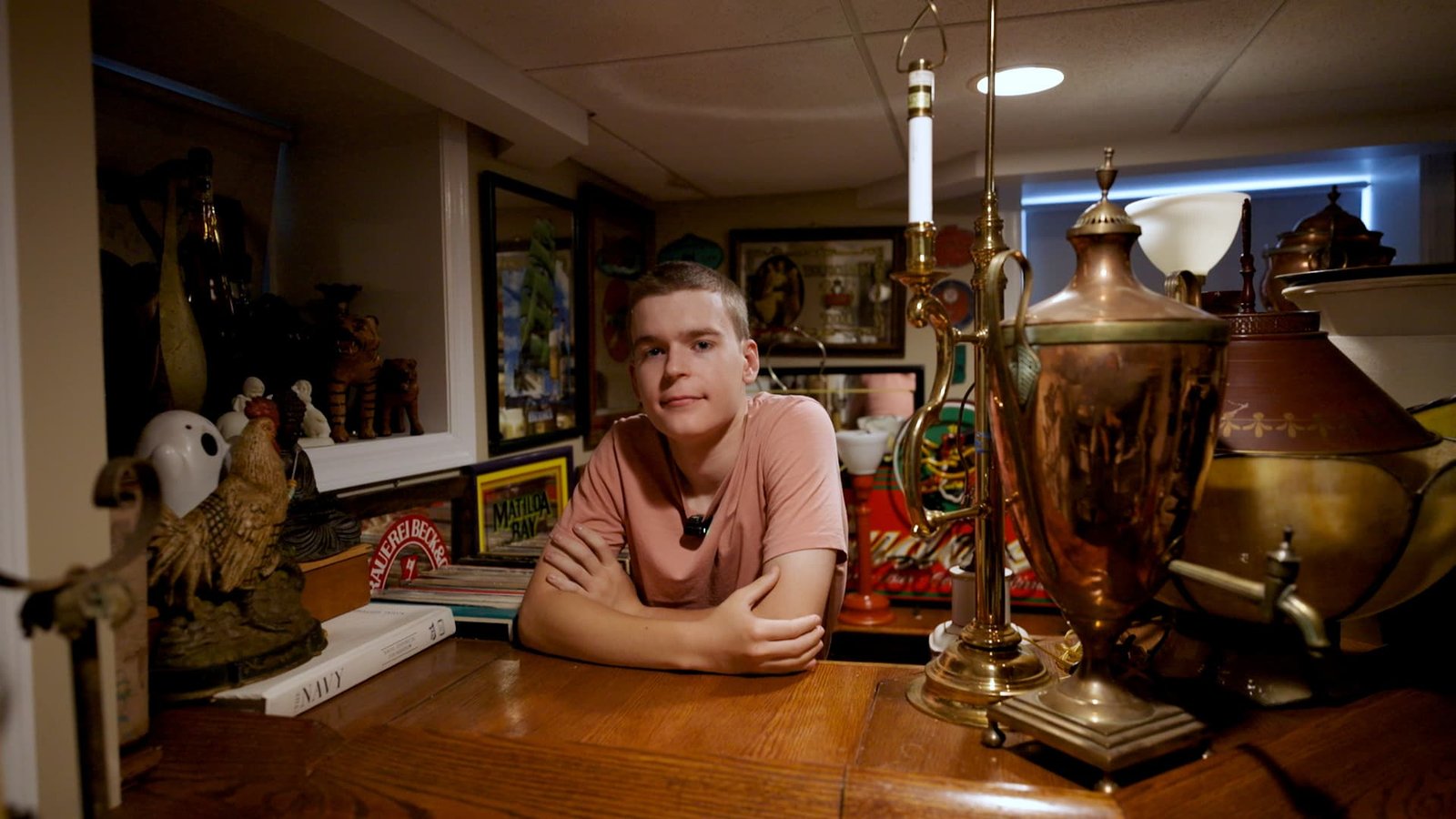
Some people’s trash becomes Michael Haskell’s treasure.
The 18-year-old buys abandoned storage units in the New York tri-state area and sells their contents. His business, Mike’s Unique Treasures, brought in about $135,000 in 2025 from eBay and auction sales, and another $85,000 from January through mid-July, according to documents reviewed by CNBC Make It.
Haskell’s entrepreneurial ventures didn’t start here. Growing up, he’d sell books for a few bucks on eBay or buy rarer Legos and hold onto them to turn a profit after they went out of production. “I never knew what I was going to be doing” career-wise, Haskell says. But “I always thought I was going to be doing something on my own.”
It’s a notion many young people share. Gen Z is contributing “disproportionately” to recent growth in business formation, according to a July report from the Bank of America Institute. In June, business application growth among Gen Z was more than double that of Millennials and Gen X. The bank’s internal data also points to founders “getting significantly younger,” the report says, noting that “with younger workers navigating a tough labor market, starting a business may be viewed as an alternative path to income growth and career advancement.”
Michael Haskell initially got into flipping storage units in the hopes that it would help him stand out from his peers when applying to colleges.Valentina Duarte | CNBC Make It
Haskell turned to storage units partly to differentiate himself from his peers. “I was looking around and seeing everyone have a 4.0 GPA and being a little self-conscious,” he says, since he didn’t have the same. As he thought ahead to college, he says he wondered: “How was I going to be different from the crowd?”
College admissions have been flooded: The Common App, which over a million students use each year to apply to various colleges, says it’s seeing the number of applicants and applications continue growing year-over-year. During the 2025-26 application cycle, the organization has seen a 2% increase in applicants and a 5% increase in total applications through March 1, compared to the same point last year.
A serendipitous rerun of “Storage Wars” was another influence for Haskell: “I was kind of hooked from there,” he says. In early 2024, Haskell says he bought his first abandoned storage unit for $10 and sold a carbon dioxide canister he found inside for $40. Before long, he was regularly juggling school with his side hustle.
“I would be going to lockers on Saturdays and Sundays and hustling to get back to school and back ready on Monday,” says Haskell, who graduated in June.
Michael Haskell juggled classes with his business while still in high school.Valentina Duarte | CNBC Make It
He can’t say what the future holds for his business: “Maybe the start of college will be the worst time for my storage unit business, or maybe the best time.” But that’s okay with him, he says because either way, he says, it’s been worth doing.
Looking for clues
Haskell sees some photos of the storage units he buys, but he doesn’t know beforehand exactly what they hold. That’s part of the thrill.
His most lucrative bet came early on, when he says he spent $450 on a unit he learned had belonged to disgraced Manhattan art dealer Andrew Crispo. It contained a painting by Man Ray, a leading figure of the Dada and surrealist movements, as well as several sketches by modernist painter Walt Kuhn, which cumulatively sold for $36,000.
Hitting that jackpot convinced his parents he was onto something, and it’s fueled him since, he says: “Every single time I’m driving to a locker, I’m thinking, is this going to be the next Crispo?”
Success in Haskell’s business boils down to piecing together clues about the life of the unit’s prior owner, he says. Memorabilia from someone’s alma mater, for instance, won’t necessarily fetch a lot of money, but suggests the owner was college-educated, which in turn bodes well for there being pricier items elsewhere in the unit, he says. “The way you make money is not by looking at stuff that’s directly in front of you,” he says. “It’s connecting the dots with various small items that may not be obvious.”
Michael Haskell sometimes hires outside help, or spends a few hours himself, to clear out the contents of a storage unit.Valentina Duarte | CNBC Make It
Haskell regularly scours a few websites that let users find and bid on abandoned storage units. With some friends, he also developed an AI tool that scans for big names attached to units.
After buying a unit, typically for $500 or less, he’ll spend a few hours clearing it out before transporting, sorting, listing, and storing the contents at his mother’s home in Englewood Cliffs, New Jersey, until they sell. Haskell says he sometimes uses tools like Google Lens or ChatGPT, or cross-references eBay listings, to estimate the going rates for items he’s discovered.
Today, he estimates he spends 20 to 25 hours a week on his business. In the hundreds of hours he’s poured into his business, he’s gotten a feel for some of the things people tend to hold onto, but there are often still surprises, he says. Every owner and “every unit is different.”
Home is where the inventory is
Walking through an eclectic mix of furnishings and tchotchkes in his mother’s home, it’s sometimes hard to distinguish what belongs to the family from what came from a unit: There are antique lighting fixtures, handmade wooden carvings of wild cats, myriad conch shells, and paintings of seemingly every size and artistic style imaginable.
Shelving units in the garage are tightly, but neatly, packed with containers of various items, from Nike sneakers to Cold War-era relics, labeled with a description or lot number scrawled in black marker. A long hallway connecting the garage to the home is lined with cardboard boxes galore, crates of vinyl records, some wooden furniture, and stacks of books piled high. Haskell estimates there are between 2,000 and 3,000 titles scattered throughout the house.
Michael Haskell stores much of his inventory in the garage of his mother’s home in Englewood Cliffs, New Jersey.Valentina Duarte | CNBC Make It
These items could stay in his mother’s home anywhere from two weeks to two years while he waits for them to sell. Or, if something from a unit catches his eye, like an ornate rug or lamp, he’ll keep it.
Haskell says watching his mother negotiate at estate sales in the past taught him how to ballpark prices. When he was still a minor, his mother helped out by signing for units. And she sometimes helped coordinate with buyers to make sales while Haskell was in class.
When juggling school and his business feels overwhelming, he thinks back to the high of the Crispo find, he says: “I had a good locker. So let’s get another one.”
Rethinking his own stuff
With two years of flipping units under his belt, Haskell no longer watches “Storage Wars,” which he says doesn’t accurately depict his work. “There’s a lot of research that goes into it that isn’t shown,” he says.
Haskell believes that, as he’d hoped, his business helped him get into college at Emory University in Atlanta; his college admissions essay centered on his experience trying to return a Purple Heart he found in one unit. He tracked down an address on a package in the same unit and showed up trying to return it. But his knocks and a letter went unanswered. He doesn’t want to sell the medal, so he’s holding onto it for now.
Michael Haskell says flipping storage units led him to re-evaluate his spending habits.Valentina Duarte | CNBC Make It
As he prepares to head south for freshman year, Haskell says he’s unsure what will become of his business over the next four years, or after he graduates. He expects it’ll be harder to continue his business in Atlanta because it’s not as densely populated as New York, and he’s looking into other business ideas, like building and operating storage unit facilities or flipping houses there.
He’s not shutting the door on Mike’s Unique Treasures just yet, but even if he doesn’t run his business long-term, he says he’s still learned a few lessons he’ll carry with him. The experience “has actually changed the way I look at stuff,” he says. He buys less, and he prefers to invest in older, secondhand items like furniture and clothing, which he says are often higher quality.
“Specifically in America, people buy way too much new stuff,” he adds. Accumulating more and more stuff for its own sake, or to have more material possessions, isn’t worth it, he says: If something isn’t valuable or sentimental, “learn to part with your stuff.”
About The Author