Trauma is usually treated as something you carry, manage, work through and sometimes ease. Rarely as something that could be stopped before it takes hold. That is what a group of researchers in Munich and Stockholm set out to test.
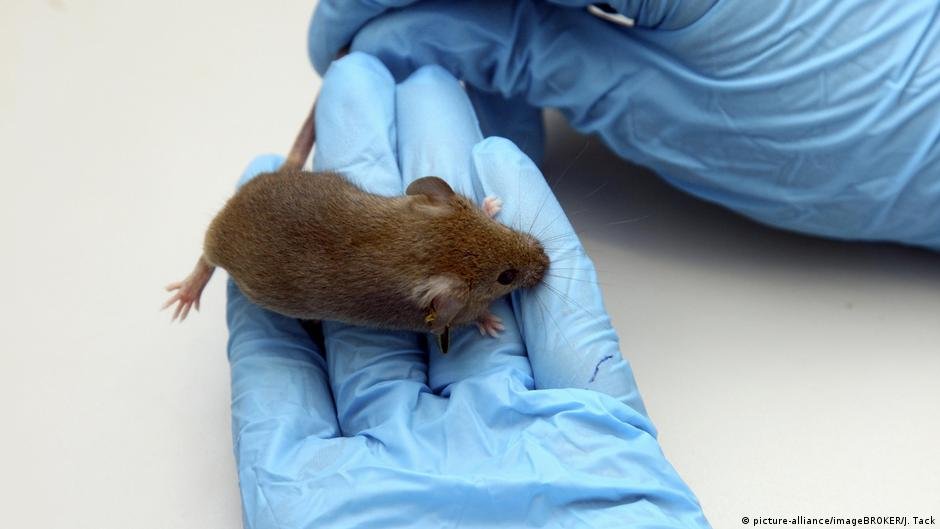
They began by making the first days of life hard. Mother mice were given far less nesting and bedding material than normal. That was enough to make mothers erratic, and the first days of life unpredictable. The mice raised in that hardship grew up looking perfectly healthy — with no obvious illness or anything visibly wrong.
Then researchers put them in groups and watched what happened. Repeatedly, these mice ended up at the bottom. Pushed into the lowest ranks of their social hierarchies, first as adolescents, then again as adults. A difficult infancy had left no visible mark — but it had set the position they would occupy for the rest of their lives.
When the researchers gave some of them a drug, the pattern disappeared.
The study, published in June, was led jointly by Mathias Schmidt at the Max Planck Institute of Psychiatry in Munich and Juan Pablo Lopez at the Karolinska Institutet in Stockholm.
How does childhood trauma affect the brain and body?
Start with cortisol, the body’s main stress hormone. When something stressful happens, cortisol floods the system. This is a standard, protective response.
What matters just as much is the off switch. The body needs to register that the danger has passed and wind the response back down. It does this through cortisol receptors — the parts of cells that detect the hormone and signal the system to stand down.
A protein called FKBP51 controls how sensitive those receptors are. Early hardship, the research suggests, causes the body to produce too much of it. That makes the receptors harder to trigger, so the signal to stand down never fully lands, and the stress response stays switched on far longer than it should.
Schmidt’s point is that none of this is something a person can feel.
“Your cortisol response is something you don’t feel,” he said. “You may think you’re very stress resilient, but your body is pumping out cortisol, and you don’t know.”
Can a drug block the effects of a difficult childhood?
The researchers used a compound called SAFit2, which blocks FKBP51. Given to the mothers during the stressful period, it reached the offspring through breast milk.
The treated mice went on to perform identically, within their social groups, to mice that had experienced no adversity at all — the social cost of a hard start erased.
The effect showed up in the brain as well as in behavior. The team screened gene activity across six stress-related regions and found that early adversity had left a broad imprint across them. The drug largely reversed it, most clearly in two: the medial prefrontal cortex and the nucleus accumbens, regions involved in emotional control and reward.
Can childhood trauma be reversed?
Not on this evidence.
In the Munich study, the compound was given during the stressful period itself, not after. What the study demonstrates is prevention, not repair.
Other studies have shown behavioral effects when the drug is used in adult animals, but full reversal of trauma already in place remains unproven. And prevention only works if you can identify who’s at risk before the harm is done — a problem this research doesn’t address.
Would this drug actually work on humans?
It’s too early to say.
The study tested male mice only, so it is not yet known whether the same holds in females. And SAFit2 remains a research compound 3 effective in animals but not yet developed or safety-tested for human use. Still, Schmidt sees a realistic path toward clinical application within the next decade, noting that stress mechanisms are “very, very similar in animals and humans.”
To view this video please enable JavaScript, and consider upgrading to a web browser that supports HTML5 video
How is trauma treated now, and why doesn’t it always work?
Existing treatments for stress-related disorders, including PTSD and trauma-linked depression, rely heavily on selective serotonin reuptake inhibitors, or SSRIs. These drugs target serotonin pathways. They work for many patients, but the mechanism is not fully understood, and a significant portion of patients don’t respond at all.
By contrast, targeting FKBP51 would mean treating the pathology at its source. “We would actually not only be treating the symptoms, but also the cause of the disorder by acting directly [on] a stress mechanism,” said Schmidt. “These types of drugs are currently not on the market.”
Longer-term, Schmidt envisions a more targeted approach: identifying individuals who are genetically vulnerable to stress, whose FKBP51 expression is already elevated, and treating that group specifically after acute traumatic events.
On the other end of the spectrum are people who, through genetics or prior experience, prove remarkably resilient even under extreme conditions, and may not need medication at all. Understanding who does need it, Schmidt said, and reaching them in time, is where the research is heading next.
What are the signs of unresolved trauma?
Schmidt is careful that trauma is highly individual, psychologically and physiologically. The rough guide he offers is duration, not intensity.
A strong stress reaction immediately after a car crash or a violent event is considered normal — the body doing its job. What concerns clinicians is when the response persists well beyond that: still unable to cross a street a month later, still unable to sleep six weeks on. Those are his illustrative examples rather than diagnostic thresholds, but the principle holds. If a stress response isn’t fading, it’s advisable to speak to a doctor.
That remains practical guidance for now. The drug, if it ever exists, is at least a decade away — and on current evidence, it would need to come before the damage, not after.
Editor: Kaukab Shairani
This article is an excerpt from our podcast Science Unscripted. You can subscribe to the podcast here.
About The Author