Skip next section What you need to know
What you need to know
- Germany is increasingly revoking protections for Syrian refugees, according to a government response in parliament
- Russia adds Germany’s Research Centre for East European Studies (FSO) to its list of ‘undesirable’ organizations
- A techno parade in Berlin takes place under heightened security following last month’s deadly attack during a Pride march
- Johannes Liebmann breaks the world record in the men’s 1,500m freestyle at the European Aquatics Championships in Paris
Below is a roundup of the top headlines from and about Germany on Saturday, August 15 and Sunday, August 16, 2026:
Don’t let the algorithm hide the news. If you rely on our team for trusted reporting, please take a moment to select us as your Preferred Source on Google so you’ll always see our verified news first.
For coverage of the wildfire in western Germany, head over to our dedicated blog.
Skip next section Germany increasingly revokes protection for Syrian refugees08/16/2026August 16, 2026
Germany increasingly revokes protection for Syrian refugees
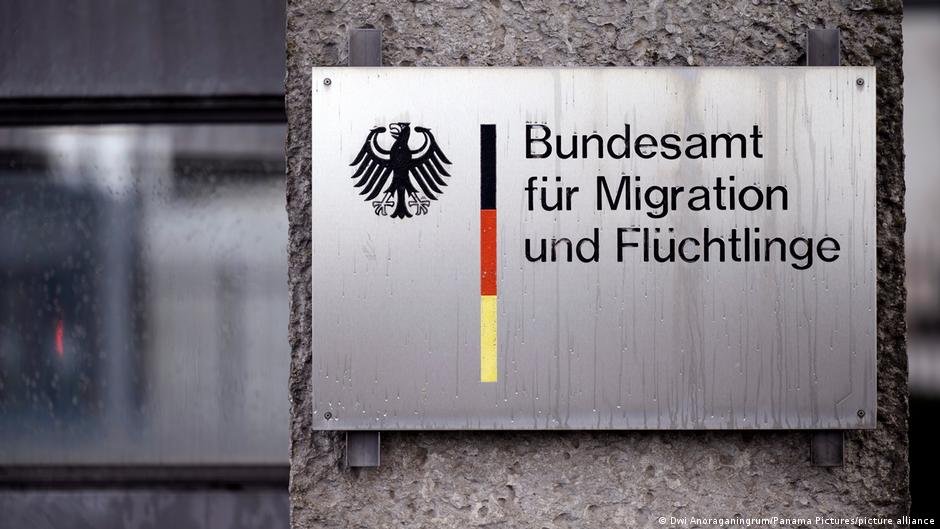
Germany has sharply increased the number of Syrians losing refugee or other protection status as authorities reassess cases following the fall of dictator Bashar Assad.
In the first half of 2026, 23.2% of 8,320 reviews ended with protection being revoked or withdrawn, according to a government response to a parliamentary question from the socialist Left Party.
The proportion has risen significantly from previous years.
In 2025, only 3.7% of reviewed Syrian cases resulted in protection being withdrawn, compared with 3.1% in 2024.
Most cases involved the loss of formal refugee status or subsidiary protection — a separate status accorded to refugees but with fewer protections.
Syrians who lose protection may still qualify for another residence permit, for example through employment, or potentially for German citizenship.
Even without another legal status, deportation to Syria remains difficult because returns require cooperation from Syrian authorities.
What is Germany’s debate around Syrian refugee returns?
Germany resumed deportations to Syria following Assad’s December 2024. They were the frist deportations since 2011, when Syria’s civil war broke out.
Earlier this year, Chancellor Friedrich Merz suggested that some 80% of Syrians living in Germany could return to Syria over the next three years.
The comments sparked considerable political backlash, with experts arguing the timeframe was unrealistic and others pointing to the large number of Syrians working in Germany’s already understaffed medical system.
Around 973,000 Syrians were living in Germany at the end of 2023, with some 700,000 having refugee status or subsidiary protection.
Over 200,000 Syrians have acquired German citizenship — making them the largest group of new naturalizations in recent years — and around 70,000 have permanent residence.
https://p.dw.com/p/5Iu3ESkip next section Welcome back!08/16/2026August 16, 2026
Welcome back!
Richard Connor | Saim Dušan Inayatullah Editor
We are continuing our coverage of news from Germany on Sunday, August 16.
https://p.dw.com/p/5Iu6dSkip next section We are pausing our coverage08/16/2026August 16, 2026
We are pausing our coverage
We will be back in the morning with more news from and about Germany.
Bis bald!
https://p.dw.com/p/5ItqGSkip next section Germany’s Weber clinches another European javelin gold08/15/2026August 15, 2026
Germany’s Weber clinches another European javelin gold
Germany’s Julian Weber has won European Championship gold in the javelin throw for the second time.
The 31-year-old overcame shoulder issues to finish ahead of his teammate Nick Thumm with his final throw of 90.40 meters.
“I just wanted to show that I’m a mental beast. I’m so glad it worked out. I’m incredibly happy,” Weber told ZDF public television.
Four years ago, he also secured a javelin gold at the European Championships in Munich.
Germany now sits third in the medal table with four golds, behind Italy and the United Kingdom.
On Friday, German sprinter Owen Ansah won the 200-meter final despite facing a potential ban from the National Anti-Doping Agency of Germany for allegedly failing to comply with a doping test.
https://p.dw.com/p/5IthISkip next section Germany’s Johannes Liebmann breaks world record in men’s 1,500m freestyle 08/15/2026August 15, 2026
Germany’s Johannes Liebmann breaks world record in men’s 1,500m freestyle
German teenager Johannes Liebmann set a new world record in the men’s 1,500 meter freestyle with a time of 14 minutes, 26.79 seconds at the European Aquatics Championships in Paris.
Liebmann, who is 19 years old, beat the previous record of 14 minutes, 30.67 seconds, that had been held by American Bobby Finke since the 2024 Olympics.
Liebmann set out a cracking pace from the very beginning, with spectators cheering him on to the finish line over the final 200 meters.
Hungary’s Zalan Sarkany won the silver medal, and Liebmann’s teammate Oliver Klemet won the bronze medal.
Liebmann, who was taking part in his first European Championships, won the 800-meter freestyle earlier this week too.
https://p.dw.com/p/5ItaeSkip next section President calls for end to fear after Berlin Pride attack08/15/2026August 15, 2026
President calls for end to fear after Berlin Pride attack
German President Frank-Walter Steinmeier has urged society to protect the LGBTQ+ community against attacks like the van ramming and stabbing near the Berlin Pride parade three weeks ago.
On July 25, an Islamist attacker drove a van into a crowd and then allegedly attacked people with a machete, killing a woman and injuring at least 31 people.
“In an open society, everyone must be able to follow their own path,” Steinmeier wrote in an article for the Zeit Online website.
This right applies “not only without fear, but also with pride; not only in private, but also in public,” he asserted.
“Everyone has the right to self-determination, particularly where it concerns the very core of every human being — the expression of one’s own personality, love and partnership, physicality and sexuality,” the head of state continued.
Steinmeier said the attack primarily targeted queer people, leaving many afraid.
He stressed that a robust democracy cannot tolerate this and must prioritize law enforcement, public safety and education.
The head of state made the comments as several smaller German cities held their own Pride events this weekend, including Darmstadt, Bayreuth, Krefeld and Münster.
https://p.dw.com/p/5ItURSkip next section Berlin’s Rave the Planet techno event starts with moment of silence08/15/2026August 15, 2026
Berlin’s Rave the Planet techno event starts with moment of silence
Kieran Burke Editor
As tens of thousands of partiers gathered for “Rave the Planet” — a Berlin music event labeling itself a political demonstration — there was quiet before organizers began blasting music.
The now high-security event began with a moment of silence for the victims of an Islamist attack on an LGBTQ+ pride event at the same spot three weeks ago.
Taking place under the motto “imagine love,” Rave the Planet is the first major party event in the German capital since the July 25 terror attack.
A Christopher Street Day (CSD) organizer invited to Saturday’s event called on those gathered to “be courageous” … “especially now.”
A large police presence is on hand to protect revelers, streets and paths have been closed and trams will not stop at regular destinations as a result of the event.
https://p.dw.com/p/5It8vSkip next section Rhine water levels fall again08/15/2026August 15, 2026
Rhine water levels fall again
Water levels on the Rhine River have fallen to new record lows, greatly disrupting river-borne cargo transport, as a prolonged dry spell continues in most of Germany.
According to the inland navigation agency WSV, the water level gauge at the Kaub bottleneck near Koblenz fell to 6 centimeters (2.4 inches) late on Friday and was 8 cm early on Saturday.
Until this year, the previous lowest level marked by the gauge was 25 cm recorded in 2018.
The gauge gives the depth over an arbitrary baseline near the bank of the river, but is an indication of the navigable depth at that point, which is around a meter (3 feet) deeper.
Most cargo previously transported on the Rhine has been shifted to road and rail, but these transport methods cannot fully compensate for the heavy loads carried by ships.
For this reason, companies have started to report disruption to their supplies, with chemical producers, utilities, steelmakers warning of higher costs, transport bottlenecks and reduced production.
To view this video please enable JavaScript, and consider upgrading to a web browser that supports HTML5 video
https://p.dw.com/p/5Isd5Skip next section Bonn authorities warn of potential danger after ordnance find08/15/2026August 15, 2026
Bonn authorities warn of potential danger after ordnance find
Authorities in the western city of Bonn have called on people to avoid an area of the Rhine riverbank in the Gronau district after ordnance was found there.
They said they would provide more information on any evacuation measures and street closures as it became available.
The ordnance was found not far from DW’s Bonn headquarters, meaning that any evacuation order could also affect the international broadcaster.
The danger level has so far been described as “slight.”
https://p.dw.com/p/5IsVkSkip next section Potentially toxic algae spread in Germany’s north08/15/2026August 15, 2026
Potentially toxic algae spread in Germany’s north
Health authorities have issued warnings to bathers as potentially toxic blue-green algae thrive in waters in the north of Germany.
When high concentrations occur in water, the algae can cause allergic reactions and irritation to skin and mucous membranes, and nausea and vomiting if ingested in sufficient quantities.
Satellite images from the Federal Maritime and Hydrographic Agency show large patches of the algae — which are, in fact, cyanobacteria — in the Baltic Sea off the coast between Rostock and Hiddensee island, extending across the sea to the Danish coast.
They have also been found in lakes in the state of Schleswig-Holstein. Swimming in them has been banned until, probably, Wednesday.
The government in the state of Mecklenburg-Vorpomerania has warned against swimming in the sea when bathers can no longer see their feet in knee-high water.
https://p.dw.com/p/5IsV6Skip next section AfD politician allegedly attacks 14-year-old — reports08/15/2026August 15, 2026
AfD politician allegedly attacks 14-year-old — reports
A politician from the far-right Alternative for Germany (AfD) is being investigated over an alleged attack on a 14-year-old boy found defacing one of the party’s campaign posters, the Spiegel newsmagazine and other media have reported.
The incident in the city of Stendal occurred just weeks before an election in the eastern state of Saxony-Anhalt.
The Spiegel cited the State Criminal Police Office (LKA) as saying that the boy, along with other youths, was caught in the act of damaging an AfD poster.
“Subsequently, there was a possible physical altercation between a person with immunity and the youths. In the course of this, a blunt instrument was allegedly used,” the LKA is quoted as saying.
It said one of the youths was slightly injured and received medical treatment.
Spiegel cited sources close to the boy as saying he suffered slight concussion, several bruises and injuries to his lip.
The public-service broadcaster MDR said the “blunt instrument” concerned was a baseball bat.
https://p.dw.com/p/5Irw5Skip next section Heightened security planned at Berlin techno parade 08/15/2026August 15, 2026
Heightened security planned at Berlin techno parade
The techno parade Rave the Planet is expected to draw tens of thousands of people in Berlin in Saturday, with police stepping up security at the event after last month’s Islamist attack on fringes of the Pride march in the capital.
Participants in the parade will also have to contend with high temperatures of up to 37 C (98.6 F).
Police say they will deploy at least one water cannon to spray a cooling water mist and free drinking water is to be made available along the route of the parade, organizers have said.
The parade is to start in the early afternoon and run until late in the evening.
It is planned to run along the main boulevard through the Tiergarten park, between the Brandenburg Gate and the Victory Column, close to the site of the July 25 attack, in which an Islamist assailant killed a woman and injured at least 31 people, some seriously.
A police spokeswoman said some 1,500 officers would be deployed at the event, with Berlin police supported by colleagues from the states of Brandenburg and Saxony-Anhalt.
The techno parade was first held in Berlin in 2022 to celebrate electronic music culture and has taken place every year since then.
Organizers have registered 300,000 participants, though police have put the number closer to 100,000 at previous parades.
https://p.dw.com/p/5Irx7Skip next section Russia lists another German research body as ‘undesirable’08/15/2026August 15, 2026
Russia lists another German research body as ‘undesirable’
On Friday, Russia’s Justice Ministry added the Research Centre for East European Studies (FSO), based at the University of Bremen, to its list of “undesirable” organizations
Such organizations are banned from carrying out activities within Russia’s territory.
The public prosecutor’s office claims that the FSO aims to lobby the US government to impose sanctions on Russia for its invasion of Ukraine.
According to the research institute’s website, it is “a place where the Eastern Bloc and its societies, with their specific cultures, are studied, and where current developments in the post-Soviet region are analyzed.”
Russia’s list of “undesirable” organizations already contains several German ones, including Deutsche Welle (DW), the German Historical Institute (DHI), which has been active in Moscow for many years, the German Academic Exchange Service (DAAD) and numerous political foundations.
https://p.dw.com/p/5IrwqSkip next section Welcome to our coverage08/15/2026August 15, 2026
Welcome to our coverage
Timothy Jones | Saim Dušan Inayatullah Editor
Guten Tag from DW’s newsroom on the banks of the — ever-drier — Rhine River in Bonn.
The most important story in Germany at present is, of course, the wildfire raging in the western Eifel region. We have a dedicated blog on the catastrophe that you can find here.
In our Germany news blog, we will thus be covering a range of other stories.
Russia has listed yet another German organization as “undesirable” as it continues to clamp down on free speech.
They include a techno parade in the capital, Berlin, which is to take place under heightened security after last month’s deadly attack during a Pride march at a nearby location.
The far-right Alternative for Germany (AfD) party is also in the news as one of its members is investigated after allegedly injuring a 14-year-old caught defacing a campaign poster.
Read on here for more on the latest from Germany.
https://p.dw.com/p/5Iru3Show more posts
About The Author