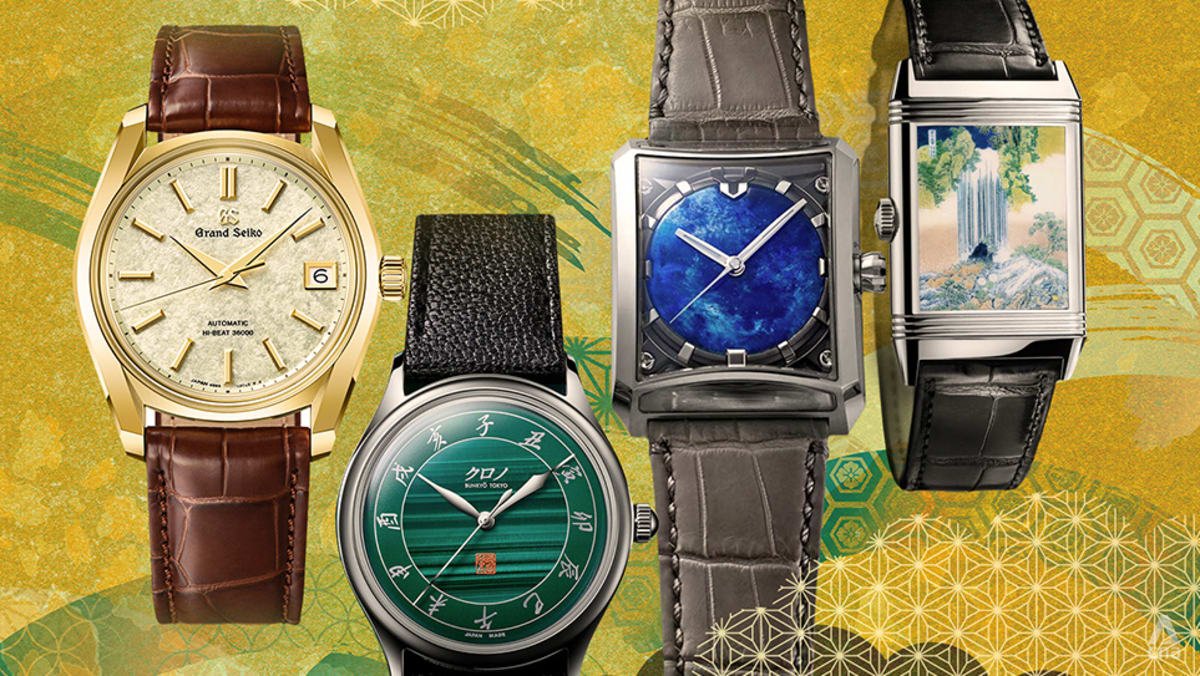
Why Japan has become one of watchmaking’s biggest sources of inspiration
From cherry blossoms and Hokusai prints to traditional lacquer and contemporary art, watch brands are looking to Japan for some of their most distinctive designs.
From seasonal landscapes and traditional lacquer to Hokusai and contemporary art, Japan continues to inspire watchmakers in very different ways. (Photos: Courtesy of respective brands; Art: CNA/Chern Ling)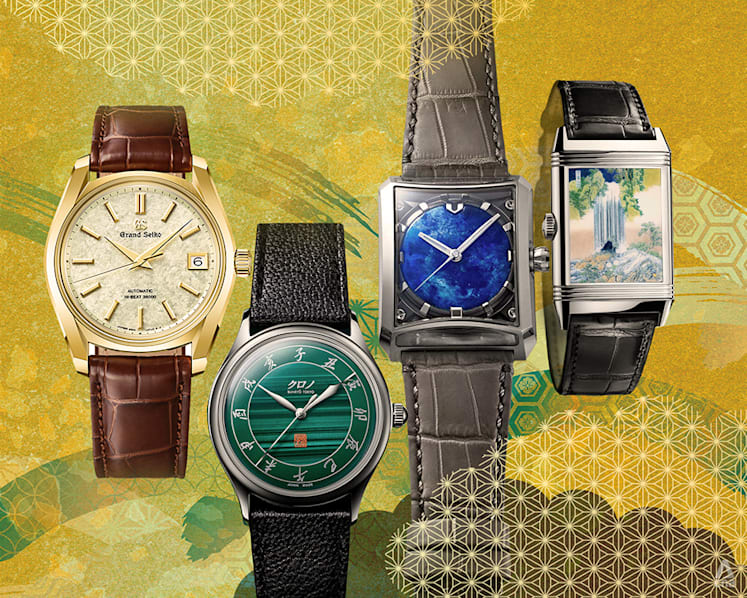
New: You can now listen to articles.

This audio is generated by an AI tool.

By
Read a summary of this article on FAST.
Get bite-sized news via a new
cards interface. Give it a try.
Click here to return to FAST
Tap here to return to FAST
FAST
In case you haven’t noticed, Japan continues to be ridiculously popular with travellers. In the first five months of 2026 alone, some 2.4m Southeast Asians – including 310,000 Singaporeans – visited the country.
Sakura season and the weaker yen probably had something to do with it. But it’s not like the rest of the year gets much quieter. Travellers queue for 10-seat omakase counters, hunt down the latest Pokemon Centre exclusives, make pilgrimages to Studio Ghibli locations and somehow return home with an extra suitcase filled with snacks from Don Quijote.
It’s safe to say that the world’s love affair with Japan shows no signs of slowing down. And the watch industry, it seems, has caught Japan fever as well.
However, this wasn’t always the case. For many Singaporeans – and Asians more broadly – our first Japanese watch was probably a digital Casio strapped to our wrist in primary school. It was affordable, reliable and hardy enough to survive playground rough-and-tumbles or kickabouts on the football field.
But over the past few decades, Japanese watchmaking has evolved almost beyond recognition.
Alongside household names like Seiko, Citizen and Casio, a flourishing community of smaller and independent watchmakers has emerged, including Kurono Tokyo and Minase, with creations that command waiting lists, sell-out launches and devoted followings around the world.
A schoolboy transported here from the 1980s would hardly recognise the landscape.
At the same time, some of watchmaking’s most celebrated names in Switzerland and beyond have been looking east. Some have embraced Japanese art, others traditional craftsmanship, while many have drawn inspiration from the country’s landscapes, seasons and philosophy.
From cherry blossoms and Hokusai prints to centuries-old lacquering techniques, Japan has become one of watchmaking’s richest creative playgrounds.
Here are five watch brands showing just how deeply Japan is influencing contemporary watchmaking.
GRAND SEIKO: THE OG JAPAN OBSESSIVE
No disrespect to Japan’s other great watch brands, but if the country had an official national watch, it’d probably be a Grand Seiko.
While plenty of brands have put cherry blossoms on a dial, Grand Seiko has built an entire design language around the country’s ever-changing seasons. Think of it as the horological equivalent of planning your Japan holiday around sakura forecasts, autumn foliage maps and the best onsen views of Mount Fuji.
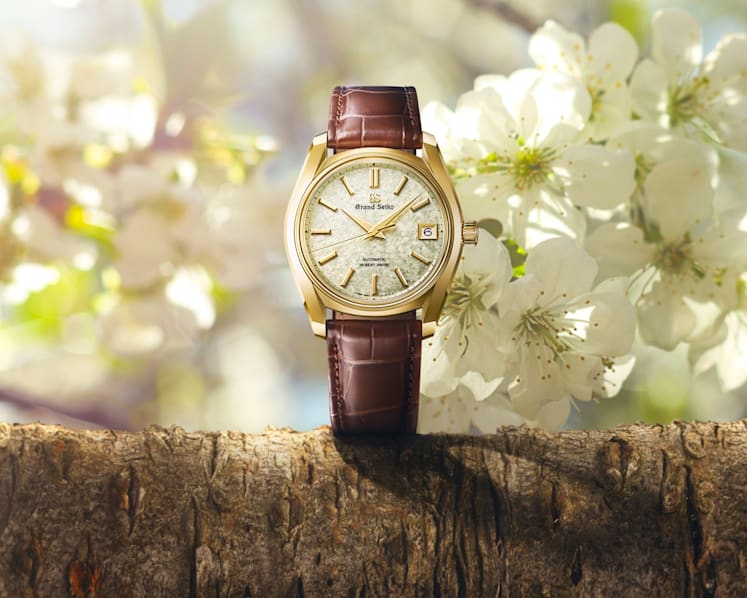
Take Grand Seiko’s new SBGH376 “Sakura-Wakaba”. Instead of celebrating cherry blossoms in full bloom – a familiar watchmaking motif by now – it captures the quieter moment when fresh green leaves begin to emerge as the last pink and white petals drift away.
Housed in Grand Seiko’s iconic 62GS case – rendered in 18K yellow gold for the first time on a non-limited 62GS model – the soft green dial shifts with the light, evoking young leaves shimmering in the morning sun. Beneath it beats the Hi-Beat Calibre 9S85 at 36,000 vibrations per hour.
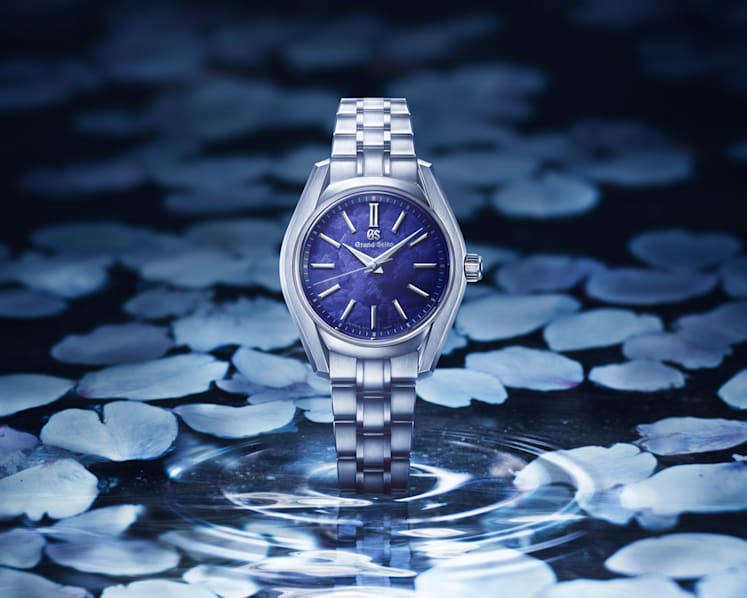
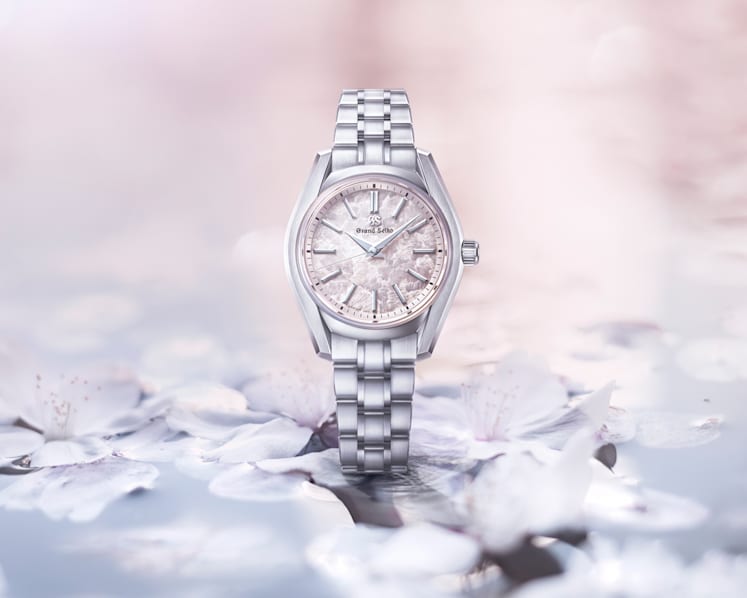
Then there are the new “Hana-Ikada” models, the SBGX363G and SBGX365G, inspired by one of Japan’s most poetic springtime sights. As cherry blossom petals fall onto rivers, they gather into delicate “flower rafts” that float downstream.
One captures the scene in soft pink daylight; the other imagines it beneath a moonlit blue sky. If anyone can make you feel emotional about fallen petals, it’s Grand Seiko.
JAEGER-LECOULTRE: HOKUSAI, BY WAY OF SWITZERLAND
If your idea of Japanese culture begins and ends with sushi, Demon Slayer and an annual pilgrimage to the Mega Don Quijote in Shibuya, allow Jaeger-LeCoultre to gently raise the bar.
In 2026, the Swiss watchmaker returned to Katsushika Hokusai, the legendary ukiyo-e master whose The Great Wave has probably appeared on everything from museum walls to your fridge magnets.
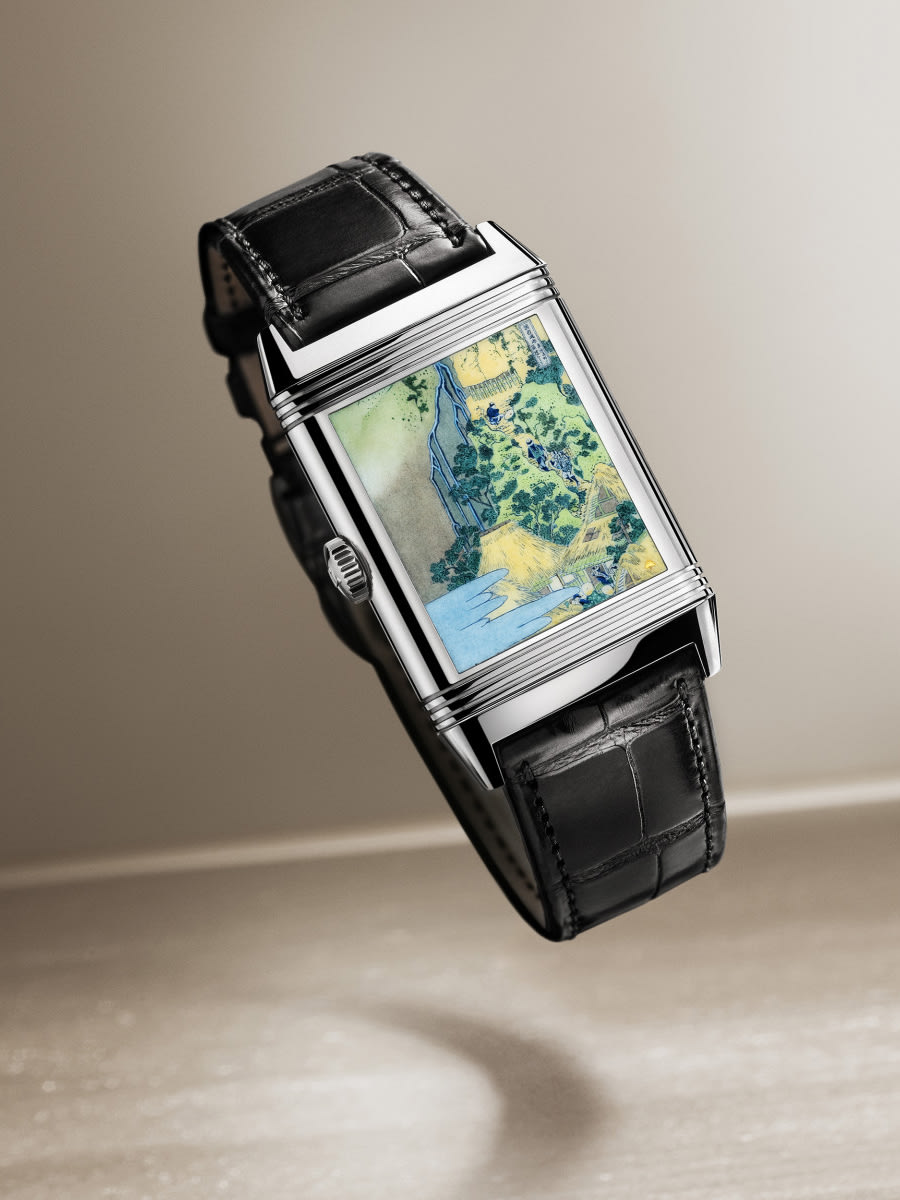
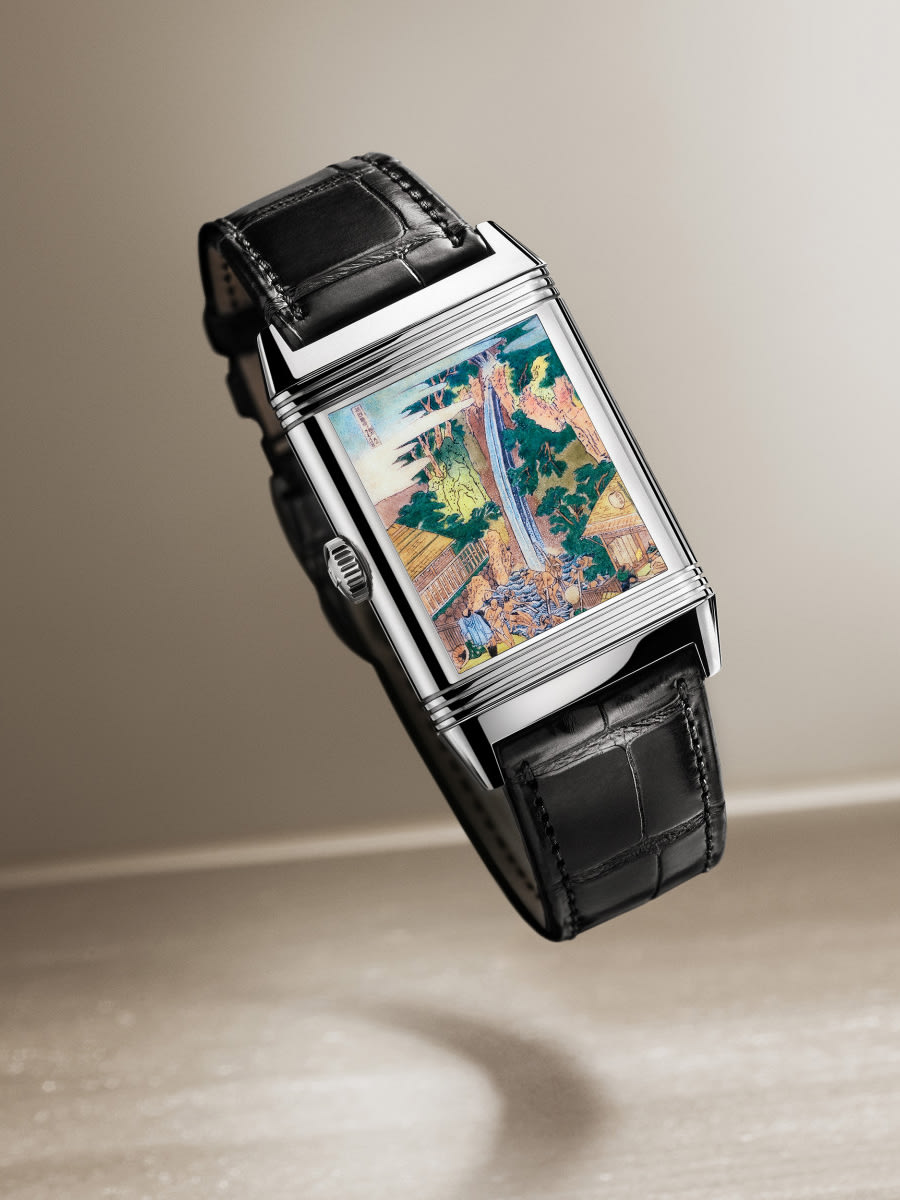
But rather than revisiting his most famous work, Jaeger-LeCoultre delves deeper into the artist’s lesser-known Waterfalls series, transforming four of its landscapes into miniature paintings on the Reverso.
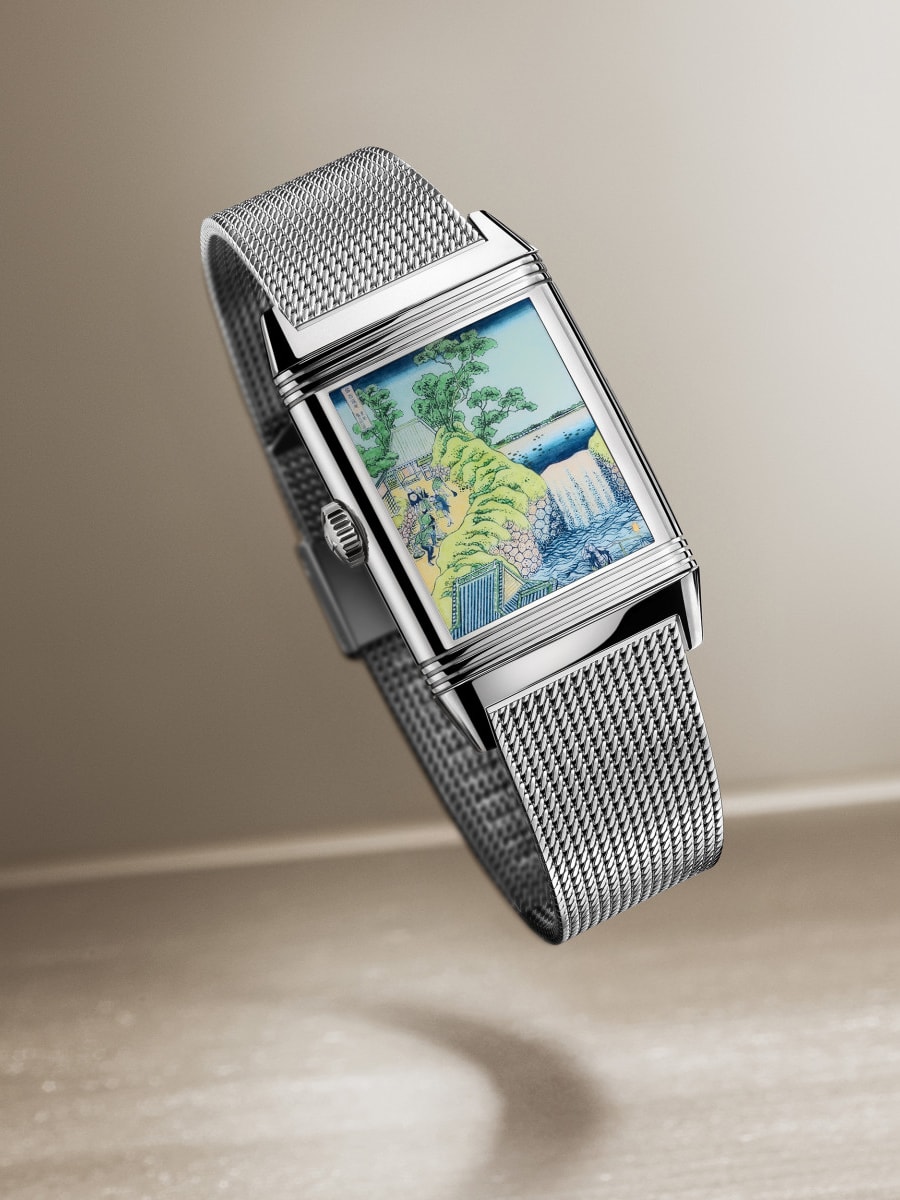
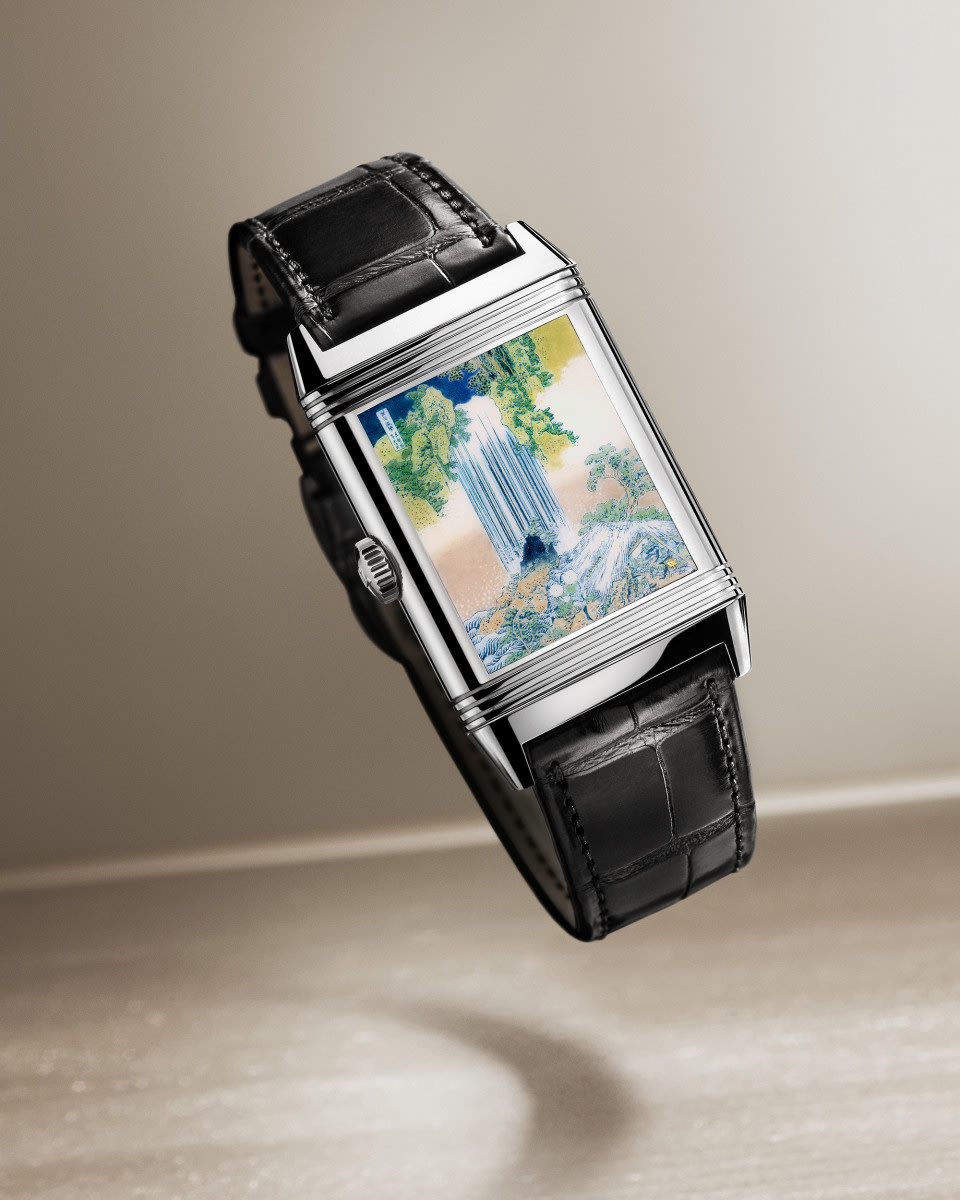
Each of the four limited-edition models pays tribute to a different waterfall depicted by Hokusai – from the thunderous cascade at Aoigaoka to the ethereal silken streams of Kiyotaki Kannon.
Flip the Reverso over and you’ll find painstaking miniature enamel recreations of the artworks on the caseback, while the front combines guilloche with translucent enamel inspired by each scene. It’s less a timekeeping device than a tiny art gallery strapped to your wrist.
The real flex, however, isn’t the white gold case or the fact that only 10 pieces of each version exist. It’s the craftsmanship. Each watch requires almost 100 hours of work from Jaeger-LeCoultre’s Metiers Rares artisans, combining hand-guilloche, enamel and miniature painting.
Perhaps that’s why the tribute feels so natural. Nearly two centuries after Hokusai helped shape how the world sees Japanese art, his influence has found another canvas in one of Switzerland’s most recognisable watches.
Not bad for an artist whose work many of us may first have encountered on a Uniqlo T-shirt.
KURONO TOKYO: THE CULT JAPANESE WATCH BRAND HIDING IN PLAIN SIGHT
Japan has a word for seemingly everything. Forest bathing? Shinrin-yoku. Moon viewing? Tsukimi. Even green isn’t just… well, green.
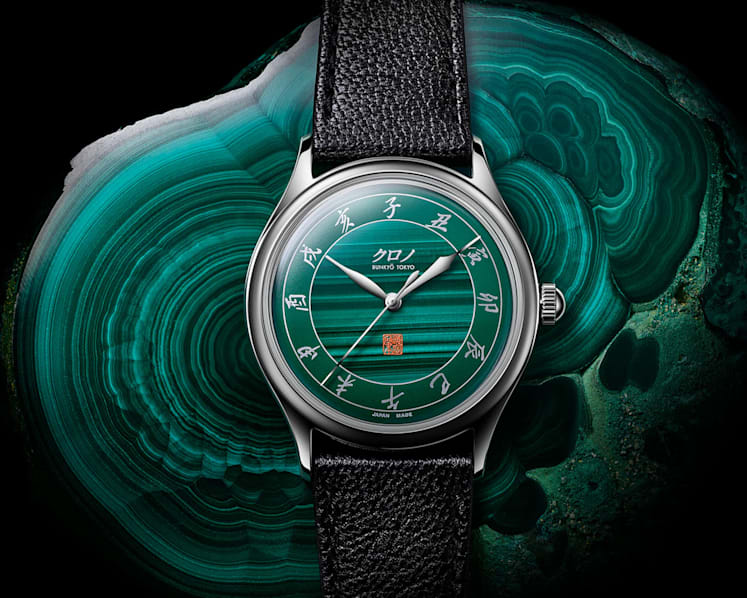
For its 2026 anniversary watch, Kurono Tokyo looked to rokusho, a traditional green pigment derived from copper oxide and prized in Japanese art for more than a thousand years, to create the Special Projects Malachite.
Watchmaker Hajime Asaoka – one of Japan’s most respected independent horologists – has long kept the pigment in his atelier. Here, he pairs hand-mixed rokusho with natural malachite to create Kurono’s signature convex dial.
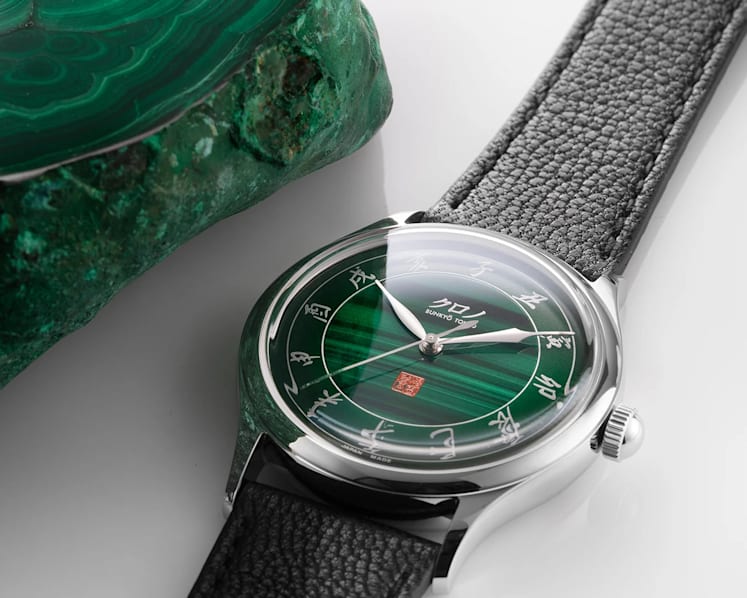
The result is mesmerising, with rich emerald tones and natural veining that make every dial subtly different. Only two in every 10 malachite dials meet Asaoka’s standards, with those selected personally approved and stamped with his vermillion seal. That may be an even tougher cut than getting a table at one of Tokyo’s most coveted restaurants.
Then there are the hour markers. Forget Arabic numerals or Roman indices – this watch uses the Eto, the 12 signs of the traditional Japanese zodiac, which differs slightly from its Chinese counterpart. Here, the Eto marks not just time but direction.
Released through two worldwide order windows in May 2026, the Special Projects Malachite is now fully spoken for.
MINASE: MAKING LIGHT ITSELF PART OF THE DIAL
The Japanese have a remarkable knack for romanticising life’s quietest moments. A cup of matcha becomes a ceremony; autumn leaves inspire annual pilgrimages; even changing light can become something worth pausing over.
Minase clearly got the memo.
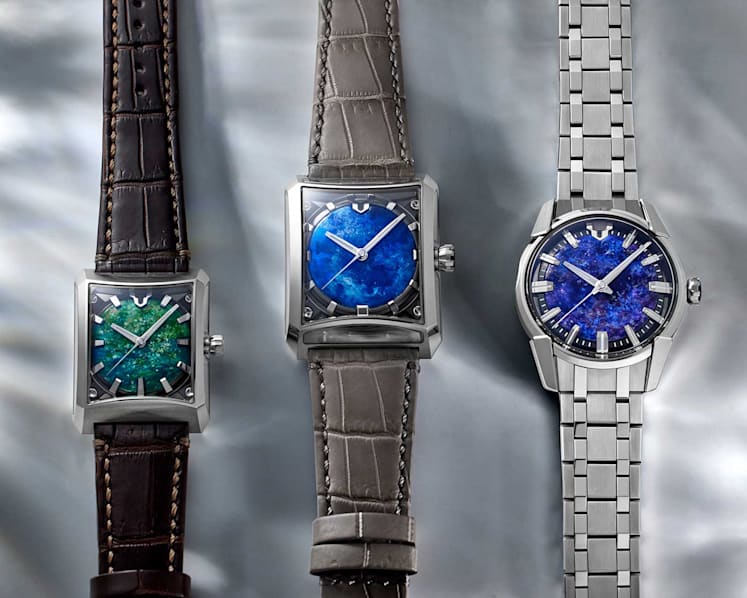
To mark its 20th anniversary, Minase teamed up with contemporary artist Towa Takaya to create the “Yusai” dial collection, a trio of watches designed around the changing effects of colour and light.
The name itself says plenty: Yu evokes the slow, eternal flow of time, while sai celebrates colour as it shifts with light, angle and perspective. In other words, these aren’t dials you glance at once. They keep pulling your eye back.
Takaya creates the effect by layering custom pigments into luminous, multidimensional compositions that shift with the light. One model conjures swirling nebulae and snowy landscapes through shimmering mother-of-pearl.
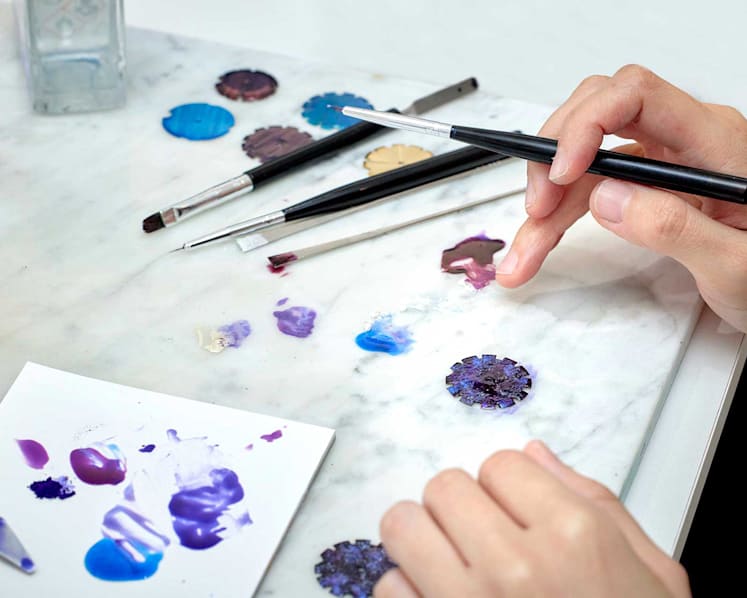
Another draws from Takaya’s Blue Series, creating an almost weightless sense of depth that works particularly well with Minase’s signature case-within-a-case construction, where the hour markers appear to float in mid-air.
The third takes its cues from Japanese gardens, with soft cherry-blossom hues rippling across the dial like petals on water.
It feels distinctly Japanese without reaching for the obvious Mount Fuji-and-sakura shorthand. Instead, the appeal lies in fleeting moments – a breeze through a garden, changing light or a colour that looks ever so slightly different every time you lift your wrist.
RESSENCE: WHERE ANCIENT JAPANESE CRAFT MEETS OUTER SPACE
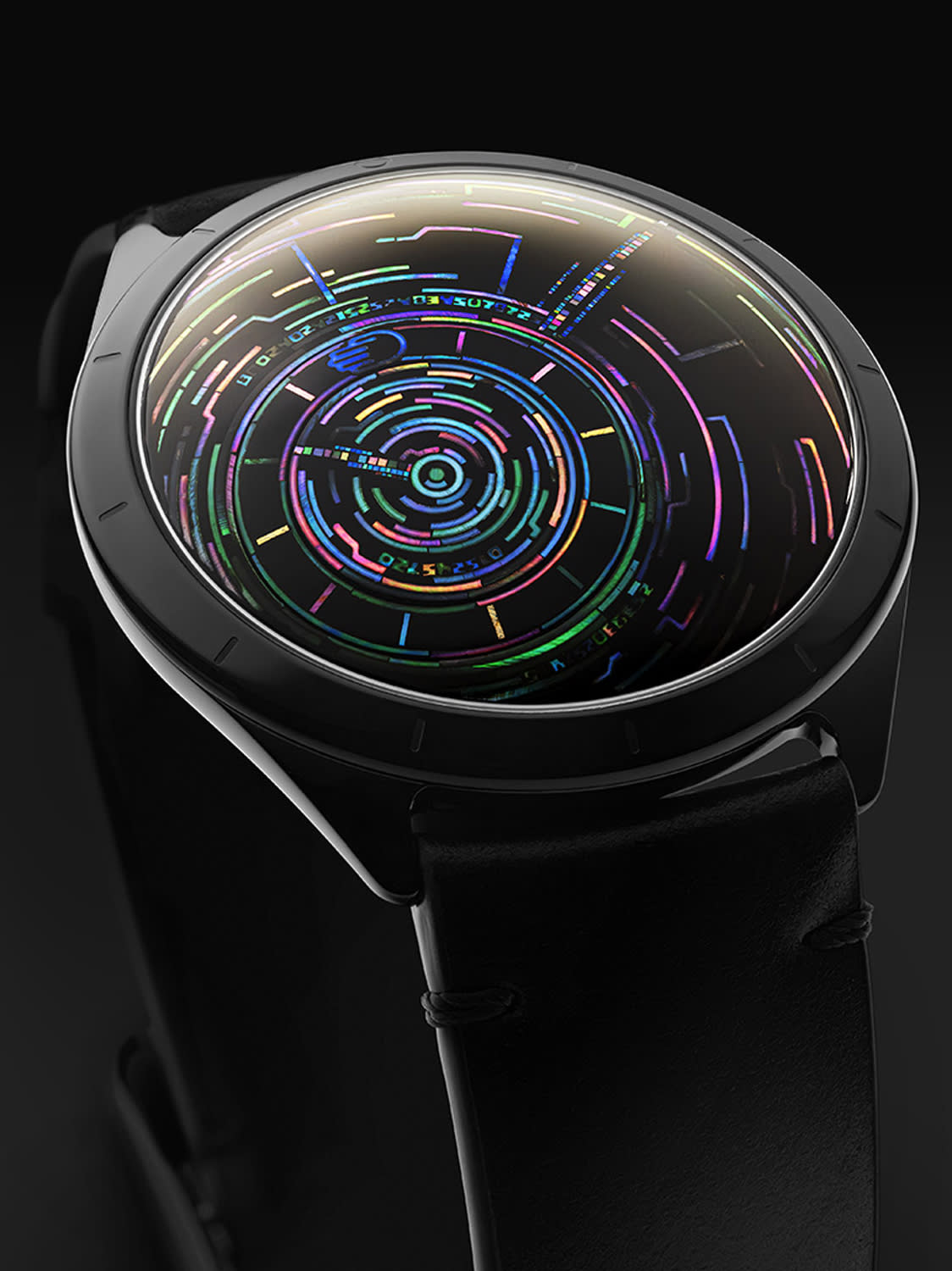
If Hayao Miyazaki ever directed 2001: A Space Odyssey, we’d imagine it looking something like Ressence’s Type 9 IKE.
The Belgian watchmaker enlisted Japanese lacquer artist Terumasa Ikeda to transform its minimalist Type 9 into something that feels less like a wristwatch and more like an alien artefact.
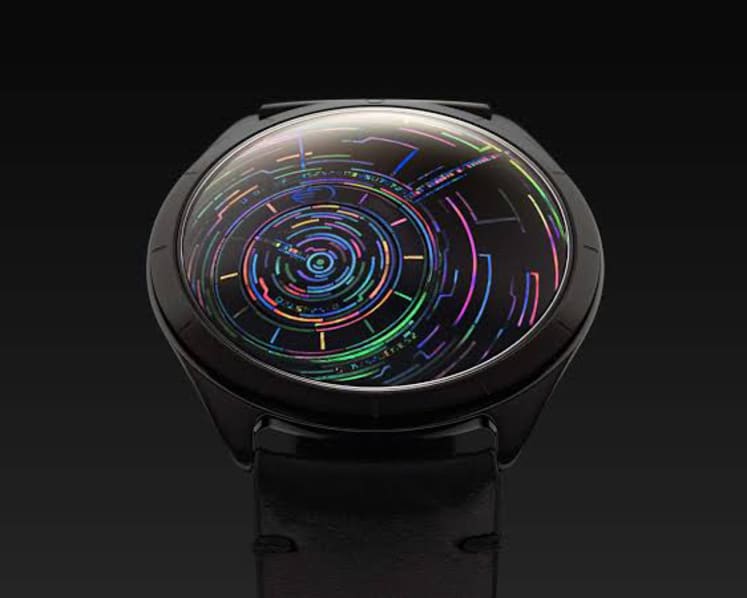
Using traditional urushi lacquer and raden, or mother-of-pearl inlay, Ikeda creates an abstract composition that seems to hover, shimmer and shift as Ressence’s signature rotating convex dial moves beneath it.
The result? A watch that looks uncannily like a message beamed back from another civilisation. Hello, Disclosure Day.
Ironically, achieving this futuristic vision required some decidedly old-school patience. Mother-of-pearl is naturally flat and notoriously fragile – “like eggshell”, as Ikeda describes it.
To fit the curved dial, each wafer-thin piece had to be soaked and gradually bent into shape before being positioned by hand. It’s the kind of painstaking work that would test anyone’s patience.
Ikeda’s work occupies the space between tradition and technology. While he embraces modern tools such as laser-cutting to prepare intricate designs, every final composition is assembled by hand using techniques that have been passed down through generations.
The Type 9 IKE, limited to just eight pieces, isn’t simply Japanese craftsmanship decorating a Belgian watch. It’s a conversation between two contrasting design philosophies – one rooted in tradition, the other looking firmly to the future.
Perhaps that is ultimately what makes Japan such fertile territory for watchmakers: a deep respect for tradition coupled with an appetite for reinvention.
Source: CNA/bt
Get bite-sized news via a new
cards interface. Give it a try.
Click here to return to FAST
Tap here to return to FAST
FAST
About The Author