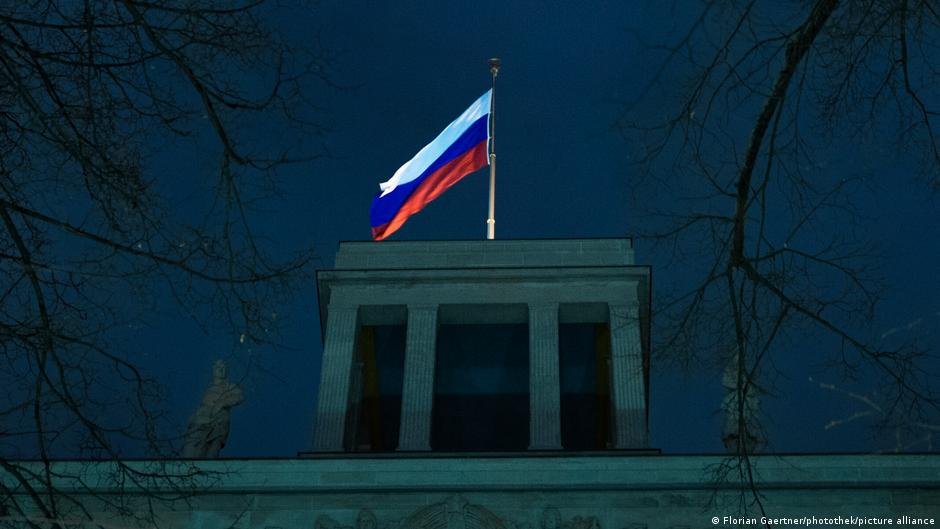
In the past few weeks, Germany has seen a drone attack on Leipzig Airport and an arson attack near defense contractors in Bavaria, while explosive devices and pyrotechnics were found at two substations in Brandenburg and North Rhine-Westphalia.
As the country enters a September featuring three vital state elections, attacks on critical infrastructure appear to be on the rise, and defense contractors are apparently in the crosshairs.
After some initial hesitation, the German government has now publicly blamed Russia for the Leipzig attack, but could the Kremlin also be behind the other attacks?
“We are not at war, but we are no longer at peace either,” said Chancellor Friedrich Merz of the conservative Christian Democratic Union (CDU) in September 2025 already.
Interior Minister Alexander Dobrindt, of Bavaria’s conservatives, the Christian Social Union (CSU), has also warned that Germany has now become a “daily target of hybrid warfare,” referring to measures that are not military, but are nonetheless meant to destabilize a country and unsettle the population — including cyberattacks, espionage, propaganda, disinformation and acts of sabotage.
The developments seem to have alarmed the German people. Some 56% of the eligible voters polled now see Germany’s security as threatened by Russia, according to the latest Deutschlandtrend, for which the polling firm infratest-dimap conducted a representative survey of 1,319 German voters for public broadcaster ARD between August 31 and September 2.
East Germans are significantly less concerned
But not all Germans feel this way. Nearly half of citizens in eastern Germany, for instance, feel only slightly threatened, or not at all, by Russia. The same goes for supporters of the far-right Alternative for Germany (AfD), some of whose prominent figures have expressed support for Russia. The survey found that two-thirds of AfD supporters consider the threat from Russia to be low.
The same divisions in the German population emerge on the question of arms exports to Ukraine. Just over half of Germans consider the country’s military support for Ukraine appropriate, or think it should even be expanded, but for just over four in ten Germans, that support goes too far. Opposition to sending weapons to Ukraine predominates in eastern Germany and among AfD supporters.
AfD holds steady lead nationwide
The eastern German state of Saxony-Anhalt will elect a new state parliament on Sunday, and the AfD continues to be way ahead in the polls and could even win an absolute majority — usually unheard of in German elections.
The party also continues to enjoy strong support at the national level. The new poll suggests that if a general election were held this coming Sunday, the AfD would receive 27% of the vote, one point less than in August, which would make it the largest party in the lower house of parliament, the Bundestag.
The CDU/CSU, meanwhile, remains in second place at 21%, well below the 28.5% it managed in the Bundestag election in February 2025. The Greens would receive 15%, while the center-left Social Democratic Party (SPD) and the socialist Left Party have seen slight improvements compared to August, reaching 13% and 12%, respectively (+1 each). All other parties would fail to clear the 5% threshold.
Unpopular government, unpopular chancellor
The latest poll also suggests that the current governing coalition of the CDU/CSU and the Social Democrats would no longer have a majority if an election were held now.
Only 15% of those surveyed are satisfied with the government’s performance, and even among supporters of the governing parties themselves, a majority is disappointed with the incumbent coalition’s performance. Chancellor and CDU leader Friedrich Merz fares even worse: Only 13% approve of his work.
This is consistent with how citizens assess the CDU/CSU’s competence.
Also notable is that significantly fewer voters believe the CDU/CSU is capable of finding solutions in key policy areas. While just over a year ago, 31% still considered those parties competent to ensure peace in Europe, that figure has now dropped to just 23%.
A similar loss of confidence in the CDU/CSU is apparent elsewhere: On asylum and refugee policy, on pension reform, and on climate and environmental policy.
On the topic of the economy, the CDU/CSU still enjoys the highest level of public confidence at 24%, but here too, the figure has dropped significantly from 31% in February 2026.
In eastern Germany, the AfD is now the party in which citizens place the most confidence across all policy areas surveyed, with the exception of climate and environmental policy.
To view this video please enable JavaScript, and consider upgrading to a web browser that supports HTML5 video
Economy causing concern
For many months now, Germans have viewed the economic situation as the most pressing problem to be solved. As many as 79% of respondents in the ARD Deutschlandtrend survey say the economy is doing poorly or very poorly. Here, too, however, there are significant differences depending on party affiliation.
As many as 41% of SPD supporters view the economic situation as good or very good, and 37% of Green Party supporters say the same. In contrast, only 3% of AfD supporters share this view — they are much more pessimistic, with 96% saying the economy is poor or very poor.
This article was translated from German.