24 minutes agoShareSaveAdd as preferred on GoogleLisa LambertWashington

 Getty Images
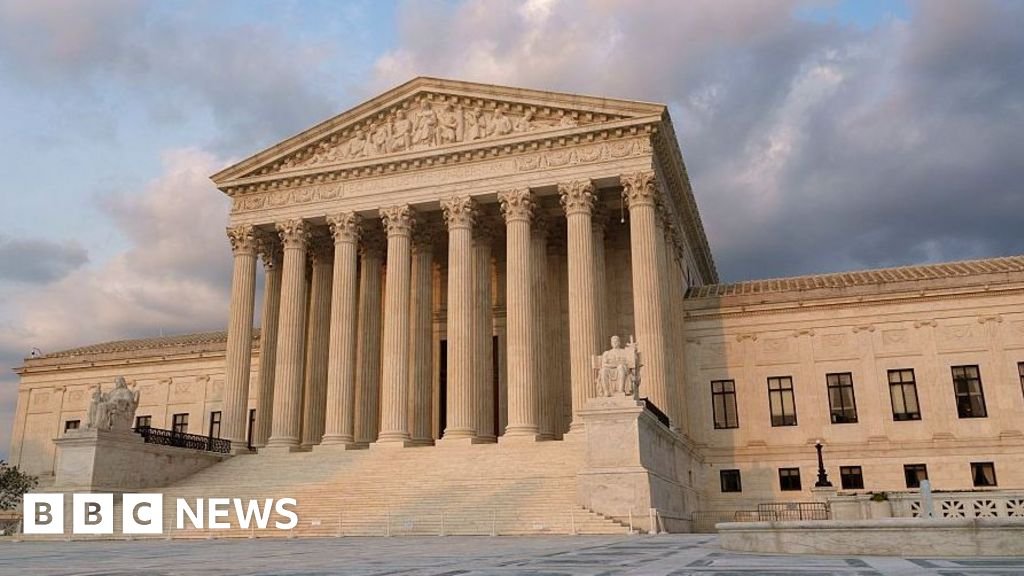
The US Supreme Court has rejected President Donald Trump’s plan to restrict voting by mail before November’s midterm elections, in a setback for the White House.
The justices upheld a federal judge’s order that had temporarily blocked the US Postal Service (USPS) from moving forward with new requirements for postal ballots.
But this decision is unlikely to be the high court’s final word on the matter. Justice Brett Kavanaugh, a conservative, agreed with Monday’s ruling, but indicated he might later rule in favour of Trump.
Trump, who argued the rules would help combat electoral fraud, signed an executive order in March directing the USPS to deliver ballots only to voters on lists of citizens.
Some states and critics had argued that the move violated states’ constitutional rights to run elections.
Justice Kavanaugh wrote in the opinion that there was “at least a fair prospect that the final rule falls within the Postal Service’s statutory authority”. But he argued that “applying the rule in the 2026 elections would be arbitrary and capricious”.
Justices Samuel Alito and Clarence Thomas, also conservatives, dissented. They wrote that the challenge to Trump’s order was a “Hail Mary pass” that was unlikely to be successful ultimately.
“The Postal Service has broad authority to regulate the mail,” they added.
Since returning to the White House, Trump has sought to restrict voting by mail. He has long claimed it allows non-citizens to cast ballots and is prone to fraud. He has previously made unsubstantiated claims that he lost the 2020 election owing to widespread electoral fraud.
In March’s executive order, Trump directed USPS to make new rules including developing envelopes with bar codes and to “not transmit mail-in or absentee ballots from any individual unless those individuals have been enrolled on a State-specific list”.
Twenty-three states and Washington DC had sued to stop Trump’s order.
The postal workers’ union also said clerks could not be trained in time for the election, and a national security group raised concerns about military members voting overseas.
In court filings, the Trump administration maintained the new USPS rules were constitutional.
It said states “cannot choose to use the federal mails to carry out their elections but then insist that their election-related mail is somehow exempt from the Postal Service’s rule-making authority, conferred by Congress”.
Boston-based Judge Indira Talwani imposed an injunction on 4 September blocking Trump’s order. She ruled that implementing the measures close to November’s elections could disenfranchise voters.
Last week, a US appeals court refused to put Judge Talwani’s order on hold.
On Sunday, another federal judge, Judge Carl Nichols, ruled against Trump’s order.
Some states have already begun distributing mail-in ballots ahead of the midterm elections, which will decide which party controls Congress.
It is not the first setback on postal ballots for Trump before the Supreme Court.
In June, the justices ruled that states may count ballots postmarked by election day, rejecting the Trump administration’s push to block tallying votes received after the polls closed.
About 30% of voters cast their ballots by mail in the 2024 general election, according to the US Election Assistance Commission, a federal independent, bipartisan commission.
Voting rights in the United StatesUS Supreme CourtUS politicsDonald TrumpPostal voting