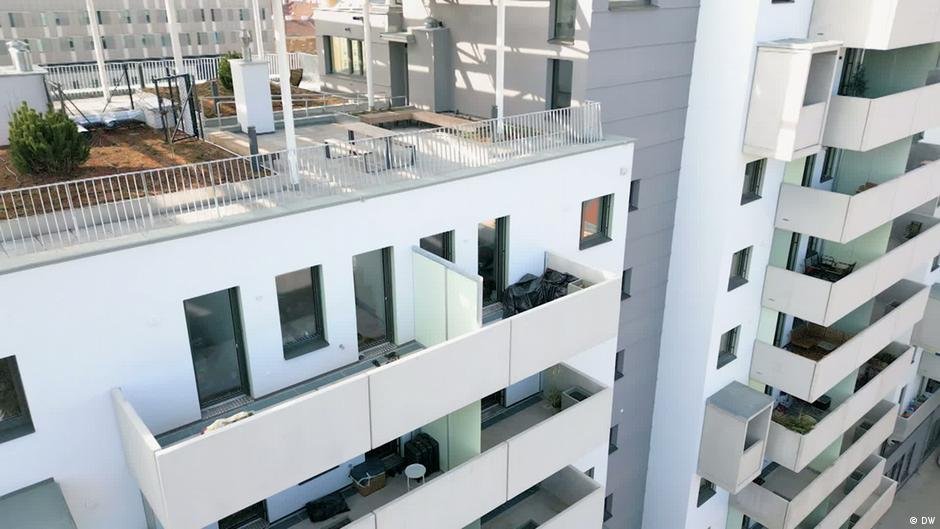
In the European Union’s most populous city, pressure on the housing market is so great that many of its residents are willing to undertake a historic experiment: Five years ago, Berliners voted in a referendum to instruct the Senate of the German capital to draft a law that would put an end to the power of large real estate companies. Those that owned more than 3,000 units should be expropriated, they said. The Senate did not act on the results of the referendum, which was non-binding. Meanwhile, the average cost of new leases has since risen by about half.
But in the Berlin elections on September 20, the socialist Left Party, which in its campaign had promised to act on the referendum, won the largest share of the vote. Whether it will be able to make good on its promises now depends on how negotiations to form a coalition shape up. But whatever happens, the election has drawn attention once again to the severity of the housing crisis in many cities across Europe.
Here are some initiatives that have already been put in place:
Vienna: The city is the landlord
The Vienna model is a flagship solution to soaring rent prices in Europe. The ambitious social housing program as introduced after World War I when the Austrian capital experienced a severe housing crisis. Beds were so scarce that some workers had to sleep in shifts. Diseases such as tuberculosis spread in the cramped living conditions.
The model serves to stabilize the city’s housing market to this day: According to the Vienna authorities, the city owns approximately 220,000 municipal apartments that it rents out as well as 200,000 subsidized dwellings. More than 60% of Vienna’s residents live in one of these two types of housing. This also helps to stabilize prices on the private market.
To view this video please enable JavaScript, and consider upgrading to a web browser that supports HTML5 video
Basel: Public land, private buildings
The fact that housing is becoming increasingly expensive in many cities is largely due to the fact that a city’s attractiveness is reflected in land prices. In many places, people are considering how to decouple rents from the price of land. One means of doing this is not to sell municipal land but to lease it to cooperatives or socially-conscious investors. This benefits councils that do not have to bear construction costs and developers too, as they do not have to factor in exorbitant land costs that are ultimately passed on to tenants.
The Swiss city of Basel is one of the pioneers of this model. About 40% of all cooperative housing units are located on public land. The Spanish city of Barcelona and the Portuguese capital Lisbon have also stepped up efforts to put this model in place.
Paris: Buying back office buildings and converting them into homes
It is harder if land and buildings are in private hands. In 2014, the French capital Paris launched an anti-displacement plan giving the municipality a “first right of refusal” in gentrifying neighborhoods to increase the share of affordable housing in the city. The current target is 30% social housing for low-income residents by 2035
Earlier this year, the French government and the Paris regional authorities identified 61 projects that could convert empty office buildings into housing and create up to 8,200 homes in the inner suburbs of the French capital.
Prague: Apartments for public-sector workers
The Czech capital has found another way to keep those without whom the city could not function in Prague: caregivers, police officers, teachers and sanitation workers. Some 660 new energy-efficient apartments reserved specifically for public-sector employees have just been built.
The subsidiary of a Czech bank, which has received European loans, handled the development. The aim is to keep rents 20% below the market rate thanks to economies of scale, and it is not the bank who decides on the tenants but hospitals or public sector agencies, which draw up leases and can attract new employees with affordable rent options. More apartments are currently being planned.
Dublin: Non-profit cost rental housing
It has also become difficult for people with low incomes to stay in the Irish capital Dublin. During and after Ireland’s financial crisis of 2008, foreign investors bought up a lot of real estate and at the same time rents skyrocketed when several major tech companies chose Dublin as their EU headquarters because of favorable tax rates. There are now long waiting lists for public housing in the city whose supply remains too low.
In 2021, the Irish government introduced the Cost Rental Housing program to provide housing to those on middle incomes, i.e. those who earn too much to qualify for public housing but too little to have a chance on the private market. To qualify in Dublin, a household has to have a net income of below €66,000 ($75,000) per year. Non-profits or public agencies lease out the apartments and rents are below market levels, by an average of almost 30% according to a recent study by the Dublin-based Economic & Social Research Institute (ESRI).
The Irish government hopes to be able to deliver 18,000 low-cost rental homes by the end of the decade. Last year, there were more than 4,200 applicants for 104 apartments in a new community in a suburb of Dublin.
This article was translated from German.
To view this video please enable JavaScript, and consider upgrading to a web browser that supports HTML5 video