The International Criminal Court (ICC) disclosed on Monday more details about the arrest warrants against two Taliban leaders, while also issuing two more arrest warrants.
The four Taliban leaders are accused of crimes against humanity through the persecution of women, girls and the LGBTQ+ community in Afghanistan since taking power in 2021.
According to the court, warrants were issued in July and September of last year against Hibatullah Akhundzada , the Taliban’s Supreme Leader, as well as against Abdul Hakim Haqqani, who heads the country’s Supreme Court.
The other two warrants were issued against Education Minister Habibullah Agha and Minister of Higher Education Neda Mohammad Nadim.
The four are charged with persecution on grounds of gender of “girls, women and other persons nonconforming with the Taliban’s policy on gender, gender identity or expression; and on political grounds against persons perceived as ‘allies of girls and women,’” according to the court.
What does the ICC accuse the 4 Taliban leaders of?
The judges who issued the warrants said that the four implemented policies that saw “severe violations of fundamental rights and freedoms of the civilian population of Afghanistan, in connection with conducts of murder, imprisonment, torture, rape and enforced disappearance.”
The Taliban “specifically targeted girls and women by reason of their gender,” the judges added, also mentioning persecution against people due to “certain expressions of sexuality and/or gender identity.”
The ICC has no jurisdiction to execute the warrants. Still, the move is considered a form of pressure on the Afghan ruling authority.
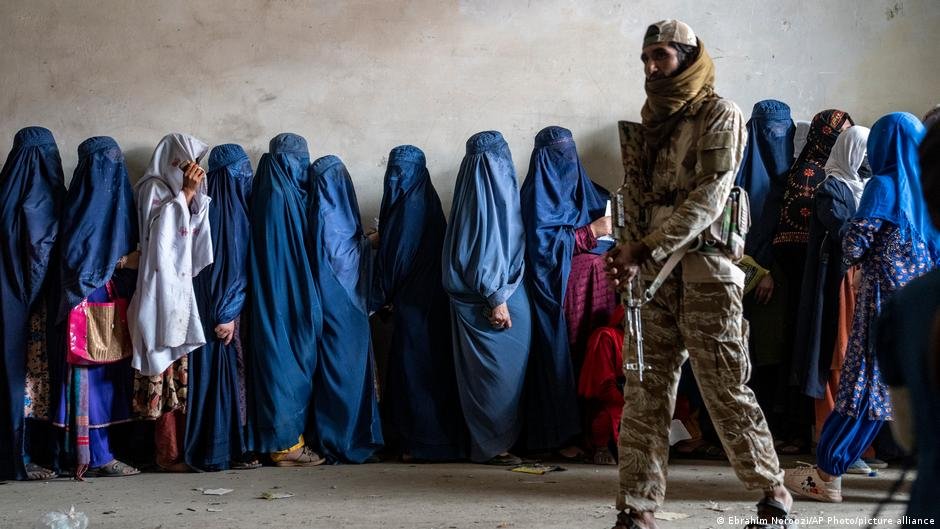
The Taliban have taken a wide range of measures to restrict women’s access to jobs and education beyond sixth grade, as well as barring them from most public spaces.
Women are also obligated to cover their whole bodies apart from their eyes upon leaving home, with a male relative having to accompany them on long trips.
Taliban rejects ICC’s warrants
Afghanistan’s government spokesperson said the country does not recognize the court’s authority.
“We are bound by the rulings of Islamic Sharia and its courts, not by intelligence entities or so-called courts.” chief spokesman Zabihullah Mujahid said in a statement.
A request for warrants for Akhundzada and Haqqani made last year by former ICC chief prosecutor Karim Khan argued that “Afghan women and girls as well as the LGBTQI+ community are facing an unprecedented, unconscionable and ongoing persecution by the Taliban.”
The UN Human Rights Council has called on the Taliban to drop its “systematic oppression of all women and girls in Afghanistan.”
Human rights groups have been calling for the international community to do more against the Taliban’s gender-based policies in Afghanistan.
To view this video please enable JavaScript, and consider upgrading to a web browser that supports HTML5 video
Edited by: Rana Taha
If you rely on our team for trusted reporting, please take a moment to select us as your Preferred Source on Google by clicking here and hitting the “star” or “preferred” button, so you’ll always see our verified news first.