Spain’s economic data has been positive recently, but politically, the country has been mired in a prolonged crisis for months.
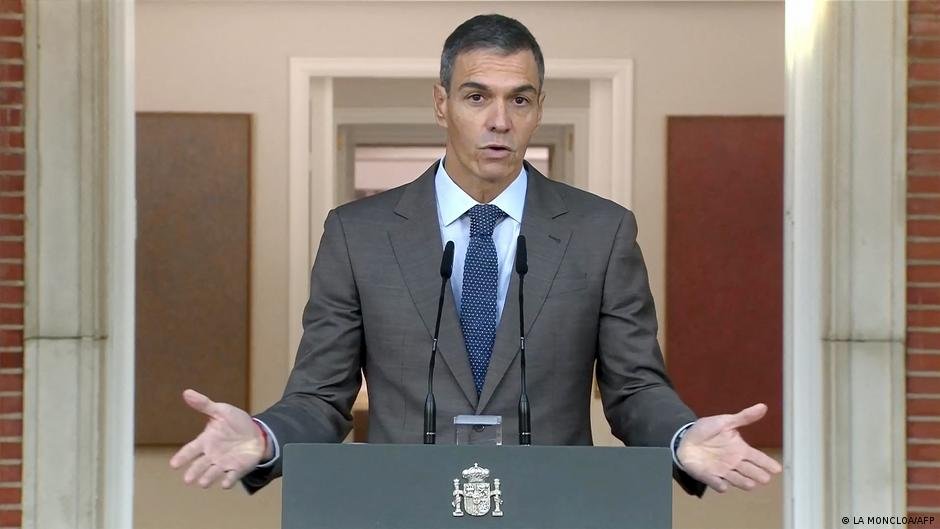
On Monday, the social democratic Prime Minister Pedro Sanchez responded with a surprise move to break the deadlock: He is calling an early election for November 29.
Why is Sanchez calling an election now?
The sudden announcement followed a dramatic political defeat for the government. On Friday, October 2, Sanchez’s emergency measures to tackle the housing crisis failed in parliament. Seven lawmakers from the conservative Catalan separatist party Junts, whose support the government has relied on since 2023, brought the measures down. Sanchez says he is now calling for a “much broader progressive majority.”
The defeat came after months of growing instability in the government’s parliamentary base. Spain’s parliament has not passed a regular budget since 2023.
The recent crisis over mass migration to Ceuta and several corruption scandals involving allegations against the Spanish Socialist Workers’ Party (PSOE) and people close to Sanchez have piled pressure onto the government.
And then came Maricarmen. The forced eviction of 87-year-old Maria del Carmen Abascal last month suddenly turned the housing shortage into the headline political issue.
The fact that his emergency measures were rejected in parliament allows Sanchez to position himself as a defender of tenants. However, it remains to be seen whether that strategy will pay off.
What role is pressure from the street protests playing?
The housing shortage has been at the top of Spaniards’ list of concerns for around three years. According to estimates by the Bank of Spain, the country is currently short of around 750,000 homes, and the figure could exceed one million by 2028.
More than half of 18- to 34-year-olds live with their parents or depend on them financially. Property prices have recently been rising three times as fast as wages. In Spain, social housing accounts for just around 1.7 percent of the country’s housing stock, putting it at the lower end of the EU scale in comparison with other member states.
To view this video please enable JavaScript, and consider upgrading to a web browser that supports HTML5 video
It is hardly surprising, then, that protest camps sprang up in Madrid and elsewhere in response to the plight of Maricarmen Abascal, and tens of thousands took to the streets across the country. After the government’s measures were rejected, the trade unions CCOO and UGT even announced a 24-hour general strike.
These dividing lines, however, do not simply split the government and the opposition. The tenants’ movement also views Sanchez’s plans as insufficient. The conservative opposition People’s Party (PP) and parts of the business community, meanwhile, warn that tighter rent controls could make the problem worse.
Is Sanchez’s model of governance coming to an end?
Since the 2023 election, Pedro Sanchez has governed without a majority in parliament. His social democratic PSOE formed a coalition with the left-wing Sumar alliance, but also depended on the support of smaller parties. These included Basque and Catalan regional parties, but above all the Catalan separatists of Junts.
That meant its seven lawmakers were repeatedly able to determine whether government legislation secured a majority or not. Over the course of the parliamentary term, this arrangement became increasingly unstable. In the first half of 2026 alone, the government lost almost one in four votes.
Evidence of the extent of this political deadlock is the state budget: Spain continues to work with the 2023 budget because the prime minister has been unable to get a new budget through parliament in his entire term. Junts ultimately refused to support Sanchez on housing policy, leaving him without backing on an issue that has been at the top of the political agenda following nationwide protests.
What was the political fallout of the Ceuta crisis?
At the end of July, more than 70,000 people crossed the border from Morocco into Ceuta within a short period of time. Although the government declared the crisis over soon afterward, at least 10,000 migrants were still in the exclave two months later, which has a population of only around 80,000. It was not until last Sunday that police cleared an improvised camp where around 3,000 people had been living.
To view this video please enable JavaScript, and consider upgrading to a web browser that supports HTML5 video
The crisis altered Sanchez’s previously relatively liberal migration policy. A new draft seen by Reuters proposes accelerated asylum procedures and deportations, as well as tighter rules. Human rights organizations have voiced sharp criticism.
How strong is the opposition?
At first glance, Spain’s conservative PP is entering the snap parliamentary election at the end of November as the frontrunner to become the largest parliamentary group.
The real winner of recent months, however, is the right-wing populist Vox party. It is now polling at just over 18%, around six percentage points more than in the 2023 election. A strong Vox turnout could increase PP leader Alberto Nunez Feijoo’s chances of gathering enough seats for a governing majority from parties right of center.
Vox leader Santiago Abascal is now confidently setting conditions for cooperation. Priority for Spanish citizens, economic deregulation and a significantly tougher migration policy, including the far-right concept of deporting foreign nationals to their countries of origin.
For his part, Feijoo faces a difficult balancing act. To replace Sanchez, he also needs to win voters from the political center. At the same time, he may need a partner for a governing majority who is steering the campaign significantly further to the right.
Will Spain also be voting on Trump and Europe’s political direction?
In international media coverage, Sanchez is repeatedly portrayed as Europe’s most prominent critic of Donald Trump. The prime minister rejected the US president’s demand for defense spending to rise to 5% of GDP, refused to allow US bases in Spain to be used for the war against Iran and criticized US-Israeli attacks.
As a result, Trump even threatened at one point to cut off trade relations. At the same time, Sanchez explicitly contrasts his more liberal migration policy with Trump’s deportation policies and attacks what he calls the “tech oligarchs” from the United States.
Sanchez is also one of the most prominent social democratic leaders of a major EU country. If the left were to lose the upcoming Spanish election, the European Council would lose one of its most outspoken voices against Donald Trump . It would also lose a prime minister who has opposed climbing defense spending, defended a more liberal approach to migration and criticized Israel more sharply over the war in Gaza than most of his European counterparts.
This article originally appeared in German.