Skip NavigationMarketsBusinessInvestingTechPolitics & PolicyVideoWatchlistInvesting Club PRO
 LivestreamMenu
- The Swiss National Bank posted a 19.1 billion-franc profit in the third quarter of 2026.
- Gold contributed 7.6 billion francs and foreign currency positions contributed 11.6 billion francs in the quarter.
- The SNB reported a 44.2 billion-franc profit for the first nine months, but any year-end distribution still depends on its full-year result and distribution rules.
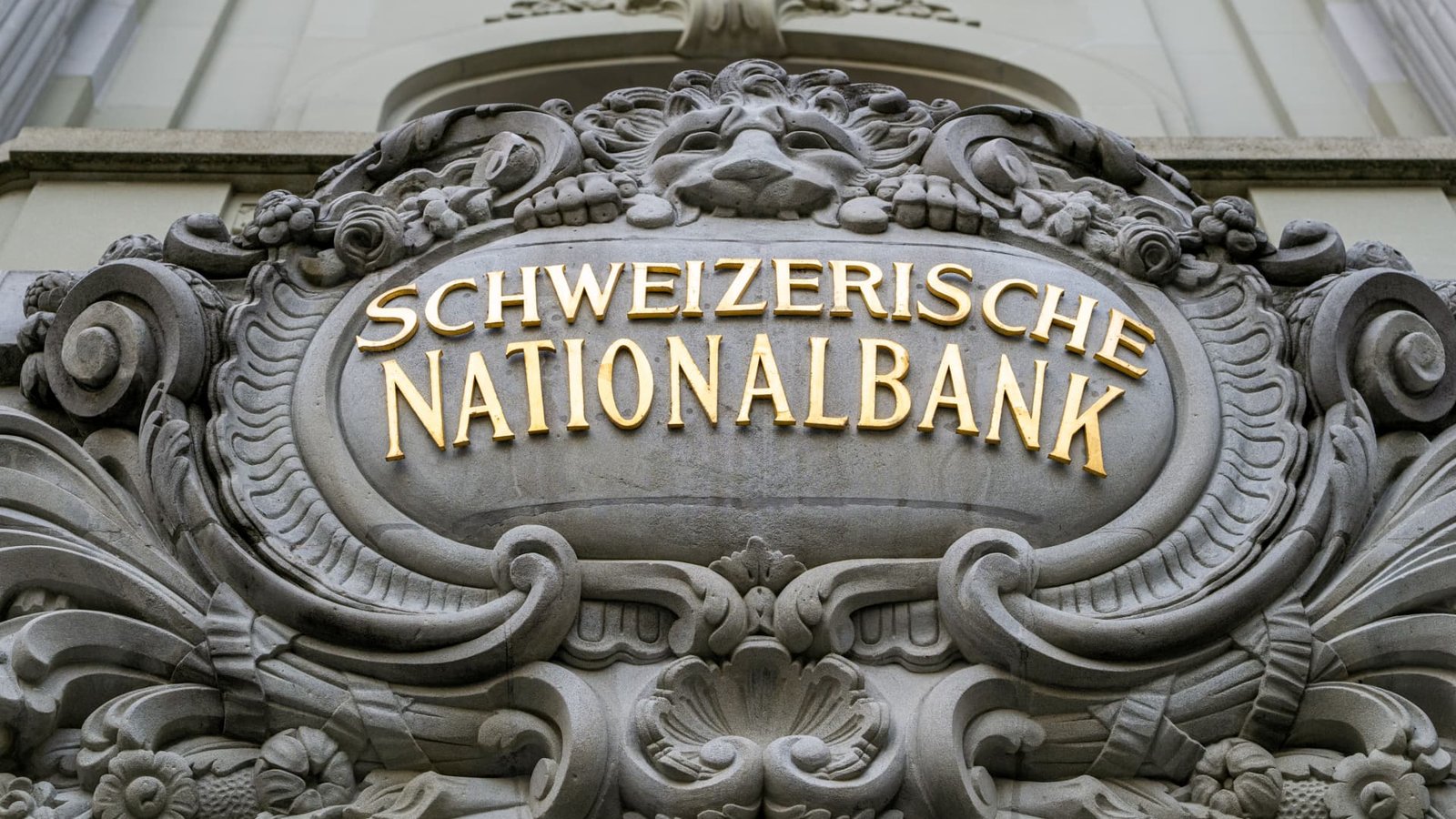
The Swiss National Bank (SNB) headquarters in Bern, Switzerland, on Thursday, Sept. 24, 2026. Pascal Mora | Bloomberg | Getty Images
The Swiss National Bank said Friday that it made a profit of 19.1 billion Swiss francs ($23.3 billion) on its investments in the third quarter, driven by its gold and foreign currency holdings.
It brought the central bank’s year-to-date profit up to 44.2 billion francs, the equivalent of around $53.8 billion, raising the prospect of a payout to Swiss federal and local governments at the end of the year.
But the overall profit in the third quarter of 2026 marked a year-on-year decline of almost 32%.
Profit and loss recorded in the SNB’s quarterly accounting updates consists of interest income, dividends, and valuation adjustments resulting from exchange rate movements and market price changes.
The Swiss franc rose around 12% against the U.S. dollar in 2025, having been lifted by investors flocking to the safe-haven currency in the wake of U.S. President Donald Trump’s tariff announcements.
So far this year, it has lost around 3.6% versus the greenback.
Profit drivers
In the third quarter of 2025, the SNB saw a 14.3-billion-franc net gain on gold, compared to a net gain on gold of 7.6 billion francs in the three months to September.
The yellow metal saw a record-smashing rally in 2025, with its value surging by around 66% over the course of 2025. But its trajectory has been far more volatile in 2026, and the metal has fallen in value by more than 7% since the start of the year.
Profit on the SNB’s foreign currency positions, which include investments in international equities, reached 11.6 billion francs, marking a year-on-year decline of around 15%.
Most of the SNB’s foreign currency reserves are held in financial assets denominated in foreign currencies, as opposed to hard currency holdings. It also has a smaller Swiss franc bond portfolio.
At the end of the third quarter, 61% of its foreign currency reserves were allocated to government bonds, including deposits with central banks and the Bank for International Settlements, while 28% were invested in equities and 11% in other bonds.
In terms of currency exposure, 39% of the portfolio was denominated in euros and 37% in U.S. dollars. Japanese yen and British pound exposure accounted for 7% and 6%, respectively.
The SNB’s stocks portfolio
The SNB’s large equity portfolio makes it unusual compared to other major central banks like the U.S. Federal Reserve and the Bank of England, which do not typically invest directly in equity markets.
However, the SNB is a passive investor, and therefore does not engage in equity selection. Its stock holdings are based on a benchmark index composed of international stock indexes, with its portfolio mostly made up of shares of mid- and large-cap companies in developed markets.
Its profits are mostly distributed to Switzerland’s federal and local governments, with shareholders receiving a dividend if its equity capital is large enough. If the investments generate a loss, the SNB may be unable to make payouts.
Despite the country benefiting from a strong investment performance, however, the SNB’s investments are not focused on achieving the highest possible return.
“For a conventional company, profits are an important prerequisite for long-term success. The SNB’s goal, by contrast, is not to generate profit,” it says on its website. “It has another mandate: It must ensure price stability in Switzerland, while taking due account of economic developments.”
“The monetary policy mandate always has highest priority. The SNB can thus find itself having to take monetary policy decisions that may have a negative impact on its annual result.”
Unlike many other major central banks, the SNB’s monetary policy mandate allows it to use interest rates and exchange rates to achieve price stability, and it will use measures to influence the exchange rate if deemed necessary.
The SNB’s inflation target also makes it an outlier among its international peers, with its target range for inflation being 0% to 2%.