Skip NavigationMarketsBusinessInvestingTechPolitics & PolicyVideoWatchlistInvesting Club PRO
 LivestreamMenuStock investors may be underappreciating the pressure the bond market could face, if the prospect of a more aggressive Federal Reserve turns into a serious risk. Bond markets were closed Wednesday for Veterans Day, which gave stocks a reprieve from some of the warning signs in the market on Tuesday. That’s when the yield on the 2-year U.S. Treasury — a useful gauge for interest rate expectations — surged 18 basis points to top 4.73%. The 10-year U.S. Treasury yield that’s used as a benchmark for mortgages and other loans also spiked, rising back above 5%. Yields climbed further when the bond market reopened Thursday, sending the 2-year note to 4.87% and the 10-year above 5.11%. Higher bond yields come after a hotter-than-expected October consumer inflation report cemented the case for a quarter point increase in the fed funds rate at the Fed’s December meeting, and raised fears of more hikes in 2027 — a scenario that stock investors have yet to price in. “The Fed is the real risk going out in the intermediate term,” Warren Pies, co-founder and strategist at 3Fourteen Research, told ” Squawk on the Street ” on Wednesday. “The market is not priced for another two plus hikes, which are probably coming.” Odds of more rate hikes are increasingly creeping into fed funds futures, which were last pricing in three quarter point raises by March, according to the CME FedWatch tool . That would put the target rate in a range between 4.50% and 4.75%, up from 3.75% and 4.00% currently. ‘Real indigestion’ Stocks are ignoring bonds lately, and with good reason. Last week’s AI washout was made worse this week as investors followed news of Nvidia CEO Jensen Huang’s extramarital affairs, and his subsequent exit from the dominant AI chipmaker early Thursday. Yet the major stock averages held up fairly well Thursday as investors rotated into others corners of the market, with Advanced Micro Devices and Broadcom two beneficiaries. But Pies worries the stock market will again turn its attention to inflation at the start of 2027, when price reports could meaningfully worsen as companies make adjustments for the new calendar year — a phenomenon called “residual seasonality” — putting the interest rate outlook front and center for investors. “That’s where I think you could start seeing some real indigestion in the equity market,” Pies said. Some on Wall Street are already running the numbers on what that could mean. Wolfe Research strategist Chris Senyek said that the typical reaction to the start of a hiking cycle is a 0.6% decline in the stock market over the next three months. Going back to 1972, the median hiking cycle lasts 19 months, with the fed funds rate rising about 3.94 percentage points, although that allows for bouts of rapid inflation and sky-high interest rates in the 1970s and early 1980s. “Our sense is that investors could be mispricing the risk of a longer than expected hiking cycle with the current Fed regime, even if oil prices slowly drift lower,” Senyek wrote on Wednesday. At Goldman Sachs, chief U.S. economist David Mericle now expects a third quarter point hike in March, in addition to the quarter point raise he already anticipates in December. He expects softer inflation reports in November and December, and hotter ones in January. December tone But it’s also the case that elevated bond yields could coexist with a resilient stock market. Just last month, the yield on the 10-year U.S. Treasury topped 5.3% at the same time as the S & P 500 also climbed to record highs above 7,800. Many expect that a productivity and earnings boom from AI could help companies cope with higher borrowing costs. But generally speaking, higher bond yields hurt stocks. A U.S. 10-year Treasury yield above 5% traditionally knocks the equity market, as investors shift to fixed income securities that give more income at less risk. Higher bond yields also lower the present value of future corporate earnings. For many, the risks to bond yields are tilted up, given ongoing credit demands from the AI buildout, a federal deficit running at 6% or more of gross domestic product and the potential for higher inflation. Steve Englander, head of G10 FX Research at Standard Chartered, is turning his attention to the December Fed meeting, where any tough comments on inflation by Chairman Kevin Warsh could finally cause the stock market to sit up and pay attention, just as the bond market and the U.S. dollar are doing. “If they did a 50 [basis point rate hike], and it’s sort of a hawkish 50 by saying, ‘Hey, we’re doing 50, but we’re not done,’ that might scare the market,” Englander said. Englander’s baseline expectation remains just one quarter point hike at the December meeting. But he also expects the 10-year yield could climb to 5.50% by the middle of next year.Read More
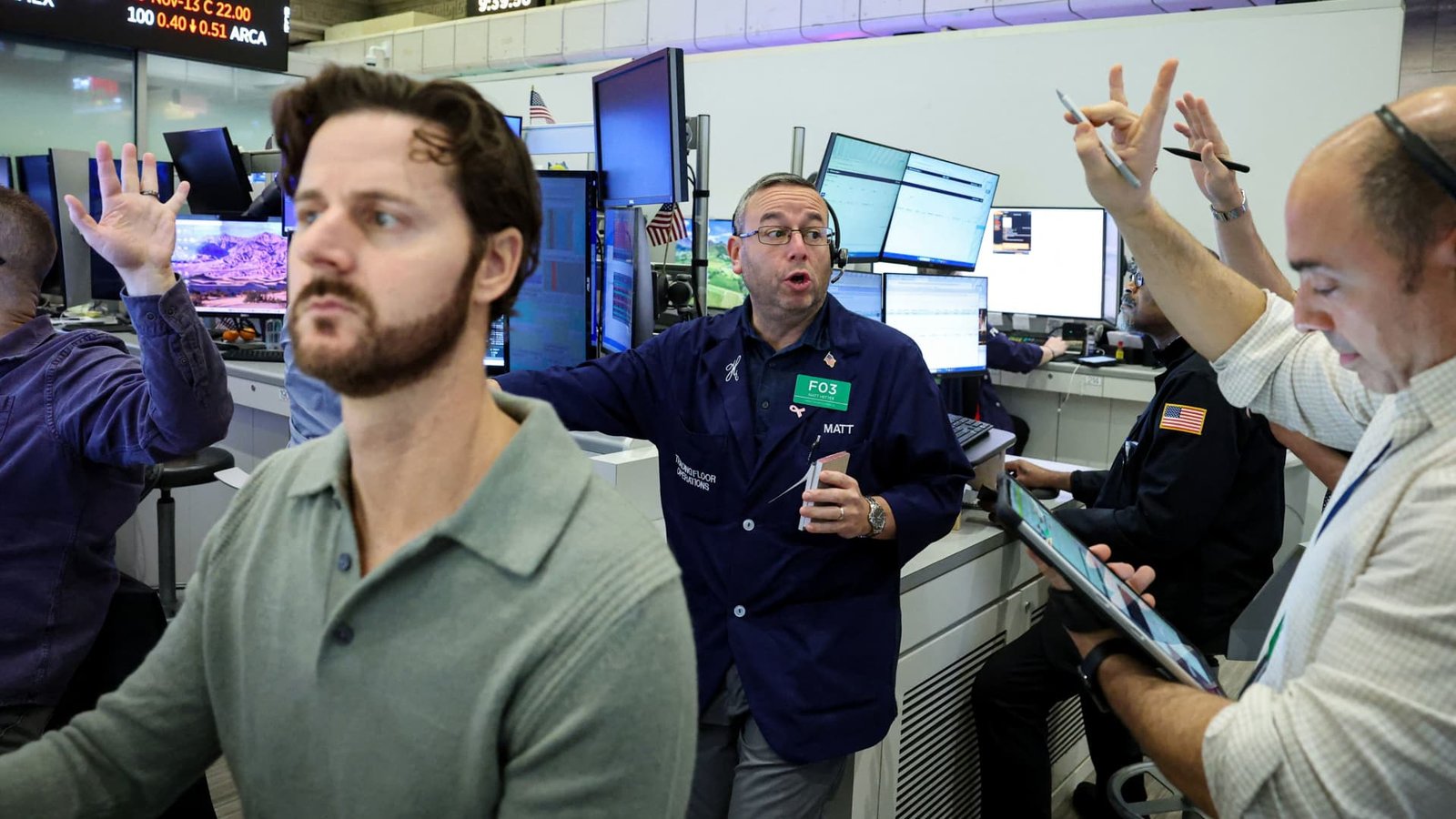
Stocks could be in for a rude awakening if the Fed hikes rates more than expected
“The Fed is the real risk going out in the intermediate term,” one strategist said.

by
Read Time
About the Author

Previous Post
Next Post
Leave a Reply
Latest News




Stay Connected
Categories
BBC News CNA CNBC CNN International Deutsche Welle (DW) Euronews France 24 General Global & European Specialized & Regional
Tags
amp Artificial intelligence Asia Breaking News: Business Breaking News: Markets Breaking News: Politics Breaking News: Technology Business business news cent china cup Donald J. Trump Donald Trump economy European Union fast football France germany india Investment strategy iran Iran war markets People per politics return russia S&P 500 Index said Singapore spain Sport Stock markets technology trump ukraine United States US-Israel attack on Iran 2026 video War in Ukraine World World Cup 2026
About the Author

AF themes
Easy WordPress Websites Builder: Versatile Demos for Blogs, News, eCommerce and More – One-Click Import, No Coding! 1000+ Ready-made Templates for Stunning Newspaper, Magazine, Blog, and Publishing Websites.

Search the Archives
Access over the years of investigative journalism and breaking reports