https://p.dw.com/p/5Pst6Prefer DW on Google
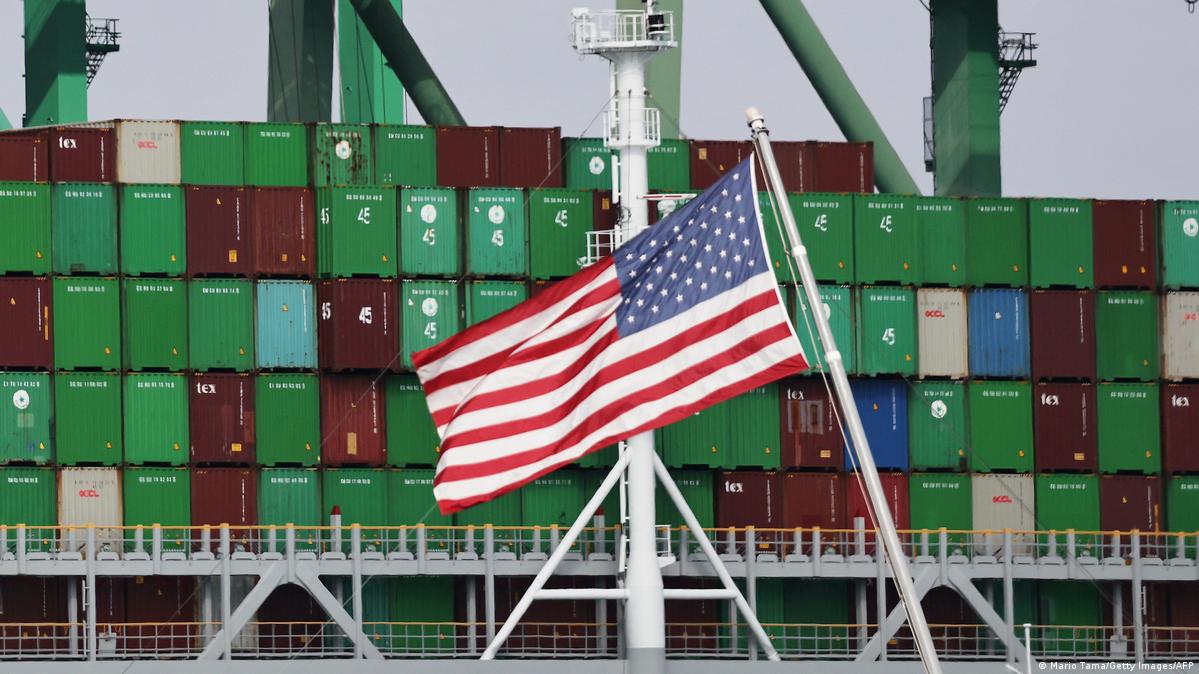
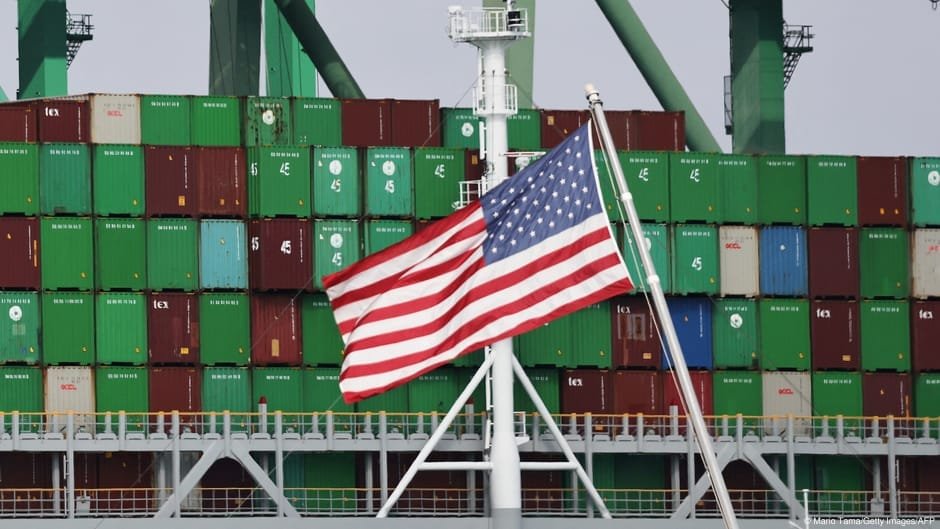
The United States on Wednesday proposed new tariffs of up to 20% on imports from 14 economies, including the European Union and China.
The Office of the US Trade Representative (USTR) unveiled the proposed duties after completing an eight-month investigation into alleged unfair trade practices involving 16 trading partners.
Washington accuses the targeted economies of promoting excessive industrial production, allowing cheaper goods to undercut American manufacturers.
The proposed tariffs largely stick to rates set under existing trade agreements, US Trade Representative Jamieson Greer told CNBC on Wednesday. However, he added that some rates could be “topped up” by a few percentage points.
The duties will be subject to a public comment period and a hearing before taking effect, possibly in January at the earliest.
Which countries would face new US tariffs?
China would face an additional tariff of 20%, the joint-highest rate among the targeted economies.
The proposed duties would respect the 15% tariff cap agreed with the European Union, Japan, South Korea and Taiwan, as well as the 19% cap agreed with Malaysia, a senior US administration official said.
Bangladesh, Cambodia, India, Indonesia, Singapore, Switzerland, Thailand and Vietnam would also be affected.
Mexico and Norway are currently excluded from the proposed measures. Greer said talks with Mexico were continuing as Washington’s investigation into its trade practices remained ongoing.
In a separate announcement, the USTR also proposed higher tariffs on Brazilian raw and refined sugar and a new 10% duty on aircraft, which would affect Brazilian manufacturer Embraer.
How would the new US tariffs work?
The senior US official said the proposed duties would not exceed tariff limits negotiated under existing trade agreements.
However, the new tariffs on China would be added to duties of around 25% imposed during Trump’s first term, bringing the combined rate for some Chinese goods to 45%.
Around $30 billion worth of Chinese imports that Washington is considering for tariff reductions would be exempt from the new measures.
The proposed duties would not be added to existing sector-specific tariffs on products such as automobiles, steel and aluminum.
Nor would they be combined with tariffs of between 10% and 12.5% imposed in July against 60 trading partners over alleged insufficient action against forced labor. Where both measures apply, the higher rate would prevail.
How have the EU and China responded to the US tariffs?
The European Union said on Wednesday it would examine the proposed US tariffs but rejected Washington’s allegations of excessive industrial production.
“We strongly reject the premise that Europe is a source of structural overcapacity,” the EU said, adding that it expected Washington to honor the trade agreement reached with Brussels last year.
Beijing also rejected Washington’s allegations of excessive industrial production and reiterated its opposition to trade wars, but stopped short of threatening retaliation.
“The so-called ‘overcapacity’ is a false issue, and China opposes using it as an excuse for political manipulation,” Chinese Foreign Ministry spokesperson Guo Jiakun said.
To view this video please enable JavaScript, and consider upgrading to a web browser that supports HTML5 video
Washington has accused Beijing of flooding global markets with cheap exports, ranging from steel to electric vehicles and solar products.
Trump met Chinese President Xi Jinping last week in Shenzhen and is due to host him at the G20 summit in Miami in December.
An existing trade truce between Washington and Beijing is set to expire on January 10. Access to rare earth minerals and Chinese purchases of US agricultural products could feature in further negotiations.
Why is Trump introducing new tariffs?
The measures are intended in part to replace revenues lost after the US Supreme Court struck down Trump’s sweeping global tariffs in February.
The court ruled that Trump lacked the authority to impose the duties by declaring an economic emergency and bypassing Congress.
The new measures instead rely on Section 301 of the Trade Act of 1974, which allows Washington to investigate and retaliate against unfair or discriminatory foreign trade practices.
Trump has repeatedly promised that tariffs will bring manufacturing jobs back to the US and reduce the federal deficit.
Could Trump’s new tariffs fuel US inflation?
The proposed duties could put further pressure on American businesses, which may pass additional costs on to consumers.
US consumer inflation reached 3.7% year-on-year in September, close to a three-year high. Earlier tariffs, the effects of Trump’s war on Iran and a boom in artificial intelligence investment have contributed to rising prices.
High living costs were a key issue in November’s midterm elections, which saw Trump’s Republican Party lose control of both chambers of Congress.
A Reuters/Ipsos poll conducted after the elections found that 62% of respondents supported efforts to repeal Trump’s tariffs.