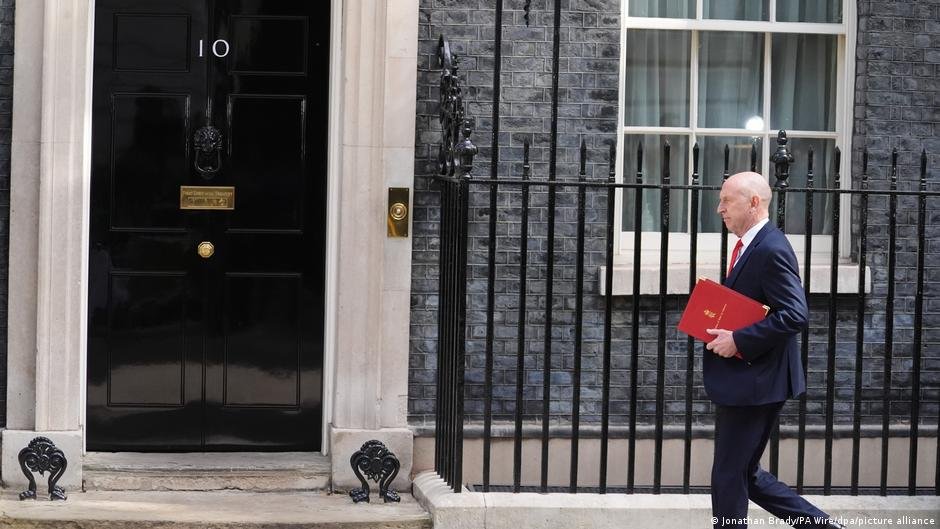
British Defense Secretary John Healey published his resignation letter at lunchtime on Thursday, quitting his post amid a dispute over military spending plans for the coming years.
The unexpected resignation compounds pressure on under-fire UK Prime Minister Keir Starmer, who in recent weeks had seemed to weather the worst of a storm about a potential challenge for the Labour Party leadership.
Britain’s Defense and Finance ministries had been locked in talks for months on how quickly to increase defense spending in the next few years.
The clash pits strained public finances and anemic growth forecasts against NATO targets to continue increasing European defense expenditures.
What did Healey say as he submitted his resignation to Starmer?
Healey, a close ally of Starmer’s for years and shadow defense secretary in opposition prior to Labour’s election win in July 2024, prefaced his resignation by saying, “This is a letter I never expected to write, and I do so now with great reluctance.”
He said he was proud of the UK’s existing rapid increases in defense spending, but said that the latest settlement on a Defense Investment Plan (DIP) for spending through 2035 “falls well short of what is required for defense and the country at this dangerous time.”
He said that the increases by 2030 were projected to be negligible compared to the spending already guaranteed by the end of 2027.
Despite “the scale of the challenge and the rising demands on defense,” Healey told Starmer that “you have been unable, and the Treasury has been unwilling, to commit the resources that the nation needs to defend the country at this time of rising threats.”
NATO’s recently increased target for members foresees them spending 3.5% of GDP on defense by 2035 — amid Russia’s invasion of Ukraine and a longstanding but intensifying US desire to relocate some of its military assets in Europe.
“You know what defense needs,” Healey said to Starmer in his letter. “You made the argument for this powerfully at the Munich Security Conference back in February. Without a DIP that meets the moment in this way, I am being forced to make decisions that would reduce the readiness of our Forces and increase the risk to personnel on operations, and could make the country less safe.”
Why is a high-profile resignation the last thing Starmer needed now?
The resignation comes as Starmer struggles to hold on to power following local and regional election defeats and disgruntlement within his Labour Party.
Various policy backfires and U-turns, not least the scandal over appointing the Jeffrey Epstein-adjacent Peter Mandelson as US ambassador, had been weighing Starmer down prior to Labour’s major mid-term election losses.
The furor of mid-May had appeared to calm somewhat in recent weeks, but the specter of a leadership challenge within his party still haunts the prime minister.
Although Health Secretary Wes Streeting’s resignation and former deputy party leader Angela Rayner’s vocal criticism did not lead to a challenge to Starmer, the other potential challenger, Manchester Mayor Andy Burnham, is seeking a seat in the House of Commons via a by-election. He would need a seat to launch a bid to oust Starmer. The vote in the Makerfield constituency takes place on June 18.
Healey seemed to address these tensions, albeit with the strategic ambiguity of a former journalist and communications and campaign manager, in the last line of his resignation letter:
“I wish you all continuing strength in the exceptional challenges you face as Prime Minister,” Healey wrote. “As always, our Labour Government will continue to have my fullest support.”
To view this video please enable JavaScript, and consider upgrading to a web browser that supports HTML5 video
Don’t let the algorithm hide the news. If you rely on our team for trusted reporting, please take a moment to select us as your Preferred Source on Google by clicking here and hitting the “star” or “preferred” button, so you’ll always see our verified news first.
Edited by: Sean Sinico