Woman in dispute with neighbour fined S$2,500 after breaching direction to move tables and adjust CCTV
Ajiramah Ahmad Hassan complied with the order months after she was charged in court.
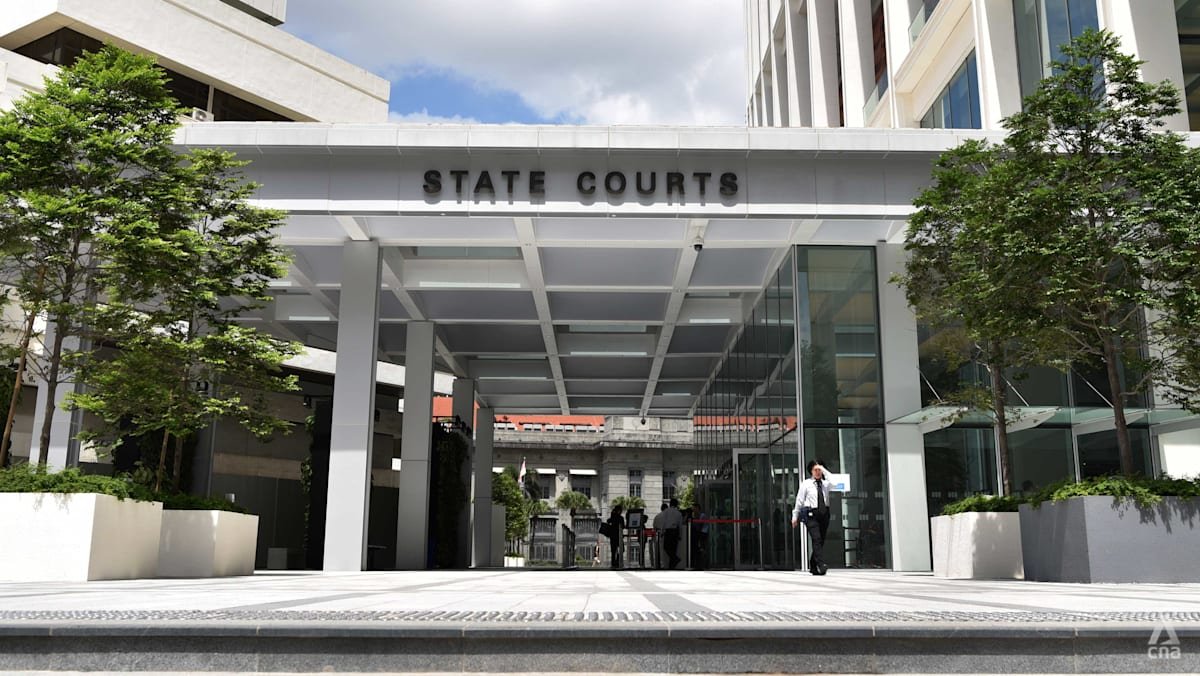
The State Courts in Singapore. (File photo: CNA/Jeremy Long)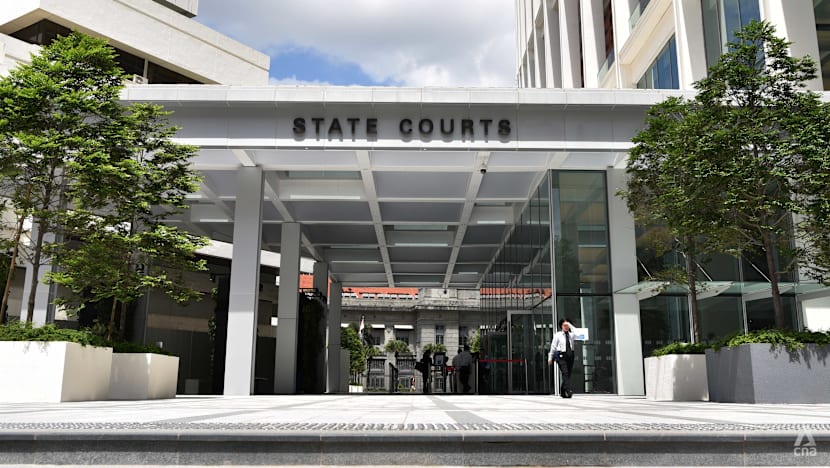
New: You can now listen to articles.

This audio is generated by an AI tool.

Read a summary of this article on FAST.
Get bite-sized news via a new
cards interface. Give it a try.
Click here to return to FAST
Tap here to return to FAST
FAST
SINGAPORE: A 72-year-old woman was fined S$2,500 (US$1,900) after repeatedly defying an order by the Community Disputes Resolution Tribunals (CDRT) to move furniture outside her flat and reposition a closed-circuit television (CCTV) camera facing her neighbour’s door.
Ajiramah Ahmad Hassan had been embroiled in a years-long dispute with her next-door neighbour over noise, according to written grounds issued on Monday (Jun 22) by District Judge Kevin Ho.
In the judgment, Judge Ho said that orders by the tribunal are to be complied with and treated seriously.
“Insofar as there is any perception that orders and directions made by the CDRT are ‘all bark and no bite’, this case should put that misplaced view firmly to rest,” the judge said.
NEIGHBOUR FILED CLAIM
In 2024, Ajiramah installed a CCTV camera above her front door and placed two tables along the common corridor outside her Housing Board flat.
Her neighbour, a 55-year-old woman who was not named in the judgment, filed a claim against Ajiramah and her husband.
On Jan 17, 2025, the CDRT ordered Ajiramah to reposition the tables so they were directly outside her own unit, and to remove or adjust the CCTV camera so it did not face the neighbour’s doorway.
After she failed to comply, the tribunal issued a special direction on Mar 14, 2025, requiring her to do so.
The neighbour filed a police report on Jun 24, 2025, and officers who inspected the unit that day confirmed the order had still not been followed.
Ajiramah was then charged in court on Oct 27, 2025, and later pleaded guilty to one charge under the Community Disputes Resolution Act (CDRA) for breaching the special direction.
Between January and May 2026, Ajiramah removed the tables and adjusted the CCTV camera so that it no longer faced the neighbour’s doorway.
The prosecution did not take action against Ajiramah’s husband, although the judgment did not state why.
The prosecution sought a fine of S$1,000 while the defence, represented by lawyer Sean Marican, argued for a S$400 fine.
Mr Marican said his client was illiterate and had difficulty understanding the tribunal’s orders as her native language was Malay. He also said the couple was unemployed and that a high fine would “crush her finances”.
ENFORCEMENT APPROACH
The CDRT was established in 2015 to hear disputes between neighbours after attempts to resolve them through mediation have been exhausted.
Judge Ho said that the CDRA provides a “two-strike approach” to enforcement.
A first breach allows the tribunal to issue a special direction requiring compliance, while breaching that direction constitutes a criminal offence.
He said deterrence was the dominant sentencing consideration in this case.
“At its heart, the breach of special direction offence is rooted in a person’s repeated disobedience of the CDRT’s order and direction,” the judge said.
“Such an offence, if left unaddressed, could undermine the efficacy of the CDRA regime, and potentially even the broader administration of justice.
“It would be a costly mistake for anyone to assume that CDRT orders can be disregarded, or even disrespected, with impunity simply because of the CDRT’s status as a tribunal.”
COURT’S DECISION
Judge Ho rejected the defence’s argument that Ajiramah had difficulty understanding the tribunal’s orders, noting that there was no evidence that she had attempted to comply or sought clarification on what she was required to do.
Even after being charged in October 2025, she only began taking remedial steps from January 2026 onwards and did not fully comply until May 2026, he noted.
The judge also rejected submissions that her financial circumstances and age should substantially reduce her sentence, saying there was no objective evidence of financial hardship and that advanced age is generally not a mitigating factor unless a custodial sentence would effectively amount to a life term.
Judge Ho found that an “appropriately calibrated fine” was sufficient, as Ajiramah eventually complied and there was no evidence of substantial harm to the neighbour.
However, he said the prosecution’s proposed S$1,000 fine was inadequate and that the penalty had to be “sufficiently high to provide for a deterrent effect” commensurate with her culpability.
He imposed a S$2,500 fine. If Ajiramah fails to pay, she will have to serve 10 days’ jail.
The court allowed her to pay the fine in five monthly instalments.
For breaching a special direction, Ajiramah could have been fined up to S$5,000, jailed for up to three months, or both.
Source: CNA/wt(gs)
Sign up for our newsletters

Get the CNA app
Stay updated with notifications for breaking news and our best stories
Get WhatsApp alerts
Join our channel for the top reads for the day on your preferred chat app

Get bite-sized news via a new
cards interface. Give it a try.
Click here to return to FAST
Tap here to return to FAST
FAST