


Commentary: Is the economy invulnerable or are we just lucky?
The world economy is resilient partly because it has been lucky, but luck runs out, says Martin Wolf for The Financial Times.
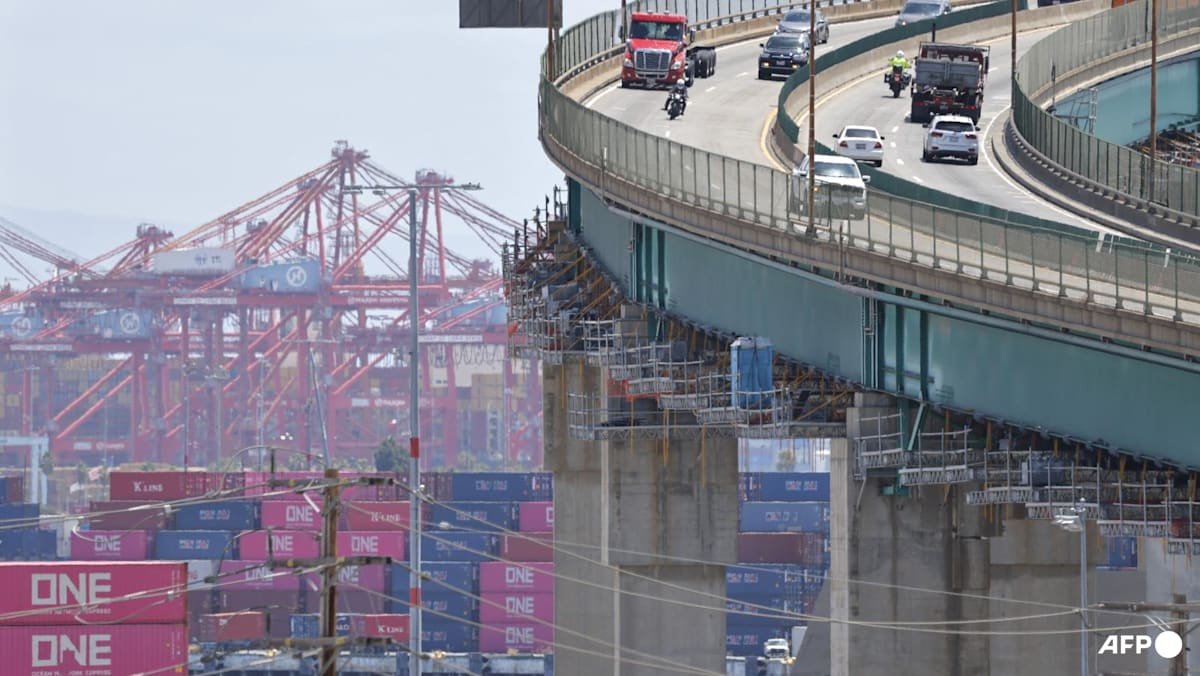
Vehicles pass near shipping containers stacked at the Port of Los Angeles on May 28, 2026 in Los Angeles, California. (File photo: Getty Images via AFP/Mario Tama)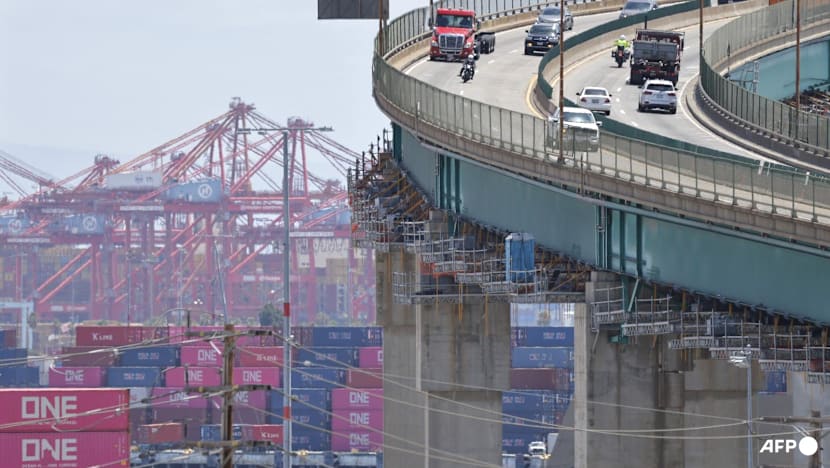
Read a summary of this article on FAST.
Get bite-sized news via a new
cards interface. Give it a try.
Click here to return to FAST
Tap here to return to FAST
FAST
LONDON: The world economy has remained resilient despite the post-pandemic burst of inflation, Donald Trump’s tariffs, Russia’s ongoing war on Ukraine, the Iran war and, as a result of these two conflicts, big energy shocks, the most recent being quantitatively the biggest in history.
Should the conclusion be that the economy is invulnerable or just lucky? If it is luck, how could it finally run out?
The lucid analysis in the latest Annual Economic Report from the Bank for International Settlements demonstrates that there has indeed been resilience, but also luck.
Moreover, it shows dangers are building up, notably in the interaction between fiscal and financial fragilities. One should add to this the social, financial and other vulnerabilities likely to be created, or worsened, by the triumphant march of artificial intelligence through the economy.

Guess Word
Crack the word, one row at a time

Buzzword
Create words using the given letters

Mini Sudoku
Tiny puzzle, mighty brain teaser

Mini Crossword
Small grid, big challenge

Word Search
Spot as many words as you can
It is not hard to imagine shocks to which the public sector’s ability to respond effectively is more limited than people currently take for granted.
WORLD TRADE REMARKABLY BUOYANT
Consider the impact of some recent events. Trump’s tariff war was significantly less damaging than expected on so-called liberation day (Apr 2, 2025).
This was because tariff levels became significantly lower than initially suggested, partly because US companies absorbed some of the cost (possibly temporarily) through lower margins and, significantly, because the tariffs were wildly discriminatory.
The inevitable result was the diversion of trade from direct Chinese exports to the US to exports via other emerging economies (mostly in east Asia) able to produce using Chinese inputs.
Moreover, and crucially, the rest of the world did not copy Trump’s protectionism. Sensibly, they judged it too absurd to be imitated.
The world has also had a very large piece of macroeconomic luck – the AI boom. This has ignited not just a confidence-enhancing boost to an already highly valued stock market but also a huge surge in US domestic investment.
The latter has, in turn, had significant spillover effects on the supply of inputs from East Asia. As a result of this boom, together with the trade diversion noted above, world trade has remained remarkably buoyant.


ECONOMIC WEAKNESSES
In 2026, however, the global economy suffered another big shock – the ill-considered assault on Iran. This has delivered an effective closure of the Strait of Hormuz, the world’s most important chokepoint for oil, natural gas and many other vital products.
This has now lasted for four months and counting. In terms of supply, this has been the biggest oil shock of all, though stocks have cushioned the blow.
If we put all these points together, says the BIS, we see four economic weaknesses.
First, inflation has risen. The question for central banks is whether this will be brief and transitory or sufficiently large and long-lasting to generate another jump in the price level, as the post-pandemic surge in inflation did so egregiously.
Could a second shock significantly destabilise inflation expectations? Yes. To miss the inflation target badly once might be a misfortune; to miss it a second time, even if far more modestly, would look like carelessness.
Second, the surge in spending on AI could slow, perhaps sharply. One reason might be fierce public hostility to the technology.
In the longer run, the combination of intense competition with disappointing returns might itself lead to a collapse in investment. This, the BIS notes, has happened in previous such innovation-led investment booms.


Third, today’s relaxed financial conditions could tighten sharply, as the result of an old-fashioned market panic.
We see compressed risk premia, rising leverage and, not least, rapid growth of relatively opaque and unregulated non-bank financial intermediation. Note, too, that private-sector indebtedness is itself not far below where it was in 2007.
Fourth, governments in high-income countries are losing control of their public finances. With a few exceptions they are running big structural fiscal deficits, while average ratios of public debt to GDP are at levels last seen after the Second World War.
These countries, especially in Europe, also face the challenges of high energy prices and ageing populations.
Interest rates, both nominal and real, are at levels last seen before the global financial crisis. As Manoj Pradhan and Charles Goodhart argue in The Unanchored Central Banker, the days of low inflation and near-zero interest rates are in the past.
A particularly important recent contribution of the BIS has been on the interaction of rising government debt with public sector debt markets.
In particular, it has stressed the rising role of hedge funds in funding governments. Their strategy depends on high leverage.
This increases the risks of a panic in which trades unwind at high speed. We saw such disruptions early in the pandemic and again in the UK’s “Truss shock” of September 2022.


TROUBLE FOR CENTRAL BANKS
For central banks, all this together threatens a great deal of trouble.
One risk is of fiscal shocks, which, the BIS stresses, are also likely to reduce degrees of freedom in monetary policy.
In addition, any financial market disruptions are likely to be met with strong support from the authorities. But that is sure to increase moral hazard still further. The current shift towards procyclical deregulation of finance further increases the likelihood of this danger.
Finally, there is the new bete noire of the BIS – the promotion of stablecoins, which pretend to be the equivalent of money, but, in any crisis, will not be.
In sum, the world economy is resilient partly because it has been lucky. Luck runs out. If the economy is to stay resilient, it must become more robust. Achieving that is now a priority.
Source: Financial Times/zw(el)
Sign up for our newsletters

Get the CNA app
Stay updated with notifications for breaking news and our best stories
Get WhatsApp alerts
Join our channel for the top reads for the day on your preferred chat app

Get bite-sized news via a new
cards interface. Give it a try.
Click here to return to FAST
Tap here to return to FAST
FAST
About The Author







