‘Overkill’: Chinese travellers push back against ‘tacky’ aesthetics taking over scenic spots in China
Online backlash reflects a growing demand for authentic experiences among travellers rather than destinations designed for virality, experts say.
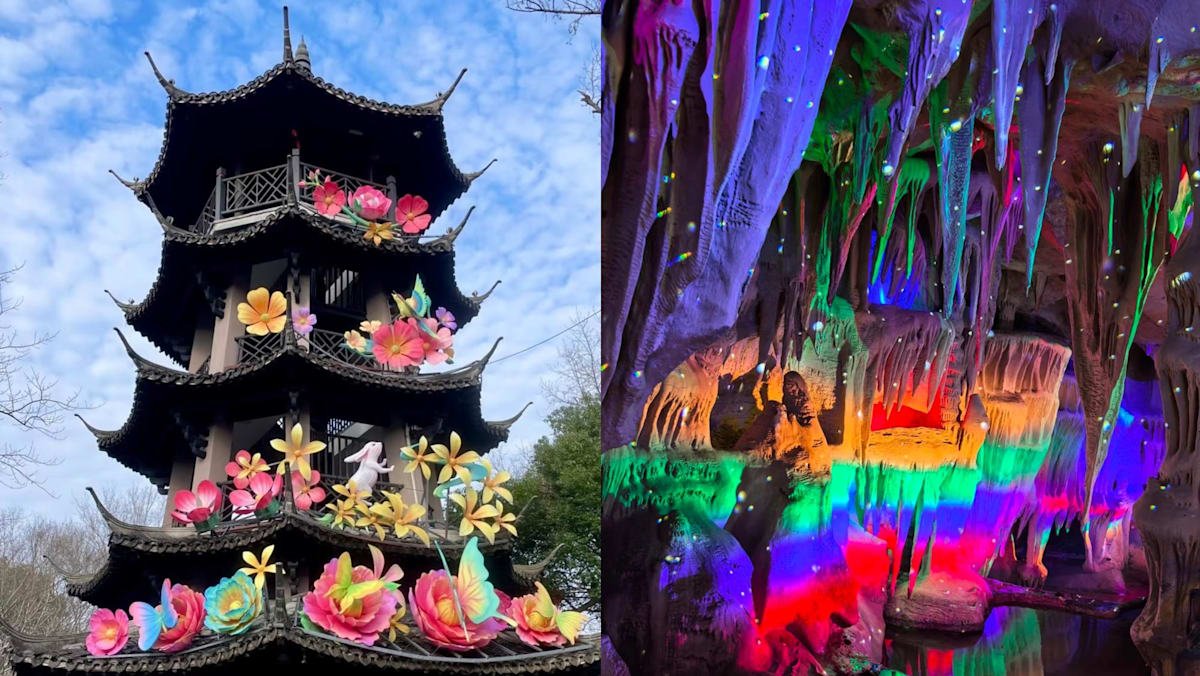
Plastic flowers seen on a pagoda in Hangzhou, stalactites are illuminated with rainbow LED lights in a cave in Chengdu. (Photos: Xiaohongshu/小鱼儿游呀游, 费可可1111)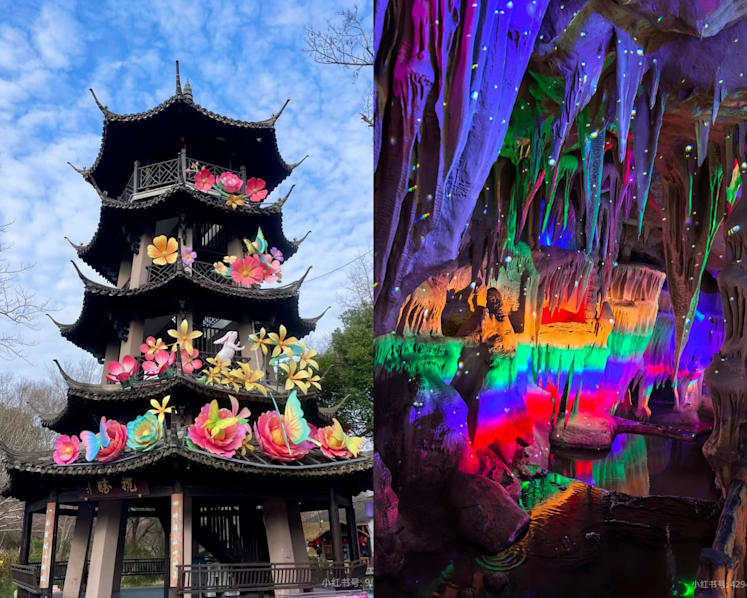
New: You can now listen to articles.

This audio is generated by an AI tool.

Read a summary of this article on FAST.
Get bite-sized news via a new
cards interface. Give it a try.
Click here to return to FAST
Tap here to return to FAST
FAST
SINGAPORE: If you’ve travelled to China recently, you might have noticed some unusual additions to popular scenic spots.
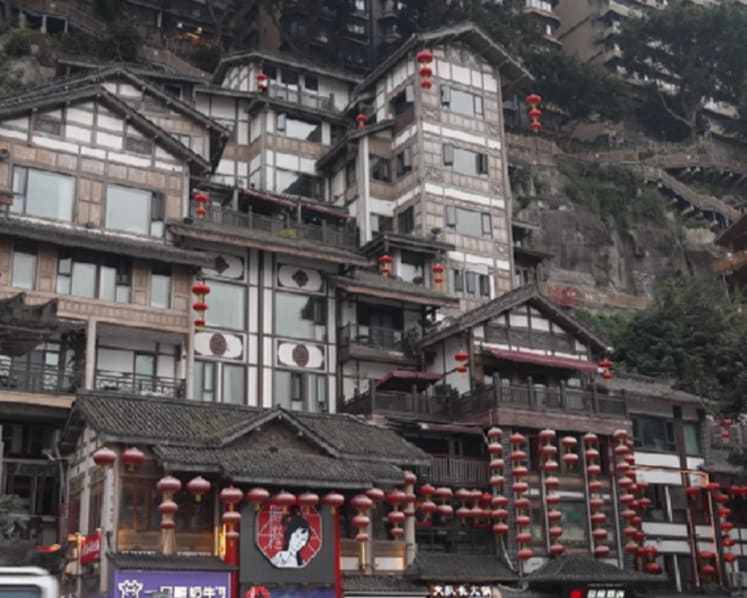
From street signs bearing slogans like “missing you in Chongqing” to rainbow LED lights illuminating ancient cave systems and giant plastic flowers adorning pagodas and temples, kitschy installations are becoming an increasingly common sight across the country – much to the frustration of Chinese travellers.
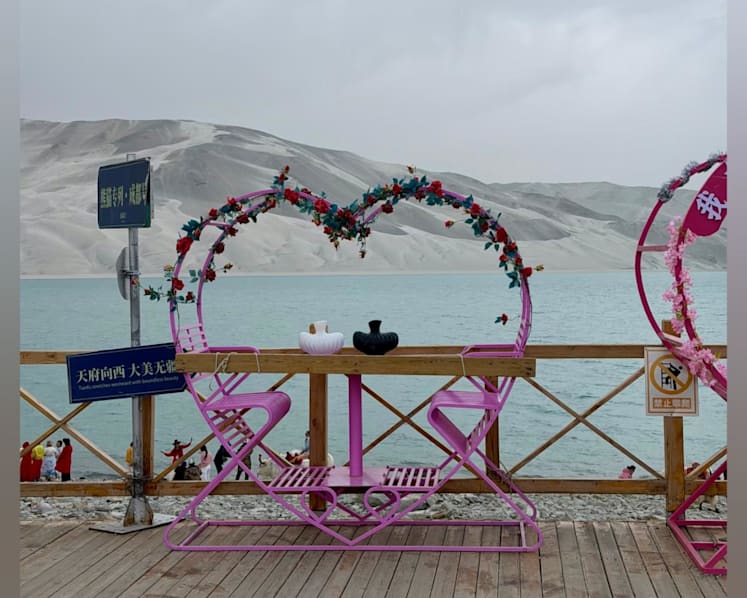
“When will such decorations (disappear),” remarked a user on Xiaohongshu, who criticised fake roses and heart-shaped decorations she recently saw around the picturesque Baisha Lake in Xinjiang province.
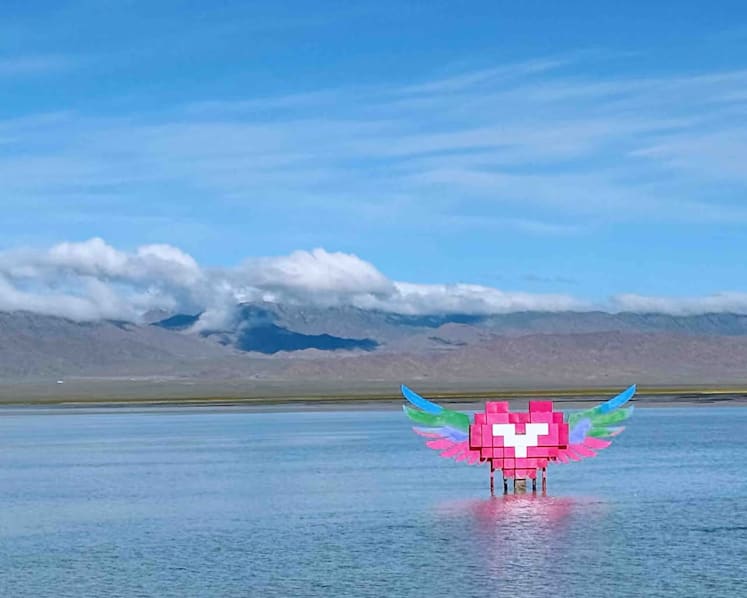
In May, pictures of a giant pink winged heart sculpture in the middle of Qinghai’s Chaka salt lake went viral.

Guess Word
Crack the word, one row at a time

Buzzword
Create words using the given letters

Mini Sudoku
Tiny puzzle, mighty brain teaser

Mini Crossword
Small grid, big challenge

Word Search
Spot as many words as you can
Famed for its crystal blue water and reflective surface, the lake is a major tourist attraction – welcoming more than two million visitors in 2025.
The sculpture had ruined the lake’s natural beauty, netizens said, describing it as “overkill” and “unnecessary”.
“Hold up – why did they put this in the middle of the lake? Wouldn’t a pristine, unobstructed lake look better? I don’t understand this,” wrote a user on Xiaohongshu – with the handle Xin.
Another user by the handle Weiwei said: “What’s the point of taking photos of nature when there’s something ugly in the middle of it?”
Krisa Chen, a 24-year-old student from Hangzhou, had initially planned on travelling to Qufu city in Shandong province this year – best known as the hometown of Confucius.
But after scrolling through photos from various travel vlogs that described local tourist spots as “messy and ugly” – she decided against it.
Pictures and videos showed crowds of tourists dressed in traditional hanfu gowns, posing under neon lights. Performers were also seen parading the streets.
“A centuries-old historic town should allow visitors to experience architectural scale, street textures, local life, craftsmanship, and historical depth,” she told CNA, adding that many places in China were becoming “overcommercialised”.
She pointed to light shows, artificial waterfalls and photo installations being set up at locations just to attract influencers.
“Using all kinds of colourful LED lights makes it garish and flashy (and) really annoying to look at,” she said.
“They (planners) also force lasers onto water scenic areas and cover ancient buildings with LED screens – and it looks “extremely jarring”, Chen said.
“The aesthetics are just terrible.”
WHY AESTHETICS AND AUTHENTICITY MATTER
Aesthetics are becoming increasingly important to many young travellers, according to a survey published on Jun 18 by the state-owned China Youth Daily newspaper.
Many are dissatisfied with what they see as the declining aesthetic quality of domestic tourist attractions, the report said.
More than 1,000 people between the ages of 20 and 40 were surveyed – with an overwhelming 95 per cent encountering tourist spots with “poor aesthetic quality”.
Respondents also criticised the “forced placements” of lights and decorations that disrupt natural landscapes and scenery – describing them as “colour and visual pollution”.
When a plastic installation or props with “little connection to a place” begin to overshadow its landscapes and architecture, “it is no longer just a matter of personal taste”, said Lina Zhong, a professor from Beijing International Studies University (BISU) and director of its Institute for Big Data Research in Tourism.
“It becomes a question of how tourism resources and public spaces are planned and managed,” she added.
But for destinations under financial pressure, adding decor like props or lights “creates an immediate visual focus”, which could lead to more visitors and tourists – and generate online exposure.
Taste is also “subjective”, she added.
“Bright colours, cartoon figures or photo installations are not necessarily bad,” she said, adding that families and some travellers could find them “fun and light-hearted”.
“The real questions are whether it is a thoughtful creation, respects the place and suits its target visitors,” Zhong said.
Sam Huang, a tourism and marketing professor at Edith Cowan University in Perth, said many tourism planners in China were driven by “commercial interest” and could lack “the needed knowledge of tourist preferences and aesthetics”.
“Chinese tourists are increasingly seeking more authentic, meaningful transformative experiences,” he said, adding that “overcommercialisation works against” authentic experiences that many Chinese tourists are after.
Such practices might backfire in the longer term, he said.
“If tourists are annoyed and dissatisfied by this ugliness, they will stay away from such places and spread negative word-of-mouth.”
Tourism in China is evolving, said BISU’s Zhong. “Visitors are more willing to pay for personalised experiences, authenticity and emotional value.”
“What they increasingly dislike is when commercial activity replaces culture instead of supporting it and it pushes out real life instead of becoming part of it.”
Source: CNA/lk(ht)
Sign up for our newsletters

Get the CNA app
Stay updated with notifications for breaking news and our best stories
Get WhatsApp alerts
Join our channel for the top reads for the day on your preferred chat app

Get bite-sized news via a new
cards interface. Give it a try.
Click here to return to FAST
Tap here to return to FAST
FAST
About The Author