Why were there no tiny dinosaurs? You might blame the mammals
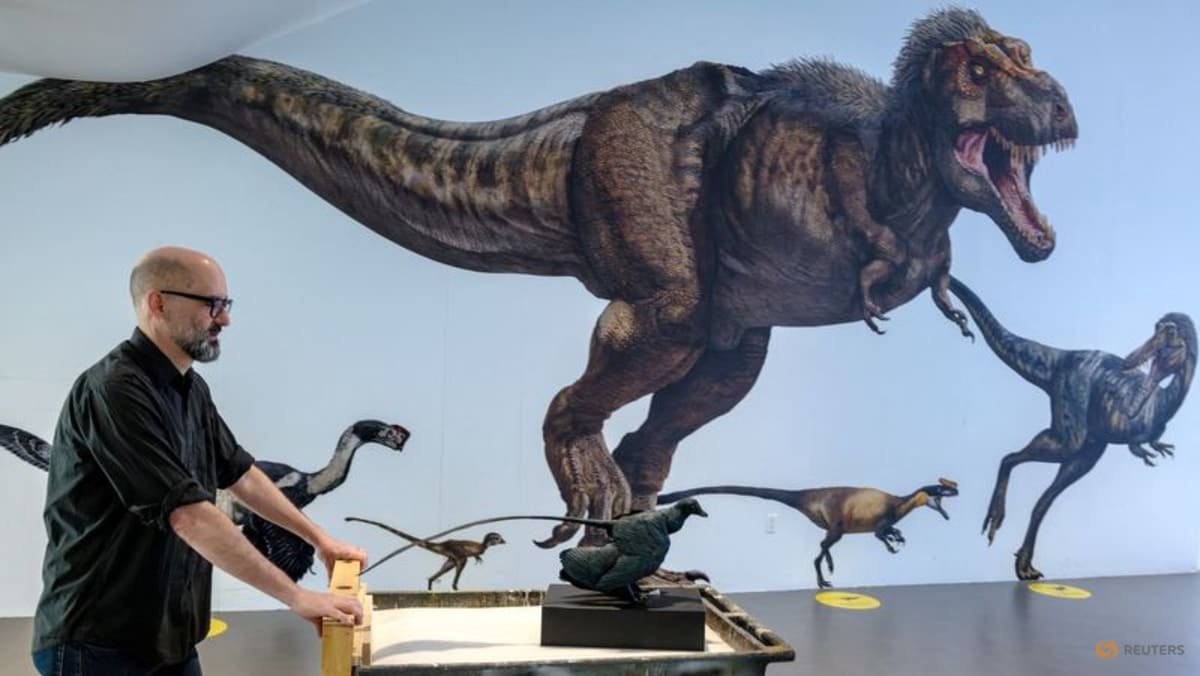
A model of the small dinosaur Microraptor being put on display at the American Museum of Natural History in New York, seen in this photograph released on August 5, 2026. Microraptor was one of the smallest-known dinosaurs, weighing about one pound, roughly the size of a large rabbit. Alvaro Keding/American Museum of Natural History/Handout via REUTERS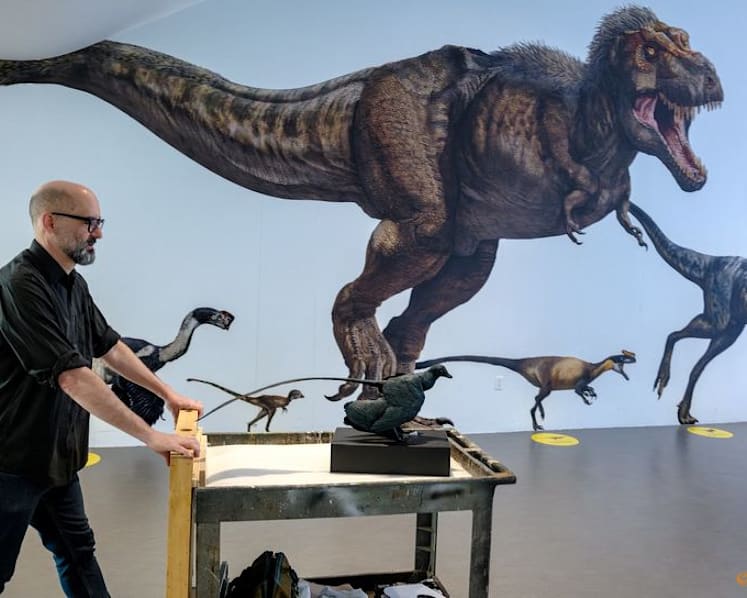
Read a summary of this article on FAST.
Get bite-sized news via a new
cards interface. Give it a try.
Click here to return to FAST
Tap here to return to FAST
FAST
WASHINGTON, Aug 6 : Everyone knows dinosaurs got really big. Some of the long-necked plant-eaters were the largest land animals ever on Earth, as shown by Argentinosaurus, perhaps 70 to 90 tons and upwards of 100 feet (30 meters) long. But how about tiny dinosaurs, like the size of a mouse? As far as we know, none ever existed.
New research investigates this phenomenon. Scientists employed mathematical models to explore the evolution of body size across vertebrate groups. They determined that energetics and physiology can account for the sizes of mammals, birds that fly and turtles, but these factors fail to explain the absence of really small dinosaurs, aside from their avian descendants.
The researchers see other dynamics at play. They hypothesized that because early mammals — most of them puny shrew-sized critters — had ably filled ecological niches for small animals, their presence prevented dinosaurs from evolving tiny body sizes adapted to such niches.
“We know based on observations of living animals and the fossil record that most animal groups have members that achieve very small body sizes, and that these small animals typically dominate their ecosystems,” said paleontologist Stephanie Lechki, a postdoctoral fellow at Princeton University in New Jersey and co-leader of the study published in the journal Evolution.

Guess Word
Crack the word, one row at a time

Buzzword
Create words using the given letters

Mini Sudoku
Tiny puzzle, mighty brain teaser

Mini Crossword
Small grid, big challenge

Word Search
Spot as many words as you can
“A small animal typically requires fewer resources and can achieve reproductive maturity and reproduce more quickly than a large-bodied animal,” Lechki said.
The smallest dinosaurs included the likes of crow-sized Microraptor, weighing as little as 15 ounces (430 grams); Fruitadens, at 26 ounces (730 grams); and Anchiornis, at 19 ounces (530 grams). These were still much larger than today’s smallest bird, the bee hummingbird (about 1.75 grams); smallest mammal, the Etruscan shrew (about 1.8 grams); and smallest lizard, the dwarf gecko (about 0.15 grams).
“Most living species are small, much smaller than us, and smaller than even the smallest dinosaurs,” said paleontologist and study co-leader Roger Benson, curator of dinosaur paleobiology at the American Museum of Natural History in New York.
That includes approximately 90 per cent of extant bird species and 75 per cent of extant mammal species.
“Think of rodents, shrews, bats, songbirds, most lizards, frogs, so many small species. This suggests that there are many more niches available to small-bodied species. The absence of tiny dinosaurs means that all those abundant niches were closed to them,” Benson said.
Dinosaurs first appeared roughly 230 million years ago and eventually became the dominant land animals, holding that status until an asteroid struck Earth 66 million years ago, causing a mass extinction of species. Mammals during the age of dinosaurs thrived in ecological niches perfect for small body sizes like insectivores and seed eaters.
“It is likely that small-bodied early mammals outcompeted dinosaurs, preventing them from reaching small body sizes. Similarly, large dinosaurs likely outcompeted early mammals, preventing them from reaching large body sizes,” Lechki said.
It was only after the asteroid struck that mammals achieved larger body sizes and expanded into ecological niches previously occupied by dinosaurs like large plant eaters and apex predators.
Another potential explanation for the lack of evidence for tiny dinosaurs is that they did exist but their fossils have been elusive. The researchers said this seems improbable because fossil deposits containing dinosaur remains often also preserve the remains of numerous small animals.
MATHEMATICAL MODELS
The mathematical models forecast how evolutionary forces drove body size based on the physiology of an animal’s energy uptake from ecosystem resources, and the rate at which the animal converts that to offspring. Evolutionary forces favor body sizes at which the rate of energy invested in offspring is maximum, Benson said.
Dinosaurs defied the models even though birds, which evolved from small feathered dinosaurs and first appeared about 150 million years ago, conformed to the models — though not flightless birds. Snakes and crocodilians also deviated from the mathematical models.
The dinosaurs from which birds evolved were from a lineage called theropods to which giants like Tyrannosaurus rex — which reached roughly 40-1/2 feet (12.3 meters) long and perhaps 8 tons — also belonged. Some flightless birds became sizable. For instance, the elephant birds that inhabited Madagascar until about a millennium ago reached more than half a ton.
“Birds evolved most of their flight adaptations around 130 million years ago and immediately became small,” Benson said. “We think that flight might have allowed birds to escape from ecological competition and invade tiny body sizes. This ultimately explains the tremendous biodiversity of living birds, which have more than 12,000 species.”
Source: Reuters
Sign up for our newsletters

Get the CNA app
Stay updated with notifications for breaking news and our best stories
Get WhatsApp alerts
Join our channel for the top reads for the day on your preferred chat app

Get bite-sized news via a new
cards interface. Give it a try.
Click here to return to FAST
Tap here to return to FAST
FAST
About The Author