China’s LandSpace lands rocket booster; joins SpaceX, Blue Origin with reusable tech
LandSpace achieved the feat with its Zhuque-3 rocket on Wednesday (Aug 19), delivering China’s first successful ground-based, leg-assisted landing of an orbital-class booster.
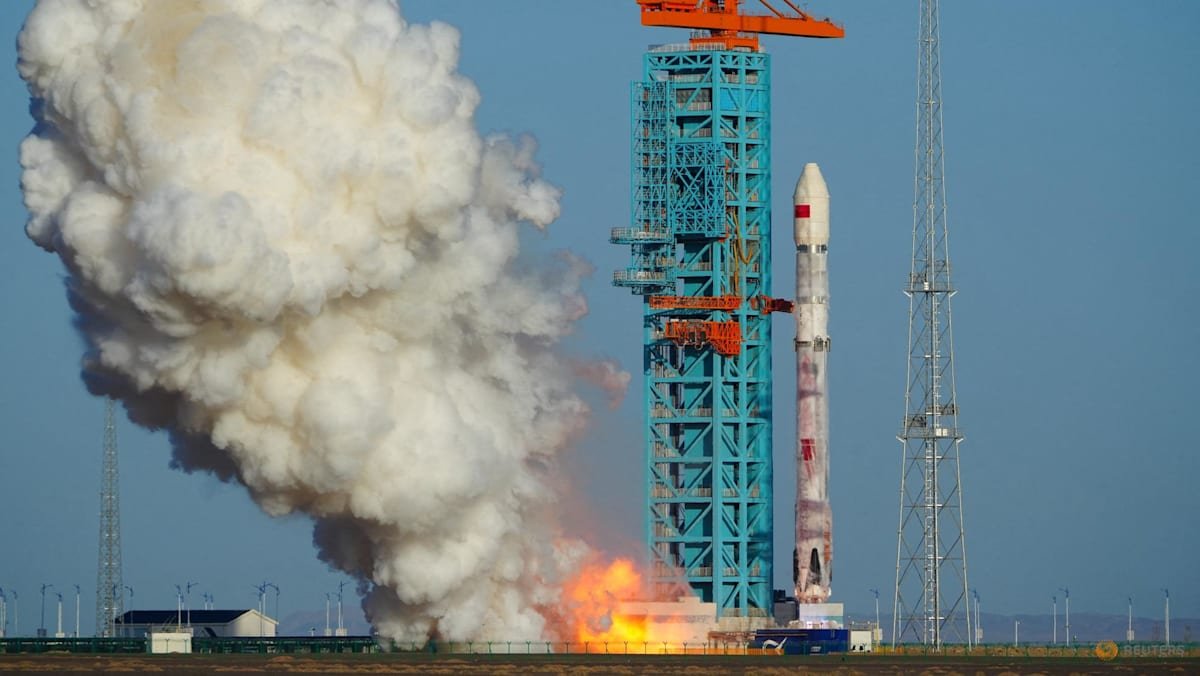
Zhuque-3 rocket by China’s private rocket firm LandSpace lifts off from the Dongfeng Commercial Space Innovation Pilot Zone in northwestern China, near Jiuquan, Gansu province, China, on Aug 19, 2026. (Photo: cnsphoto via Reuters)
Read a summary of this article on FAST.
Get bite-sized news via a new
cards interface. Give it a try.
Click here to return to FAST
Tap here to return to FAST
FAST
BEIJING: Chinese startup LandSpace on Wednesday (Aug 19) recovered the first stage of its Zhuque-3 rocket, joining SpaceX and Blue Origin as the only private companies to land an orbital-class booster and narrowing China’s gap with the United States in reusable rockets.
The ability to return, recover and reuse a booster is crucial to reduce cost and make it easier to put satellites into orbit, turning space exploration into a commercially viable business similar to civil aviation.
The achievement occurred during LandSpace’s second attempt to land the engine-packed first stage of the Zhuque-3, a stainless-steel rocket billed as China’s answer to SpaceX’s Falcon 9.
The 66.1m Zhuque-3 lifted off from the Dongfeng Commercial Space Innovation Pilot Zone in northwestern China, with the nine-engine first stage – or booster – returning to a landing site in the province of Gansu, 390km southeast of the launch pad, state media reported.

Guess Word
Crack the word, one row at a time

Buzzword
Create words using the given letters

Mini Sudoku
Tiny puzzle, mighty brain teaser

Mini Crossword
Small grid, big challenge

Word Search
Spot as many words as you can
The landing is likely to increase investor confidence as LandSpace pursues a listing on the Shanghai Stock Exchange’s tech-focused STAR Market. LandSpace seeks to raise 7.5 billion yuan (US$1.11 billion) through an initial public offering to support development and expand reusable launch services.
The firm submitted an updated IPO prospectus to the bourse in June that said it aimed to be profitable by 2029.

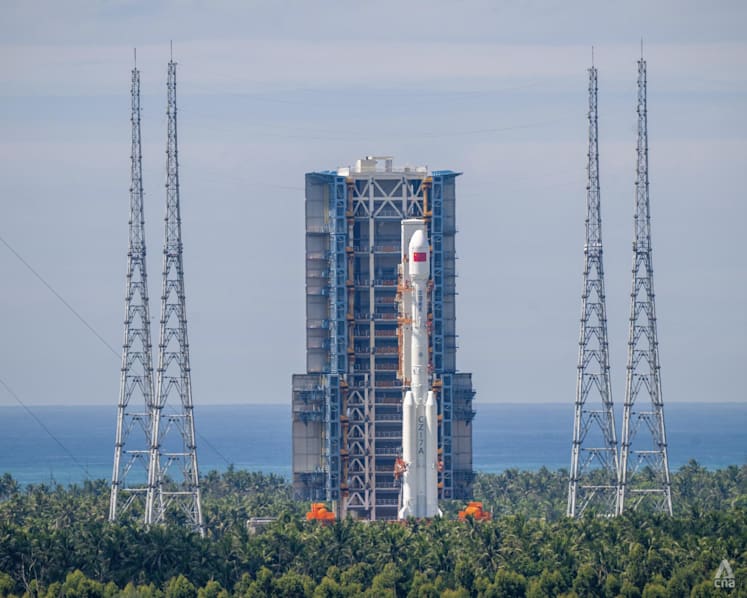
LandSpace said the Zhuque-3 is made of stainless steel, which offers greater heat resistance and the prospect of reduced production costs compared with the Falcon 9’s aluminium-lithium alloy body. It also runs on methane and liquid oxygen, which can burn cleaner than the Falcon 9’s liquid oxygen and kerosene mix.
The rocket can lift 14.2 metric tons to low-Earth orbit on a one-way trip versus the Falcon 9’s 22.8 tons, LandSpace said.
LandSpace aims for the Zhuque-3 booster to be reused up to 20 times. SpaceX launches the Falcon 9 around 150 times a year, or roughly three times a week, and reuses its booster dozens of times.
FOURTH ATTEMPT
Wednesday’s launch marked China’s fourth orbital booster recovery attempt.
LandSpace made history in December 2025 as the first Chinese entity to conduct a reusable rocket test. The rocket entered orbit as planned, but its first stage did not complete a controlled landing.
Weeks later, China launched the state-developed Long March 12A, which also reached orbit but failed in recovery.



In July, China successfully tested an experimental booster retrieval system using a net-capture system on a floating seaborne platform, becoming just the second country to land an orbital-class rocket.
Unlike deployable legs, the Long March 10B reusable rocket used four lightweight hooks to engage with steel cables on the platform’s net system, an innovation Beijing says simplifies the rocket’s onboard structure, reduces vehicle mass and increases payload capacity.
With Wednesday’s landing, LandSpace has now delivered China’s first successful ground-based, leg-landed recovery of an orbital-class booster.
LandSpace plans to reuse a recovered first-stage booster in the next six months, a step it says will lay a foundation for future high-frequency and low-cost commercial launches.
Source: Reuters/lk(ws)
Sign up for our newsletters

Get the CNA app
Stay updated with notifications for breaking news and our best stories
Get WhatsApp alerts
Join our channel for the top reads for the day on your preferred chat app

Get bite-sized news via a new
cards interface. Give it a try.
Click here to return to FAST
Tap here to return to FAST
FAST
About The Author