Initiative to help rough sleepers find co-tenants for rental flats among pilot projects given MSF funding
Other projects to get help under MSF’s PATH fund include one that helps rough sleepers get apprenticeships and another that will upgrade a temporary shelter’s facilities.
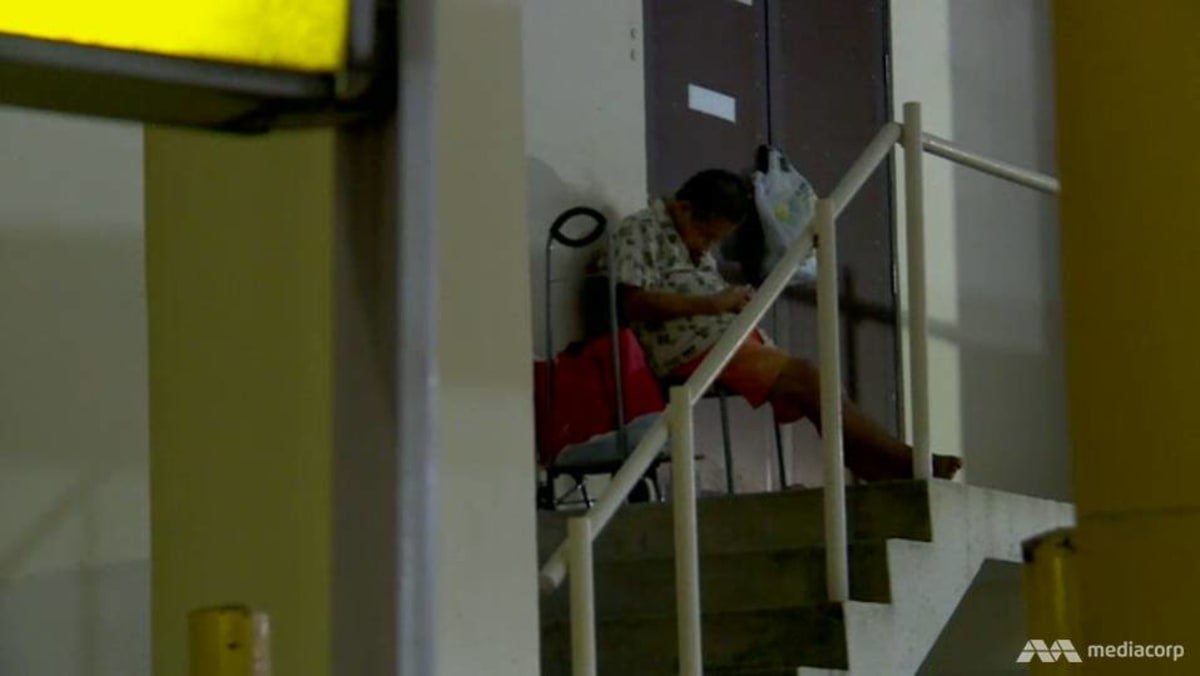
A rough sleeper seen on a flight of stairs in Singapore. (File photo: CNA)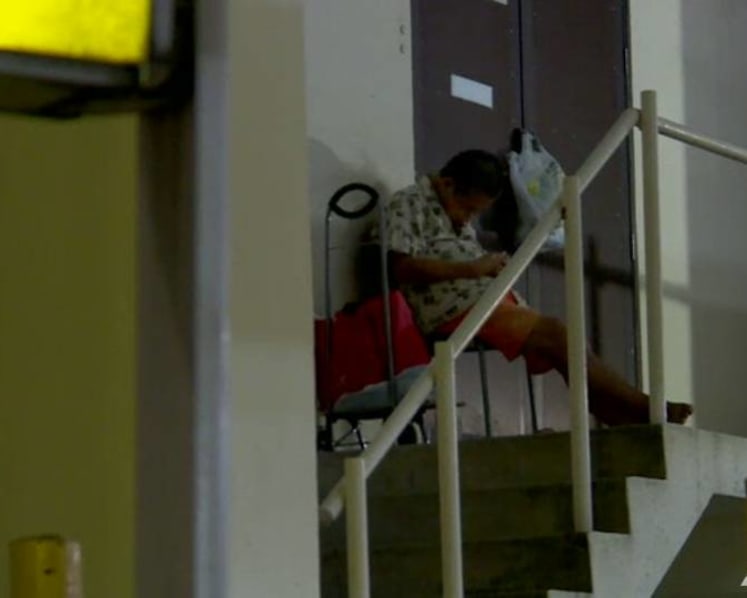
New: You can now listen to articles.

This audio is generated by an AI tool.

Read a summary of this article on FAST.
Get bite-sized news via a new
cards interface. Give it a try.
Click here to return to FAST
Tap here to return to FAST
FAST
SINGAPORE: An initiative to match rough sleepers with one another so they can jointly rent a public rental flat is among the pilot projects to receive help under a new Ministry of Social and Family Development (MSF) fund.
MSF announced on Wednesday (Aug 19) that 17 community-led projects will be piloted, spanning areas such as employment, housing, outreach, social reintegration and youth support.
Of these, 11 will test new initiatives aimed at providing more tailored support for rough sleepers.
This is the first tranche of projects under the S$450,000 (US$352,600) Partnership to Tackle Homelessness (PATH) fund, which aims to support initiatives that help homeless people.

Guess Word
Crack the word, one row at a time

Buzzword
Create words using the given letters

Mini Sudoku
Tiny puzzle, mighty brain teaser

Mini Crossword
Small grid, big challenge

Word Search
Spot as many words as you can
Rough sleepers are defined as individuals who sleep in public spaces, regardless of whether they have housing. This includes those without a home and those who have a home but are unable to return to it.
The fund gives community organisations opportunities to pilot innovative approaches, test new solutions and contribute ideas shaped by their experiences working directly with rough sleepers.
“These projects also recognise that helping someone move out of rough sleeping is not only about providing temporary accommodation,” said MSF.
“It is also about helping individuals restore stability in their lives, strengthen their relationships and develop the confidence, skills and support networks needed to remain stably housed.”
According to an MSF report in January, 496 rough sleepers were counted during a single-night street count on Jul 18, 2025, a slight decrease from the 530 in 2022.
The next application window for the PATH fund will open in March 2027.
The 17 projects were unveiled at the Partners Engaging and Empowering Rough Sleepers (PEERS) appreciation event on Wednesday.
It was attended by Minister-in-charge of Social Services Integration Desmond Lee, Senior Minister of State of Social and Family Development Goh Pei Ming and Senior Parliamentary Secretary Eric Chua.
PILOT PROJECTS
One such initiative aimed at helping rough sleepers find more permanent housing is the Common Ground – Joint Singles Scheme (JSS) Matching Programme.
The scheme matches single rough sleepers who want to apply for a public rental flat with compatible co-tenants. This is intended to help them access housing more quickly while reducing the risk of shared living arrangements breaking down.
Dr Steven Tham, executive director of Good News Community Services, told CNA that the organisation held its first matching event last month, where rough sleepers could meet and get to know one another better.
Participants were given cards listing various behaviours and preferences, such as whether they were comfortable with sleeping late or loud music, and could indicate what they were willing or unwilling to accept in a potential co-tenant.
“These are what we call the non-negotiables. And at the same time, they can indicate the things that they don’t mind. For example, a bit of untidiness, visitation, watching movies or singing aloud,” he added.
This helped identify people with compatible living preferences and gave prospective co-tenants an opportunity to get to know each other before deciding whether to live together.
“That helps them feel a little bit more confident and they will be willing to stay together,” Dr Tham said.
“It is much better than randomly going to somebody … Because you have established some common ground for them to start off.”
The Joint Singles Scheme (JSS) allows two singles to jointly rent a flat together. The JSS Operator-Run pilot allows singles to apply for a rental flat without first having to find a flatmate.
Tenants will be assigned flatmates by a social service agency, taking into consideration each tenant’s profile, preferences and living habits.
According to MSF’s report in January, over half of the respondents – 58 per cent – were aware of the launch of new public rental housing schemes such as the JSS Operator-Run pilot.
When asked whether they had applied or would be keen to apply for these schemes, only 39 per cent said they were willing to.
MSF said in the report that the new public rental housing models were well-received by some rough sleepers, but more could be done to raise awareness, given that many respondents were unaware or unwilling to consider these options.
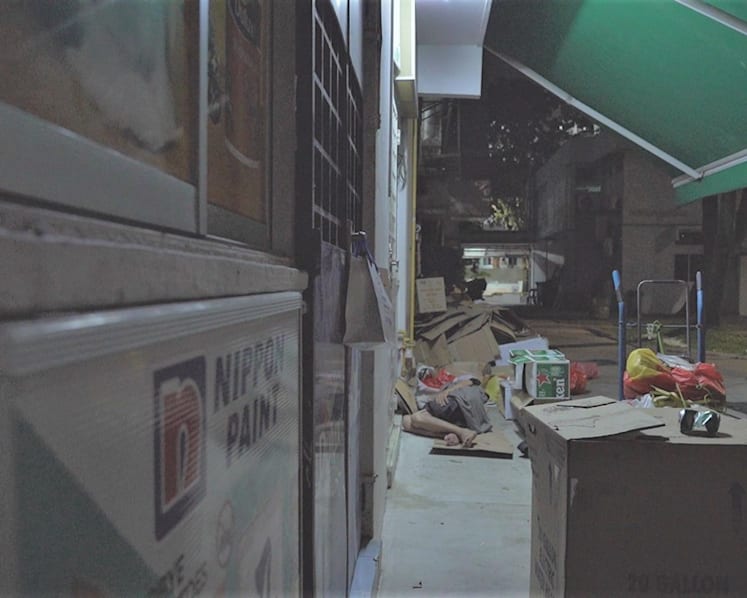
Getting rough sleepers to take the first step and meet a potential co-tenant can be challenging, Dr Tham said.
Some may also be reluctant to move into a shelter because they are unfamiliar with the process or have yet to build sufficient rapport with those reaching out to them.
His team may approach and speak to them over several months to build trust. They would also explain the benefits of moving into a shelter, such as better hygiene facilities and a place to store their belongings.
He added that support continues after they move into their new homes, with social workers keeping in touch with them and providing help if problems arise.
“That gives them the assurance that if they still have issues, they have someone to consult,” Dr Tham said.
EMPLOYMENT SUPPORT
Another pilot initiative aims to help rough sleepers overcome barriers to employment.
Associate director of Hope Initiative Alliance Joyder Ng recalled helping a rough sleeper staying at a temporary shelter to secure a job.
He had undergone training for a security role but did not pass the assessment on his first attempt. A second attempt required him to undergo and pay for another round of training, but he did not have the money to do so.
“We provide the shelter, but we don’t have additional donations. But we discussed it and decided to put it through and sponsor him for the second test,” she said.
He eventually passed the test, allowing him to secure employment.
Ms Ng said: “Having a job, being able to support themselves, being able to earn and spend their own money is something that helps them see they are worthy and it’s meaningful for them.”
Building on such efforts, the team started MAPS – Micro-employment and Apprenticeship Pathways to Stability – to provide rough sleepers with tailored employment opportunities, from apprenticeships to micro-jobs.
Ms Ng said the initiative is in the preparation phase and the organisation has reached out to potential employers, as well as job coaches and career counsellors.
Ms Ng said the initiative is not simply about placing rough sleepers in work or expecting them to take long-term employment immediately. Instead, it aims to help them become work-ready, including through apprenticeships or part-time work.
“Once they feel more comfortable and more confident about what they are doing, they can also pursue long-term employment with the employers,” she said.
REFURBISHMENTS
The other six projects will support community organisations operating Safe Sound Sleeping Places – interim shelters in community-owned premises – to improve their facilities and provide more conducive interim shelter for rough sleepers.
Also known as S3Ps, these shelters give rough sleepers a place to rest for the night.
One of them is Toa Payoh Methodist Church, where pastor Ms Ming Feong Ching described its five-person S3P as a “stepping stone” for rough sleepers.
Those who come to the shelter may be sleeping rough for a range of reasons, including family conflict, failed marriages and unemployment.
“All who come in will have a social worker to journey with them, and what we provide is a place to sleep. Without this shelter, they are always on alert for robbery, abuse, and the harsh weather,” she said.
With the funding, the church plans to refurbish its S3P with new cabinets to store residents’ luggage and lockers for their valuables. It also plans to purchase new mattresses, safari beds, an air purifier and a vacuum cleaner to improve and maintain the shelter.
Ms Ming said lockers would give rough sleepers a greater sense of security.
“These are their personal belongings and not knowing if they are safe just creates additional anxiety,” she said. “So they can go out to work or look for work without carrying all their belongings on them every day.”
This sense of security is important because the belongings rough sleepers carry with them are often “all they have”, Ms Ming added.
“So giving them that secure, reliable place to sleep allows them to really rest without having to always worry about personal safety, and eventually be in a better frame of mind so that they can make important decisions to move their life forward,” Ms Ming said.
The church also conducts walks around the Toa Payoh area twice a month to reach out to rough sleepers. Ms Ming said some are “resistant” to moving into a shelter because they may feel “locked in”.
“We respect their decision, but we continue to reach out until the day that they agree to go to a shelter,” she said.

STRONGER PARTNERSHIPS
MSF also recognised 12 organisations with the five-year partner award for their sustained contributions to supporting rough sleepers, while 11 new organisations that joined the PEERS Network this year received the new partner award.
The PEERS Network now comprises more than 80 community partners, social service agencies and government organisations, which work alongside volunteers and members of the public to provide coordinated support for rough sleepers.
MSF said addressing rough sleeping requires sustained collaboration across these groups, with partners bringing different expertise and perspectives to support those experiencing homelessness.
“MSF will continue working closely with partners to strengthen support for rough sleepers, test new ideas and strengthen early support, and build a stronger ecosystem of care,” it added.
“Together, these efforts aim to help more rough sleepers achieve stable housing, rebuild social connections, strengthen family and community ties, and reintegrate into society with dignity and confidence.”
Speaking to the PATH Fund recipients at the appreciation event, Mr Lee said: “Every rough sleeper has a story that needs to be heard, and meaningful change begins with somebody choosing to show up.
“I want to thank you for being that someone week after week after week. There’s not easy work. There’s lots of love, lots of patience, lots of outreach on the ground, and befriending, and working close together with one another, (and) working in partnership with others in the peers network. We help provide that whole chain of support all the way till housing stability.
“And I’m confident that we will go even further because of the commitment and care that all of you bring to this work.”
Source: CNA/cj(mi)
Sign up for our newsletters

Get the CNA app
Stay updated with notifications for breaking news and our best stories
Get WhatsApp alerts
Join our channel for the top reads for the day on your preferred chat app

Get bite-sized news via a new
cards interface. Give it a try.
Click here to return to FAST
Tap here to return to FAST
FAST