Dog’s death during canine-catching operation renews scrutiny of how Malaysia manages strays
Activists say that the ultimate goal should be preventing strays from ever being born or abandoned on the streets.
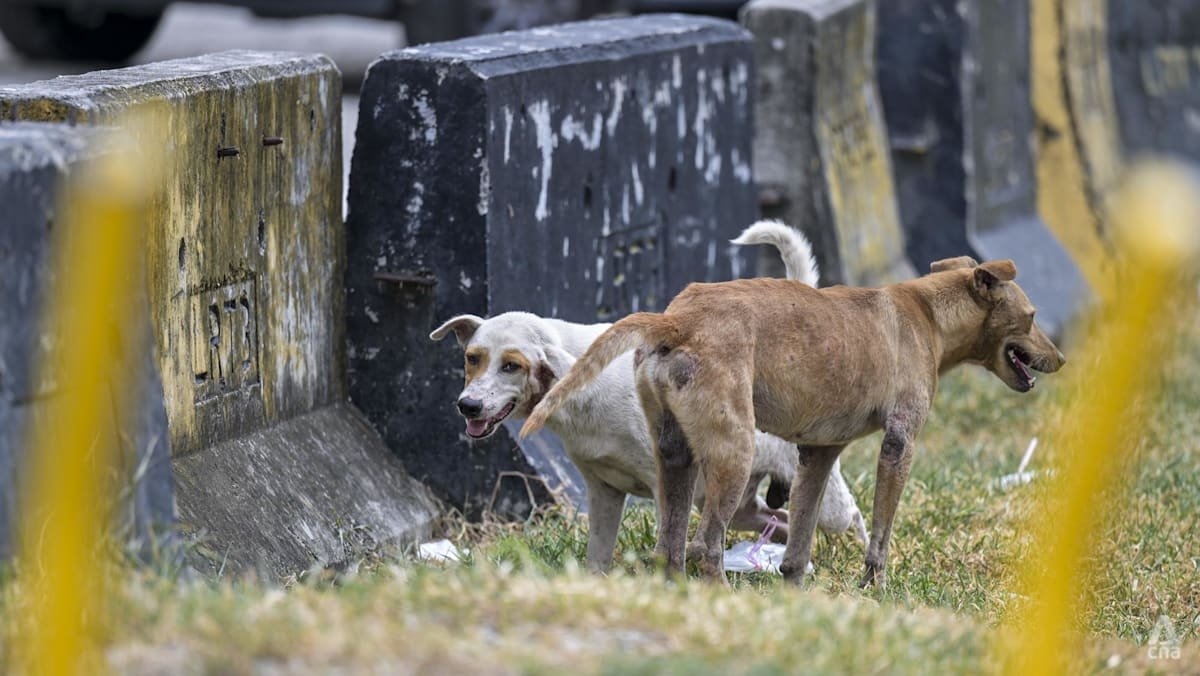
A couple of stray dogs in Klang. (Photo: CNA/Fadza Ishak)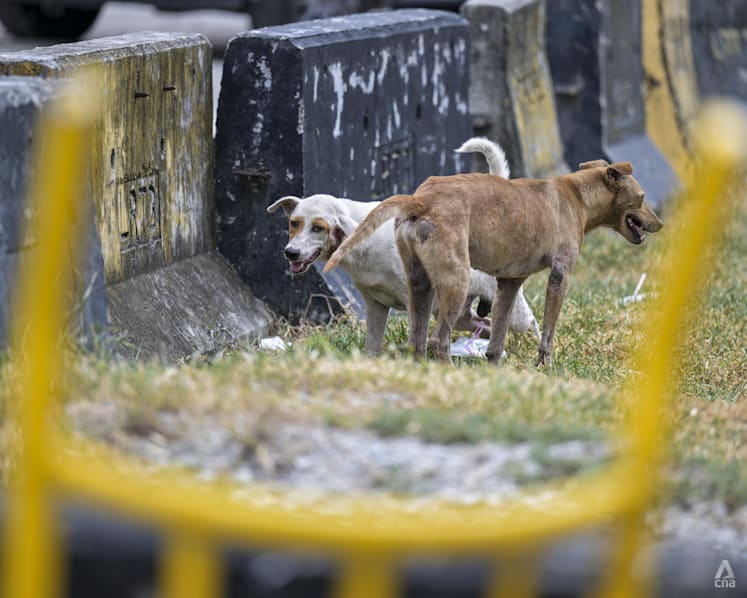
New: You can now listen to articles.

This audio is generated by an AI tool.

Read a summary of this article on FAST.
Get bite-sized news via a new
cards interface. Give it a try.
Click here to return to FAST
Tap here to return to FAST
FAST
KUALA LUMPUR: A pet dog’s death during a municipal dog-catching operation in Selangor – which has led to animal cruelty charges against its owner and a volunteer canine-catcher – has renewed scrutiny of how Malaysia manages its strays.
On Thursday (Aug 20), S Roghini Devi, 42, and Muhammad Shah Idham Nor Haikal Shaharom, 24, were separately charged at the Klang Sessions Court with committing animal cruelty through an unreasonable act that caused unnecessary pain or suffering.
Shah Idham is alleged to have strangled the dog with a loop while Roghini was alleged to have pulled the dog.
Roghini was the dog’s owner while Idham was part of a group involved in the Klang municipal council dog-catching operation on Jul 29.

Guess Word
Crack the word, one row at a time

Buzzword
Create words using the given letters

Mini Sudoku
Tiny puzzle, mighty brain teaser

Mini Crossword
Small grid, big challenge

Word Search
Spot as many words as you can

The operation was reported to have been launched in response to frequent resident complaints about neighborhood strays, including a severe accident where a motorcyclist was purportedly injured by a roaming dog.
A video of the July incident went viral online and saw different groups disputing the sequence of events which occurred close to midnight outside Roghini’s home.
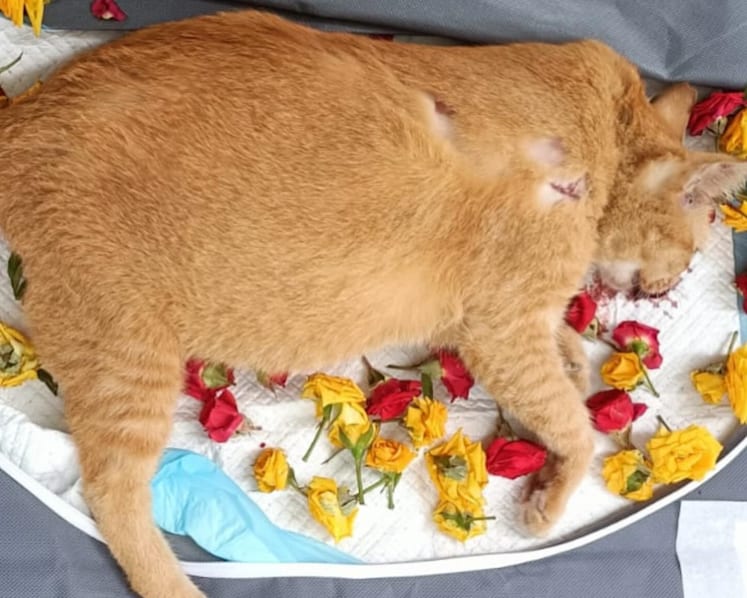
Since the July incident, Roghini has been quoted by local media as saying that Rocky was struck on the head and unresponsive when she found it looped by the neck.
Meanwhile, Shah Idham’s lawyer had said that the confrontation turned chaotic only after Roghini intervened, sparking a tug-of-war over the animal, as reported by local news outlets.
Rocky’s death drew condemnation from Tengku Permaisuri Norashikin – the queen consort to the Sultan of Selangor – who spoke out against animal cruelty towards pets and strays alike.
“No form of animal cruelty would be accepted or tolerated, regardless of who committed the act, their position, race, religion or the reason given,” said Tengku Permaisuri Norashikin, who is also the Royal Patron of the Stray Free Selangor initiative under the state’s chapter of the Society for the Prevention of Cruelty to Animals (SPCA).

The incident has thrust the issue of stray dog management back into the national spotlight – a concern amplified by a recent proposal by the Seremban city council in Negeri Sembilan to introduce a cash-reward incentive programme for catching stray dogs.
Activists whom CNA spoke to said that such a proposal would not solve the issue, with Kalaivanan Ravichandran – who is the president of Persatuan Haiwan Terbiar Malaysia (SAFM) – saying that the country needed a multi-year national stray animal population management programme.
SAFM is a non-governmental organisation (NGO) dedicated to the welfare of all animals.
This multi-year scheme would include large-scale spay and neuter programmes, vaccination, and proper management of community dogs among other things.
“Ultimately, the long-term objective should not be to become better at catching stray dogs. It should be to reach a point where fewer dogs are being born or abandoned onto our streets in the first place,” he said.
It was reported that before the attempt to catch Rocky, another 12 dogs had been caught in the area. It is unclear if the dog catchers were aware that Rocky belonged to Roghini.
On Thursday, the animal cruelty charges – framed under Section 29(1)(e) of the Animal Welfare Act 2015 and punishable under Section 29(1) of the same Act – were read out separately to the two at the court, one after another.
The offence carries a fine of between RM20,000 (US$4,950) and RM100,000, imprisonment for up to three years, or both upon conviction.
Roghini was also charged with keeping Rocky without a valid licence from the Klang Royal City Council, an offence that carries a maximum fine of RM2,000 or up to one year in prison.
Tensions were high at the court complex as supporters for both Shah Idham and Roghini gathered, met by an increased police presence.
Kalaivanan said that Rocky’s case received significant public attention partly because it had an owner who was able to come forward, speak about what happened and pursue the matter.
“But that also raises a much bigger concern: what happens when the dog has no owner?” he said.
REACTIVE POLICIES AND THE DANGER OF BOUNTIES
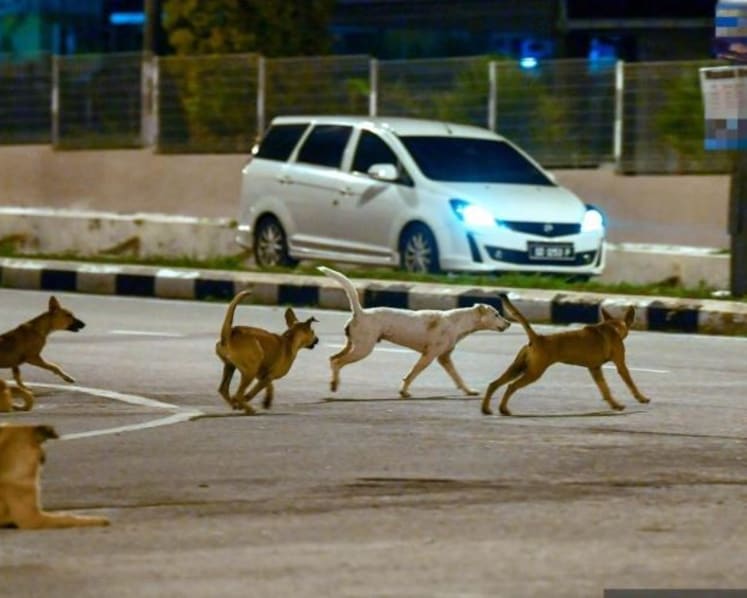
Animal advocates said the fundamental flaw in current strategies is a fixation on managing visible strays rather than curbing the root cause: the continuous influx of new dogs onto the streets.
Kalaivanan said that stray dog management in Malaysia remained largely reactive, triggered only by public complaints, bite incidents, or high visibility, with capture and removal serving as the immediate default response.
“You can remove hundreds of dogs from an area, but if abandonment continues, dogs remain unsterilised and breeding continues without a sustained population management programme. Eventually more dogs will appear,” he said.
Kalaivanan said that different local authorities have different budget allocations, approaches and capacities, with programmes often carried out individually instead of being part of a coordinated national strategy with common targets and proper data.
He pointed to the nationwide uproar in October 2024, when a stray dog named Kopi was shot dead during a stray culling operation by the Besut District Council in Terengganu.
The case drew widespread outrage after a 52-second video surfaced online, capturing the moment a resident discovered Kopi’s lifeless, severely injured body shortly after gunshots echoed through the area.
In 2023, the Kuala Langat Municipal Council in Selangor faced severe public backlash after images of nearly 100 neglected, emaciated dogs at its pound went viral online. The dogs were eventually sent to a shelter in Johor.
Kalaivanan said that for many stray dogs, there may be nobody present to witness what happens during capture, nobody to ask questions afterwards, and nobody to lodge a complaint if the animal is injured or handled inhumanely.
“In many cases, the public may never know what happened to that particular dog after it was taken away,” he said.
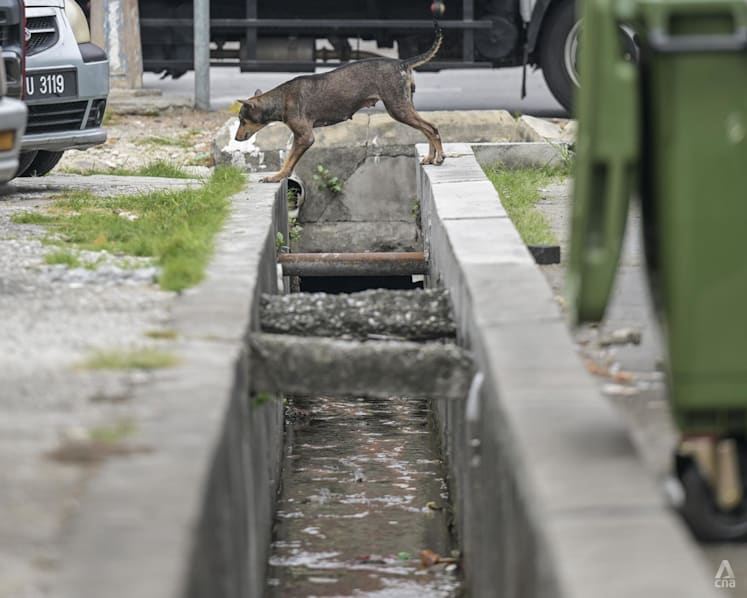
Kalaivanan said that NGOs are frequently expected to rescue, neuter, foster, rehabilitate and rehome animals, but they could not solve a nationwide population problem by themselves.
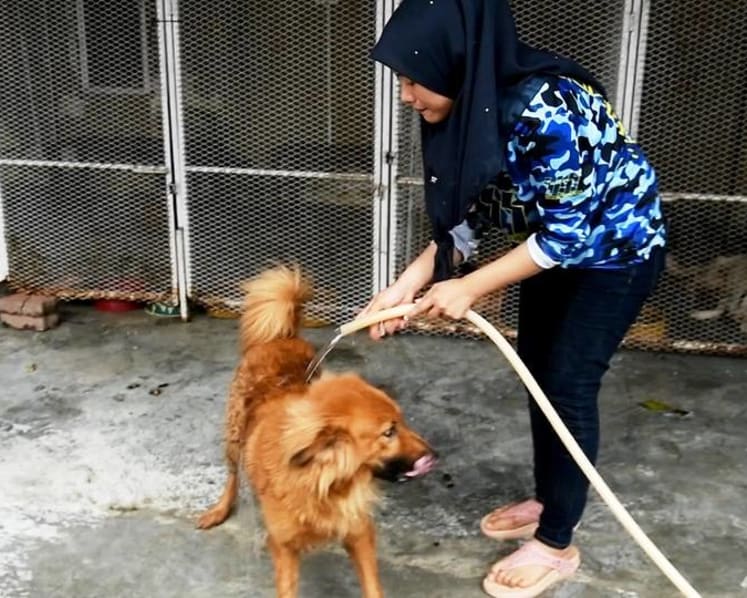
This strain is starkly evident in the country’s animal shelters that have taken it upon themselves to house the strays to avoid them from being put down.
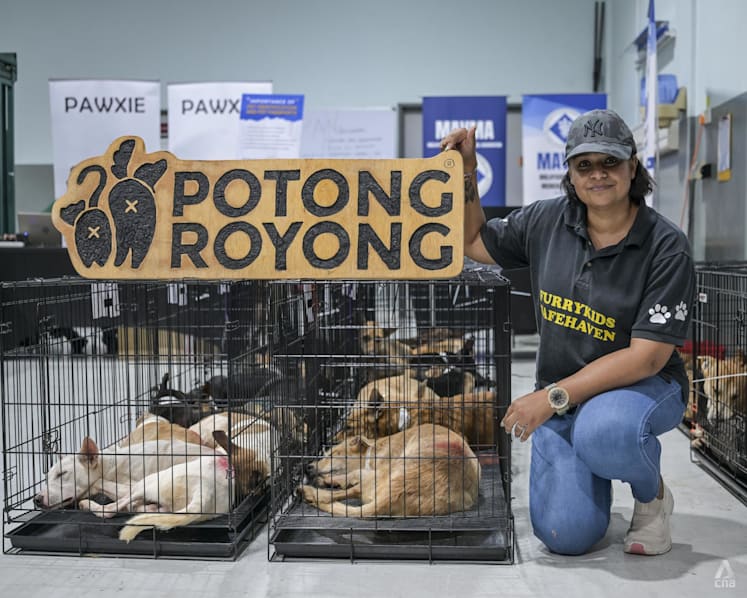
Kiran Bhatt, president of FurryKids Safehaven – a dog shelter in Seremban – told CNA that the shelter’s beginnings stemmed from an urgent rescue effort for 84 dogs that were set to be put to sleep by the Kuala Lumpur City Hall back in 2017.
After negotiations with the local authority, the shelter took in the dogs to prevent them from being killed. Today the number of dogs has grown to about 2,200 in the 6.7 acre shelter, an area roughly the size of four football fields.
“The number of dogs is increasing but the adoption rate is very low. It is not easy to sustain ourselves,” said Kiran, who is also a volunteer.
Kiran is now deeply concerned by the newly announced incentive of RM50 for every adult stray dog and RM25 for every puppy voluntarily surrendered to the Seremban City Council, saying that an incentive attached to the surrender of a stray animal raises serious animal-welfare and accountability concerns.
“How will (the city council) ensure that community dogs are not captured simply for monetary reward? How will ownership or community caregiving be verified? Where will these dogs go? What happens when available shelters reach capacity?” she questioned.
Seremban mayor Masri Baharuddin was reported by Malay-language daily Sinar Harian as saying that the council was open to receiving suggestions, provided that they were well-founded.
“I am open to all views as we work together to find the best solution, but do not merely criticise our efforts like the Malay proverb ‘dogs barking at a hill’ – making noise to no avail.
“It is easy to question what is being done, but resolving the problem is far from easy,” he reportedly said on Aug 14.
Klang resident Syahirul Adli, 40, who was at the court in support of Shah Idham, told CNA that he has also been chased by dogs while on his motorcycle.
He said that while he personally avoids physical contact with dogs, he tolerates them as long as they keep their distance. The real public concern, he added, is the fear of being chased or bitten.
“The number of stray animals in Klang seems to be increasing. There are many cats as well, but people are more afraid of dogs as they are more likely to cause harm,” said Syahirul.
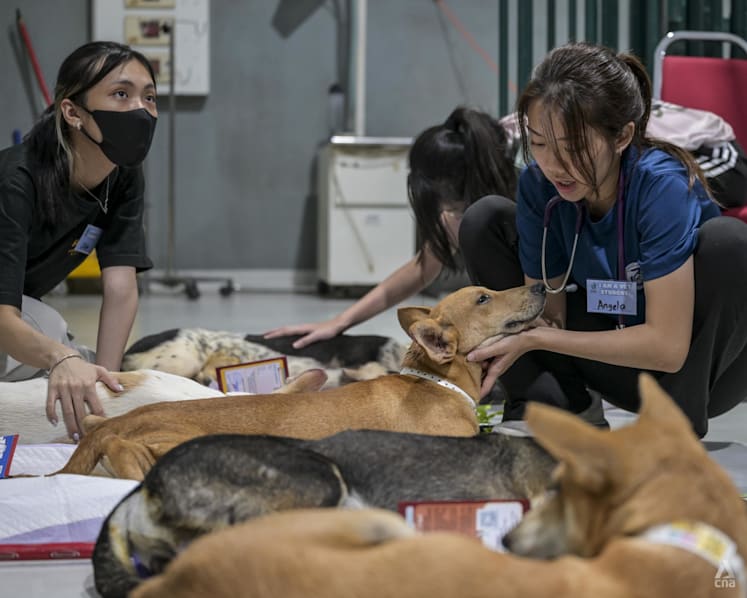
But for Wani Muthiah of the animal welfare NGO Malaysian Dogs Deserve Better (MDDB), involving untrained members of the public in municipal operations creates a recipe for disaster as they risk getting injured as well.
In the case of the Rocky incident for instance, the Klang town council had invited residents to join the operation. It was reported that there were 11 council members and about 50 residents involved in the operation that saw 12 dogs being caught.
The operation was carried out following repeated complaints from residents and students that they had been disturbed and chased by stray dogs in the area.
Wani warned that incentive-based programmes open the door to dangerous abuses, such as where some people would start stealing pets.
“Friendly community dogs that walk up to people or wait for food are easy targets, while mother dogs won’t run because they refuse to abandon their puppies,” she said.
CNA has contacted the Department of Veterinary Services and the Ministry of Housing and Local Government for their comment.
WHAT CAN BE DONE
The animal welfare groups CNA spoke to broadly agreed that sustained sterilisation programmes should form a central part of Malaysia’s approach, citing Penang’s model which is based on humane population management as an alternative to indiscriminate culling.
Choong Koon Yean of the Penang chapter of the International Aid for the Protection and Welfare of Animals told CNA that her organisation has a formal partnership with local authorities to implement an islandwide Trap-Neuter-Release/Rehome (TNR/R) programme.
She said that since the scheme began in March 2018, the Penang Island City Council has not killed stray dogs under the programme. They are humanely caught, neutered, vaccinated and either returned to their original territory or rehomed where appropriate.
Aggressive dogs that bite or chase people are never released back onto the streets, with these dogs rehabilitated where possible.
Choong said that 8,767 dogs have gone through Penang’s TNR/R programme, with 1,203 dogs rehomed.
Under the public-private partnership, the Penang Island City Council provides the facility including a pound and support for its maintenance and utilities, while the organisation undertook the programme’s operational work and raises funds required for its implementation
“The key principle is that neutering reduces reproduction while allowing stable, sterilised dogs to remain within their territories, gradually reducing the population over time,” she said.
While refusing to claim that Penang Island has “solved” the stray dog problem, Choong said that it has demonstrated that a sustained, systematic and humane population-management programme can produce measurable and lasting results.
She added that irresponsible pet ownership remains a primary driver of the crisis, noting that owners frequently let unneutered dogs roam freely or abandon them altogether when they are no longer wanted.
“They contribute directly to the stray dog population and increase the risk of conflicts between dogs and people. Irresponsible ownership is one of the root causes that must be addressed if we are serious about preventing future tragedies,” she said.
Some state and local authorities have also signalled moves towards sterilisation and rehoming as part of their approach to managing strays.
The Johor government said that it plans to adopt the Netherlands’ widely cited approach to managing stray animals, including sterilisation, shelter care and adoption.
State Housing and Local Government Committee chairman Jafni Md Shukor said the state government would work with NGOs to address the stray dog and cat population.
“For stray dogs, the approach is similar to the one implemented in the Netherlands where the authorities spay the animal to eliminate unwanted litters, in addition to taking care of their welfare in terms of nutrition.
“So, the plan is to work closely with the NGOs that will place these stray dogs in a dedicated shelter instead of leaving them abandoned and emaciated,” he was quoted as saying by Malay Mail on Aug 13.
He noted that currently only the Johor Bahru City Council has a shelter for stray dogs in the district.
Similarly, Klang mayor Abd Hamid Hussain said on Aug 16 that the city was planning to collaborate with an NGO on a “trap, neuter, release” approach.
He said that while NGOs would fund the sterilisation procedures, the council would provide temporary holding spaces during the process, with a permanent municipal shelter for strays to be built.
“We want these animals put up for adoption so that they can find new homes,” he was quoted as saying by The Star.
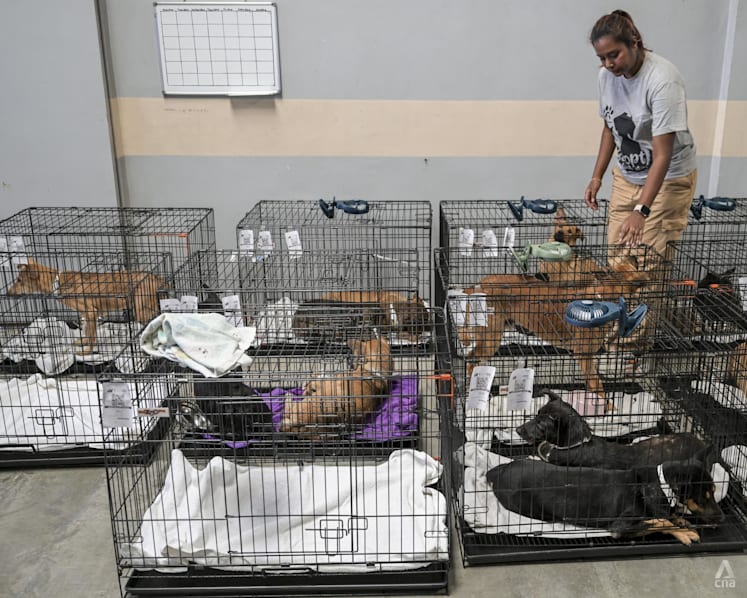
But advocates said sterilisation and rehoming needed to be accompanied by measures addressing how dogs end up on the streets in the first place.
Kiran of the FurryKids Safehaven shelter stressed that there was a need to advocate for responsible ownership, saying that those caring for dogs should ensure it is securely contained and do not wander into situations that may put the canine or public at risk.
“Prevention is always kinder than dealing with the consequences after a tragedy. Public safety and animal welfare are not opposing goals. They go hand in hand.
“As animal advocates, we cannot simply defend dogs when something goes wrong. We must also advocate for responsible ownership, responsible community feeding, early intervention, and humane management. That is how we protect both people and animals,” she said.
For such measures to have a lasting impact, Kalaivanan said they would need to form part of a consistent national strategy rather than isolated programmes introduced when problems arise.
He believes that the authorities should work together with veterinarians and credible animal welfare NGOs under one coordinated framework.
“With a properly funded three-to five-year programme, clear responsibilities between agencies and measurable KPIs, Malaysia can progressively reduce the stray dog population,” he said, referring to key performance indicators.
Roghini – who spoke to CNA on Aug 18 and before it was known that she would be charged in court – said that she hopes Rocky’s case will spark genuine change in the management of all stray animals in the country.
“I was able to be Rocky’s voice, but what about the stray dogs that have no one? They are living beings too, and they deserve to be treated with compassion,” she said.
Source: CNA/rv(as)
Sign up for our newsletters

Get the CNA app
Stay updated with notifications for breaking news and our best stories
Get WhatsApp alerts
Join our channel for the top reads for the day on your preferred chat app

Get bite-sized news via a new
cards interface. Give it a try.
Click here to return to FAST
Tap here to return to FAST
FAST