Europe’s space chief raises need for the region to coordinate its satellite plans
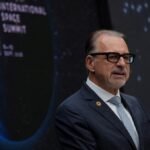
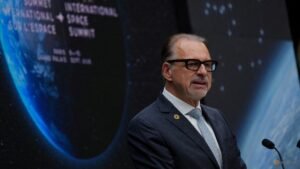
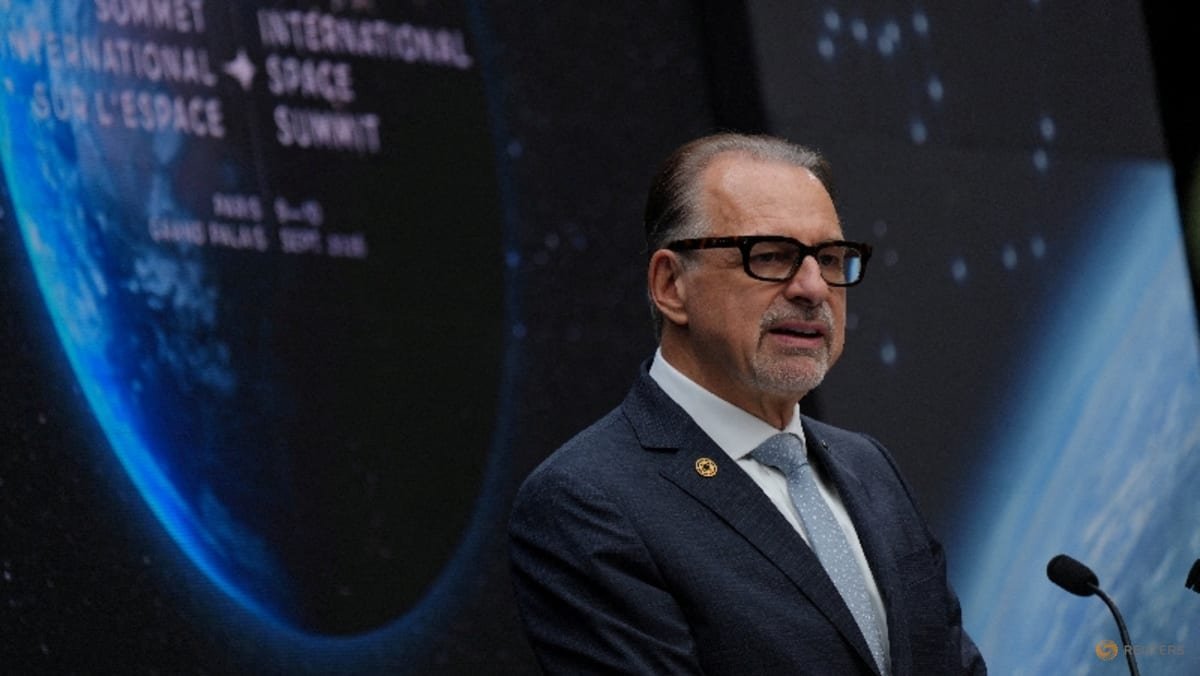
FILE PHOTO: European Space Agency (ESA) Director General Josef Aschbacher a speech at the International Space Summit at the Grand Palais in Paris, France, September 10, 2026. Aurelien Morissard/Pool via REUTERS/File Photo
Read a summary of this article on FAST.
Get bite-sized news via a new
cards interface. Give it a try.
Click here to return to FAST
Tap here to return to FAST
FAST
PARIS, Sept 10 : Europe must ensure its countries’ competing satellite programmes can work together effectively and do not duplicate each other, European Space Agency Director General Josef Aschbacher said on Thursday.
He was speaking at a space summit in Paris, where new contracts for the European Union’s IRIS² planned communications constellation were announced, bolstering efforts to create an alternative to non-European actors, most notably Elon Musk’s SpaceX.
Referring to separate national programmes, Aschbacher told Reuters on the sidelines of the summit that it was important to avoid them becoming silos.
“If we are able to connect them, then it is actually a very powerful system,” he said. “Under the condition that interoperability is implemented and is materialised. And this, of course, has yet to be done.”

Guess Word
Crack the word, one row at a time

Buzzword
Create words using the given letters

Mini Sudoku
Tiny puzzle, mighty brain teaser

Mini Crossword
Small grid, big challenge

Word Search
Spot as many words as you can
IRIS²’s rollout includes initial launches in 2029.
Germany’s pursuit of a separate national military satellite network has added to concerns about fragmentation of European efforts and rising costs.
Aschbacher said the European Space Agency, which has a central role in IRIS²’s implementation, has held technical meetings with industry players to define requirements for interoperability.
FRANCO-ITALIAN JOINT VENTURE’S DEAL
On the second and final day of the French-hosted summit, Thales Alenia Space said it had signed an agreement with satellite operator Eutelsat to supply government payloads for 330 of IRIS²’s low-Earth-orbit satellites, while Airbus said it would build the first layer composed of at least 66 satellites.
Thales Alenia Space, a joint venture between France’s Thales and Italy’s Leonardo, said the order made up around €500 million ($582 million) of a broader IRIS² contract expected to exceed €3 billion.
Aschbacher also said he was encouraged by strong political support from member states for plans that could eventually allow Europe to launch its own astronauts rather than relying on U.S. spacecraft.
In a proposal published during the summit, he called for investment of €1 billion a year for 10 years starting in 2029 to strengthen European autonomy in the space sector. A decision on whether to approve the proposal would be taken in 2028, in line with ESA procedures.
French President Emmanuel Macron used the summit to call for greater European coordination and for European governments to direct public procurement at European companies.
He said, however, that need not rule out partnerships with foreign companies, including U.S. firms.
(Additional reporting by Makini Brice; Writing by Florence Loève and Gianluca Lo Nostro; Editing by Ingrid Melander and Barbara Lewis)
Source: Reuters
Sign up for our newsletters

Get the CNA app
Stay updated with notifications for breaking news and our best stories
Get WhatsApp alerts
Join our channel for the top reads for the day on your preferred chat app

Get bite-sized news via a new
cards interface. Give it a try.
Click here to return to FAST
Tap here to return to FAST
FAST