Smaller phone and laptop makers dig in for years of memory scarcity
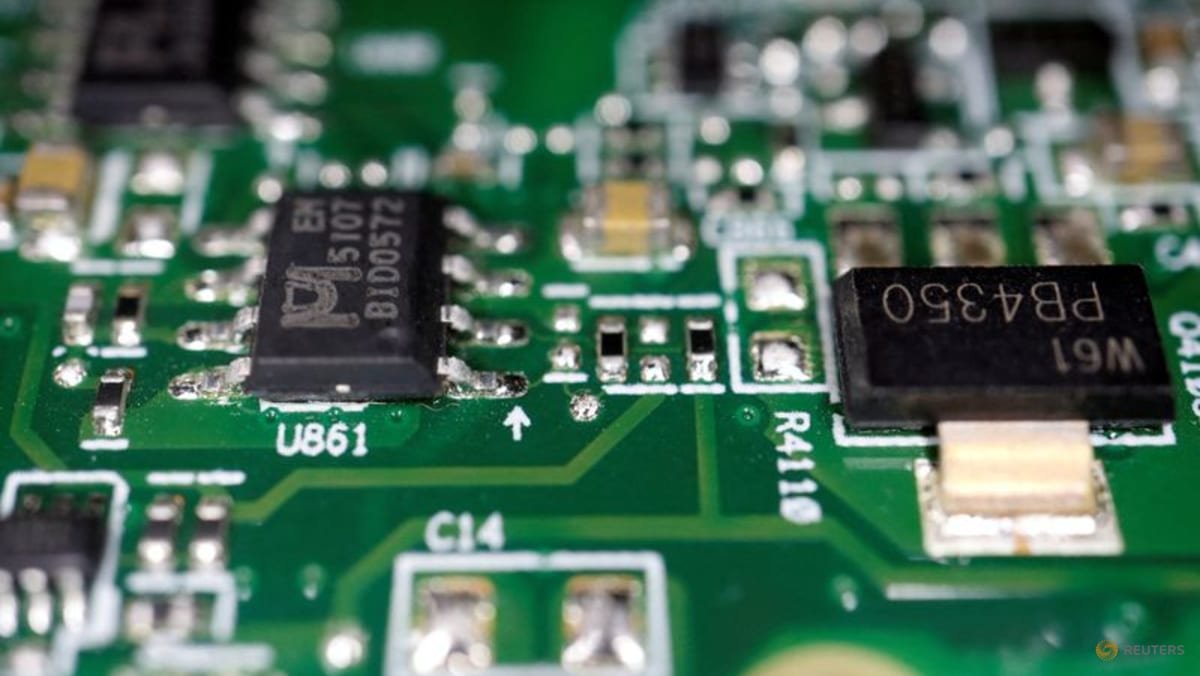
FILE PHOTO: Semiconductor chips are seen on a printed circuit board in this illustration picture taken February 17, 2023. REUTERS/Florence Lo/Illustration/File Photo
Read a summary of this article on FAST.
Get bite-sized news via a new
cards interface. Give it a try.
Click here to return to FAST
Tap here to return to FAST
FAST
Sept 16 : Independent phone and laptop makers are redesigning products, testing incoming chips for fakes and passing on costs as a memory shortage they expect to last through 2027 squeezes the lower end of the device market.
Availability, not price, is the binding constraint, executives at three companies said.
“If you don’t have allocation, you’re out of the game anyhow,” said Raymond van Eck, chief executive of Dutch repairable-phone maker Fairphone.
Memory maker SK Hynix’s CEO in July said 2027 would be “the worst year in the industry’s history from the supply perspective,” with demand outstripping capacity beyond 2030.

Guess Word
Crack the word, one row at a time

Buzzword
Create words using the given letters

Mini Sudoku
Tiny puzzle, mighty brain teaser

Mini Crossword
Small grid, big challenge

Word Search
Spot as many words as you can
Counterpoint Research forecast in June that smartphone shipments would fall 13.9 per cent this year to 1.08 billion units, the steepest annual decline on record, as memory costs make entry-level phones uneconomical to build.
THE RALLY SLOWS, THE SHORTAGE DOESN’T
TrendForce expects conventional volatile memory (DRAM) contract prices up 13-18 per cent this quarter, against 93-98 per cent in the first.
Jolla, a Finnish handset maker founded by former Nokia engineers, said its combined storage and DRAM package rose to a peak at the end of March and has held since, confounding spring forecasts of a doubling by autumn.
“We are very happy for that, of course, for the time being,” said Chief Executive Sami Pienimäki, who expects supply to normalise only from 2028.
The scale of the mismatch became clear late last year, said Nirav Patel, chief executive of U.S. repairable-laptop maker Framework, prompting “everyone trying to grab as much supply, as much inventory as they could, as quickly as they could”, which deepened the shortage.
Unable to afford a stockpile, Framework places non-cancellable orders well ahead without knowing final price, timing or volume.
DESIGNING FOR SCARCITY
Jolla designed two motherboard variants so it can swap the combined package for discrete chips. Framework made memory modular from the start; customers now fit memory salvaged from older machines.
Jolla stress-tests samples from every batch it receives, checking the chips are new rather than refurbished parts resold as first-hand. Where prices spike, Pienimäki said, sellers follow.
Memory can account for almost 60 per cent of the bill of materials on handsets priced around $400, van Eck said. Each firm passes that on differently: Framework reprices quickly as costs land, Jolla added a paid memory upgrade, and Fairphone has not raised prices at all.
Source: Reuters
Sign up for our newsletters

Get the CNA app
Stay updated with notifications for breaking news and our best stories
Get WhatsApp alerts
Join our channel for the top reads for the day on your preferred chat app

Get bite-sized news via a new
cards interface. Give it a try.
Click here to return to FAST
Tap here to return to FAST
FAST