Commentary: This is the problem with the circular AI economy
What will happen if the Jenga tower of Nvidia’s vendor financing collapses? Rana Foroohar from the Financial Times gives her take.
FILE PHOTO: The words “AI Artificial Intelligence” and a keyboard in this illustration taken October 19, 2026. REUTERS/Dado Ruvic/Illustration/File Photo
Read a summary of this article on FAST.
Get bite-sized news via a new
cards interface. Give it a try.
Click here to return to FAST
Tap here to return to FAST
FAST
NEW YORK: Why isn’t circular financing illegal? The question was posed by an anxious CEO at a recent business dinner I attended in California, off the back of a conversation we were having (predictably) about the fallout of Nvidia.
The chipmaker has propped up a big chunk of the larger AI ecosystem via loans and equity stakes in customers that buy its products, aka “circular financing”. This creates a market but also layers of interconnected fragility that can ricochet more broadly if things go wrong. It can also make it difficult to differentiate real demand from the speculative kind – hence the anxious question.
Nvidia’s earnings report last week was more robust than one might have expected given the turmoil at the company. Still, there is legitimate concern about whether a decline in chip orders over the next few months could mean less vendor financing, and thus a collapse in the larger AI ecosystem. That is in part because the size of this “great AI circular financing circus”, as a recent MacroStrategy report put it, is unprecedented.
“THE GREAT AI CIRCULAR FINANCING CIRCUS”
Nvidia increased its vendor financing by a whopping 1,600 per cent over the past three years, to a total of just under US$700 billion. To compare, Cisco – which lent to dotcom companies to buy routers, switches and other hardware to build out networks in advance of the dotcom collapse – had US$1.3 billion in financed leased debt exposure in March 2001.

Guess Word
Crack the word, one row at a time

Buzzword
Create words using the given letters

Mini Sudoku
Tiny puzzle, mighty brain teaser

Mini Crossword
Small grid, big challenge

Word Search
Spot as many words as you can
As in today’s AI bubble, many of those dotcom companies were ordering more equipment than they needed immediately, piling in as the market was growing so quickly. When the boom turned to bust, they were unable to repay Cisco, which in turn had to cut back on loans, creating a feedback loop that eventually led to a sharp decline in orders by 2001. It also helped push the wider market into an earnings recession.
The worry now is that while Nvidia was, like Cisco, lending directly to clients, it was also taking equity stakes in customers’ businesses and offering commitments to purchase customer cloud services. What will happen to that funding when sales to China go away, and the company is under incredible political scrutiny? Will all of this cause the off-balance sheet funding bubble to burst, taking down the AI market (on which about half the value of the S&P 500 is directly or indirectly dependent) with it? And if it does, what broader impact might that have on the real economy?
A LOOK AT HISTORY OF VENDOR FINANCING
To answer that question, it is helpful to think about the history of vendor financing. Supporting customer demand has long been a way for companies at the centre of a boom – particularly a new and transformative infrastructure boom – to create a market for their products. The question for investors is how much of the demand is real versus speculative, to what extent the speculation spills into the banking system, and how much of the vendor investment eventually turns into productive capacity – and over what time.
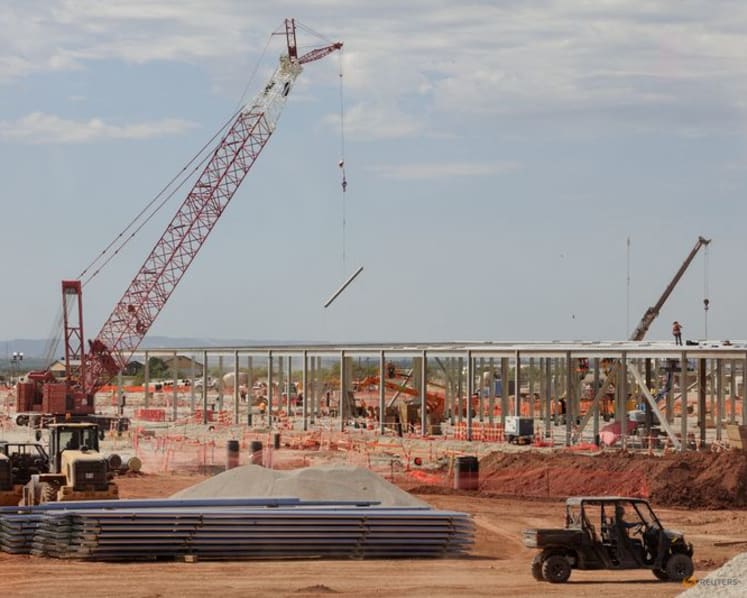

Consider the 19th-century railroad boom, during which rail owners extended credit to farmers to buy land, with the promise that their crops would need to be shipped over those new lines, creating more demand for the railways themselves. Some of those schemes resulted in overleveraged farmers who had to abandon land during crop failures.
But research shows that despite the isolated booms and busts off the back of vendor financing, if railroads hadn’t existed in 1890, agricultural land values in the US would have been over 60 per cent lower. Farmers eventually benefited from the development of the rails, as did the economy – but the timeline was decades, not quarters or even years.
Vendor financing tends to amplify boom and bust cycles, but it rarely causes full-blown financial crises. The railroad panic of 1873, for example, was about a bond and banking crunch – not railroad lending to farmers. Likewise, the vendor lending by GE Capital, the finance unit of General Electric, to industrial customers in the run-up to the 2008 crisis, or the financing of General Motors dealers by GMAC during the same period, didn’t help the financial panic of the time, but also didn’t fundamentally cause it. Bank exposure to exploding mortgages did that.
LESSONS TO BE LEARNED
So, what lessons should we take from all this about Nvidia and its potential repercussions? First, it’s likely we haven’t seen the last of the market fallout. Given the magnitude of financing the company was doing, it’s likely that many of the smaller companies in its orbit could take a hit if there is a big lending pullback.
If the broader ecosystem falters, that could slow data centre build-out (as could politics), which would have a wider real economy effect. It could be that some hedge funds and private equity shops backing AI will suffer, too. But it’s harder to imagine that the largest financial institutions would go down, given that they’ve been more risk-averse since 2008.
It is also possible to imagine that even if none of the companies in question exist in 10 or 20 years, the AI ecosystem will – and we will be wealthier for it. Nervous investors should remember this as they weather the volatility of the next few quarters (or years).
Source: Financial Times/sk
Sign up for our newsletters

Get the CNA app
Stay updated with notifications for breaking news and our best stories
Get WhatsApp alerts
Join our channel for the top reads for the day on your preferred chat app

Get bite-sized news via a new
cards interface. Give it a try.
Click here to return to FAST
Tap here to return to FAST
FAST