Malaysia’s Anwar says easier to deal with China than US amid tech tensions
In an interview, Malaysian Prime Minister Anwar Ibrahim reveals how he navigates superpower rivalry, Trump’s pro-China complaint and AI chip curbs on Malaysia.

New: You can now listen to articles.

This audio is generated by an AI tool.

Read a summary of this article on FAST.
Get bite-sized news via a new
cards interface. Give it a try.
Click here to return to FAST
Tap here to return to FAST
FAST
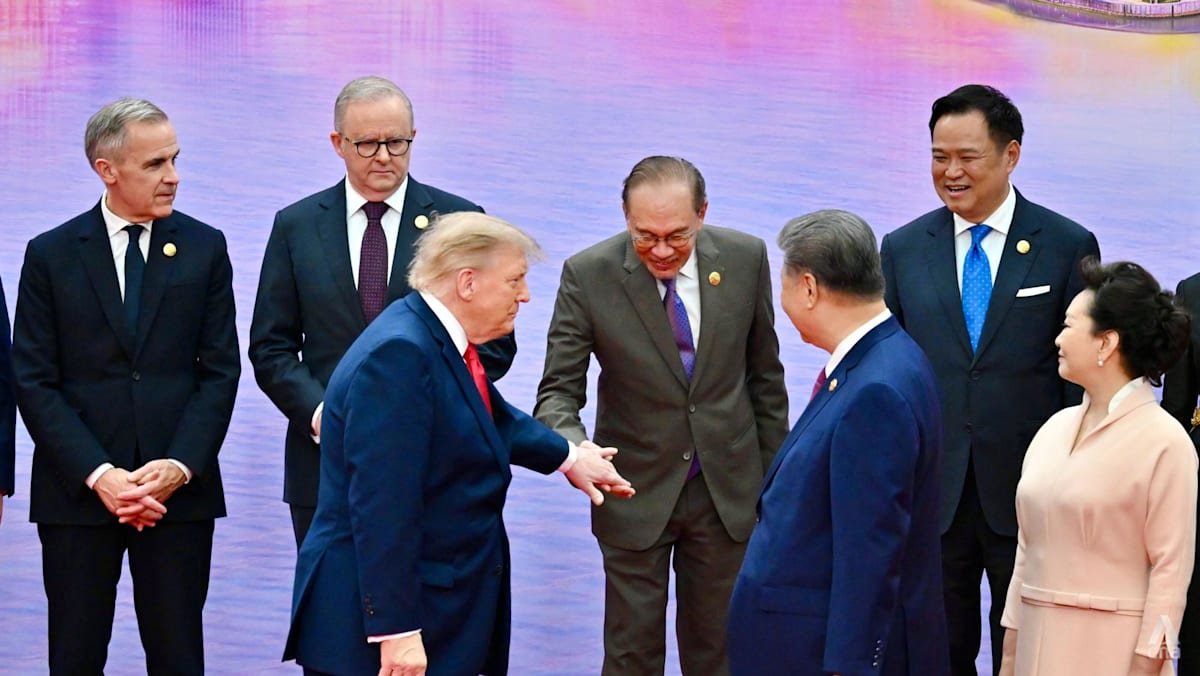
China has never raised any concerns about Malaysia being close to the United States nor stood in the way of any technology arrangements with the Americans, the Southeast Asian country’s Prime Minister Anwar Ibrahim has said. In an interview with the South China Morning Post in Shenzhen before a bilateral meeting with China’s President Xi Jinping, Anwar said he found Beijing easier to deal with than Washington but maintained that his government was not leaning towards one side or the other. The recurring issue of Malaysia’s strategic hedging between the two superpowers has come under the spotlight again, as the US last week imposed curbs on advanced artificial intelligence chips to Kuala Lumpur and three other Southeast Asian nations for fear they would be used by Chinese data centres based there. The US announcement could dampen Malaysia’s growth as a regional hub for data centres, a sector that has secured nearly US$100 billion in investments since 2021.

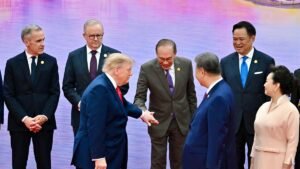
The country has a high concentration of Chinese-owned data centres alongside major investments by Nvidia and Google either through local partners or on their own. On Nov 4, Google announced a US$15 billion investment for 2027-28 to build data centres and clean energy projects, among other investments. Speaking after the Asia-Pacific Economic Cooperation leaders’ meeting in Shenzhen, Anwar acknowledged that his country was often portrayed as being pro-China. He revealed that Donald Trump had raised this with him when the US president visited the Malaysian capital last year.

Anwar told the SCMP: “I’ll be very frank here that it is certainly easier with the Chinese. No 1: they’re our neighbours. We’re more familiar with their culture and they are more forthcoming. For example, meeting President Xi Jinping or Premier Li Qiang is much easier. They take time to listen, to try and appreciate and understand some of our concerns.”
Contrary to speculation, he stressed that China did not demand that Malaysia take its side against the US.
“Having excellent relations with China does not preclude us from continuing to engage with the United States. And the Chinese seem to understand. People tend to suggest that I’m tilting a bit towards China. It’s not true,” Anwar said.
Malaysia is one of seven ASEAN members that have joined the World Artificial Intelligence Cooperation Organisation (Waico), an AI governance alliance led by China. While Malaysia has agreed to set up a “sovereign AI cloud” with the US, it has not joined Pax Silica, a US-led initiative that aims to secure supply chains for AI, semiconductors and critical minerals while reducing reliance on China. Two members of the Association of Southeast Asian Nations – Singapore and the Philippines – are part of Pax Silica.
Anwar said Malaysia was “open” to the idea of joining Pax Silica and did not expect opposition from Beijing.

Guess Word
Crack the word, one row at a time

Buzzword
Create words using the given letters

Mini Sudoku
Tiny puzzle, mighty brain teaser

Mini Crossword
Small grid, big challenge

Word Search
Spot as many words as you can
“There was never any pressure or suggestion from China to say, ‘no, please be wary’,” Anwar said, referring to Pax Silica. “It hasn’t happened in my meetings with President Xi Jinping; I had no sense of that.”
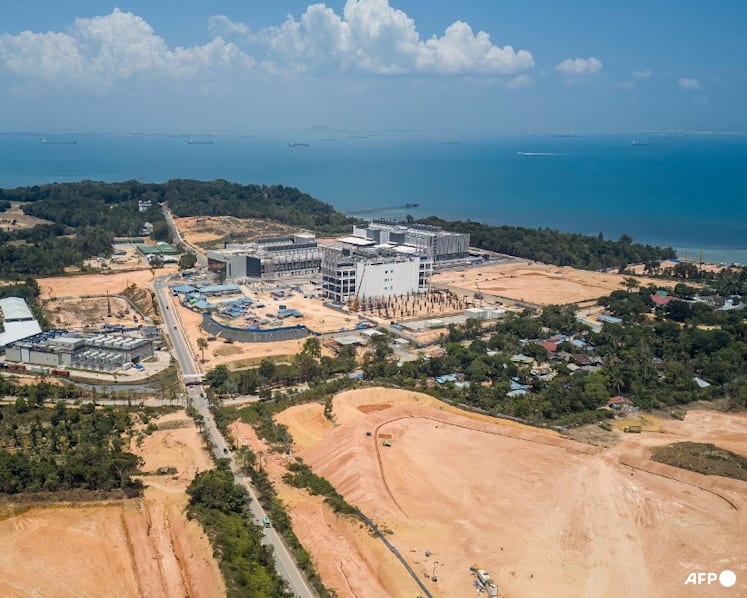
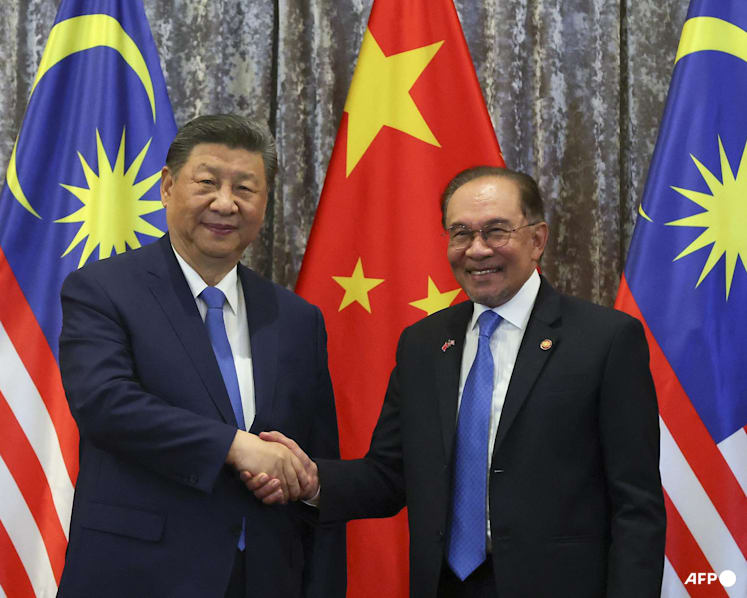
Mainland China and Hong Kong are Malaysia’s second- and third-largest sources of annual foreign investment after Singapore. China is also Malaysia’s largest trading partner, with the US coming in third behind Singapore.
On Xi’s American counterpart, Anwar revealed details of his 40-minute conversation inside the US presidential limousine – the “Beast” – during Trump’s official visit to Kuala Lumpur last year for the 47th Asean summit. Anwar said Trump told him, “You are leaning towards China.”
“So I said, Mr President, we don’t have to lean. They’re just our immediate neighbour. We share the same waters and we have centuries-old relations,” Anwar said.
He said he reassured Trump that Malaysia remained a close friend of the US, reminding the US president about their bilateral trade, American investments and Anwar’s own past stint teaching at Georgetown University.
“Contrary to some other perceptions, he’s a good listener. I’m not sure whether he agreed, but he was kind. He was exceedingly kind in that discussion in the Beast,” Anwar said.

On the new US restrictions, Anwar said Malaysia would monitor if American companies were somehow sending chips to China, just as it would monitor Chinese firms required to operate under Beijing’s rules.
“If you impose a condition on the (US) company that it cannot export to China, fair. We will observe that because that is the agreement you have with your company,” he said.
“But that will not preclude our decision to work with the Chinese, with Chinese investments and with Chinese companies making their own decisions.”
He said he had conveyed this message to both Trump and US Secretary of State Marco Rubio as recently as two weeks ago. Any foreign investor demanding dedicated government oversight to safeguard its supply chain would have to foot the bill as well, the prime minister said. “You want our help? Yes. You pay. We are getting smart as a business,” he added.
This article was first published on SCMP.
Source: South China Morning Post/ia
Sign up for our newsletters

Get the CNA app
Stay updated with notifications for breaking news and our best stories
Get WhatsApp alerts
Join our channel for the top reads for the day on your preferred chat app

Get bite-sized news via a new
cards interface. Give it a try.
Click here to return to FAST
Tap here to return to FAST
FAST