Nvidia halts chip shipments to Southeast Asia: Report
Move comes as US steps up export controls to prevent Chinese access to AI computing power.
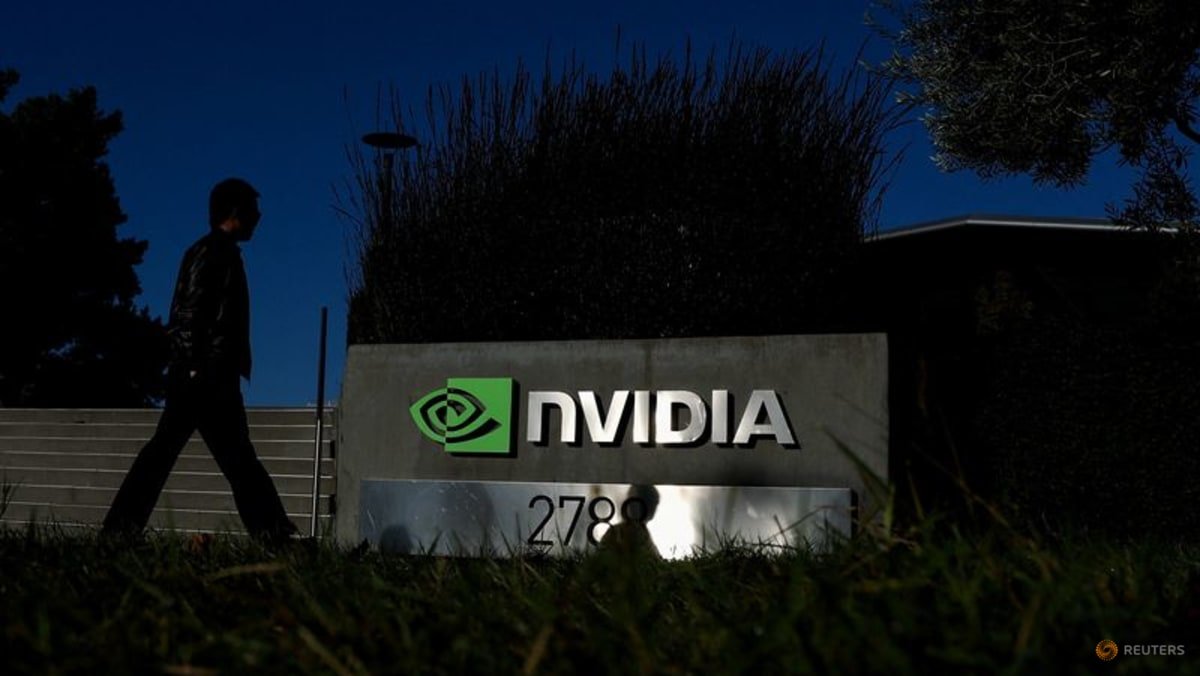
File photo. A person walks next to Nvidia logo outside the company’s headquarters. (Photo: Reuters/Carlos Barria)
New: You can now listen to articles.

This audio is generated by an AI tool.
Read a summary of this article on FAST.
Get bite-sized news via a new
cards interface. Give it a try.
Click here to return to FAST
Tap here to return to FAST
FAST
Nvidia has told its manufacturing partners to stop shipping servers to four Southeast Asian countries, as the US steps up export controls to prevent Chinese access to AI computing power.
Manufacturing partners such as Dell and Supermicro, which package Nvidia’s chips into servers, have told buyers in Malaysia, Singapore, Thailand and Indonesia that Nvidia will not allow their orders to be shipped, according to three people with knowledge of the matter.
It is unclear whether the halt is temporary, as Nvidia and its partners try to work out how to comply with Washington’s new export controls, the people said.
The four Southeast Asian countries have become favoured destinations for Chinese AI developers seeking to access Nvidia’s most advanced chips, whose exports are restricted by Washington.

Guess Word
Crack the word, one row at a time

Buzzword
Create words using the given letters

Mini Sudoku
Tiny puzzle, mighty brain teaser

Mini Crossword
Small grid, big challenge

Word Search
Spot as many words as you can
The region is lucrative for Nvidia. The chipmaker booked US$104 billion of revenue through its Singapore subsidiary in 2025, a 72 per cent increase in 12 months, according to company accounts. Nvidia also records some of its Taiwan and China revenue via its Singapore unit.
Many Chinese groups get around US export controls by renting access through cloud computing providers that buy servers containing Nvidia chips.
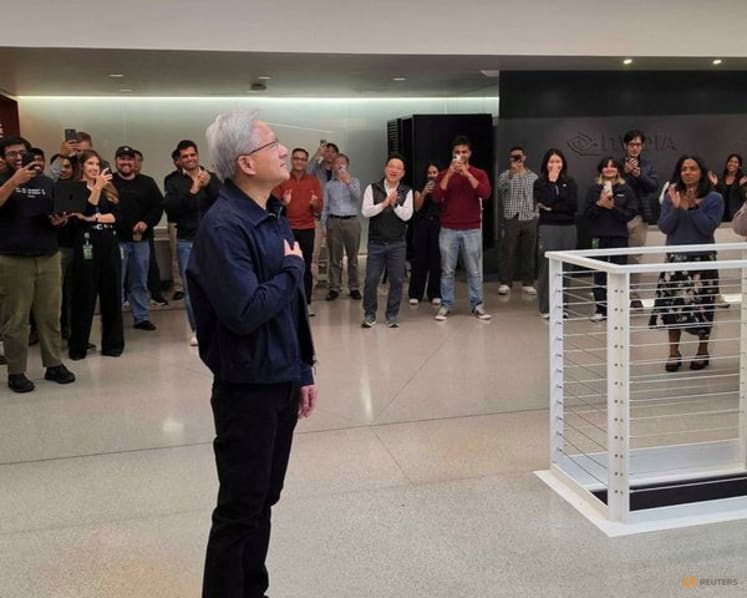
The US commerce department introduced new rules last week aimed at stopping the practice. The measures came after Jensen Huang was briefly ousted as chief executive of Nvidia following reports of extramarital affairs, including with a woman tied to a cloud provider that leased access to Chinese companies and is being investigated for alleged involvement in smuggling.
The revelations complicated Huang’s stance that the US should continue selling Nvidia chips to Chinese companies to increase their dependence on American technology.
Despite Beijing’s push to develop domestic alternatives, China’s leading AI labs remain heavily reliant on Nvidia’s processors to develop their flagship models, particularly during compute-intensive early-stage training.
While many were hoping Huang’s return to the helm of Nvidia this week would open a path to less strict enforcement of the new rules, there is little indication that the company will hold back from executing them, said the people.
The commerce department has set a 90-day deadline for cloud providers to obtain a licence by proving that their end users do not include restricted entities.
“There’s this new rule but no guidance on execution,” said an executive at a cloud provider. “No one knows how to apply for this licence while the 90-day clock is ticking. It’s causing sheer chaos in the region.”
Demand from Chinese tech companies has fuelled Southeast Asia’s data centre boom, particularly in Malaysia and Indonesia, where billions of dollars have poured into the construction of AI infrastructure. The new US restrictions have put much of that investment in jeopardy.
Among those affected is Aolani, a Singapore-based cloud company that planned to provide advanced computing power to ByteDance, the Chinese owner of TikTok, through leasing agreements, said two of the people.
The disruption has led some bankers who previously agreed to finance the project to stop issuing credit worth about $500mn and to ByteDance potentially dropping the deal.
Nvidia declined to comment. Dell, Supermicro, ByteDance and Aolani did not respond to requests for comment.
This story was first published in The Financial Times.
Source: Financial Times/aj
Sign up for our newsletters

Get the CNA app
Stay updated with notifications for breaking news and our best stories
Get WhatsApp alerts
Join our channel for the top reads for the day on your preferred chat app

Get bite-sized news via a new
cards interface. Give it a try.
Click here to return to FAST
Tap here to return to FAST
FAST