New US tariffs: Limited near-term impact on Singapore, but analysts warn of lasting trade barriers
Analysts noted that the tariff rate is not final and there is genuine room for negotiation with the US. They also pointed to exclusions for some products that may apply.
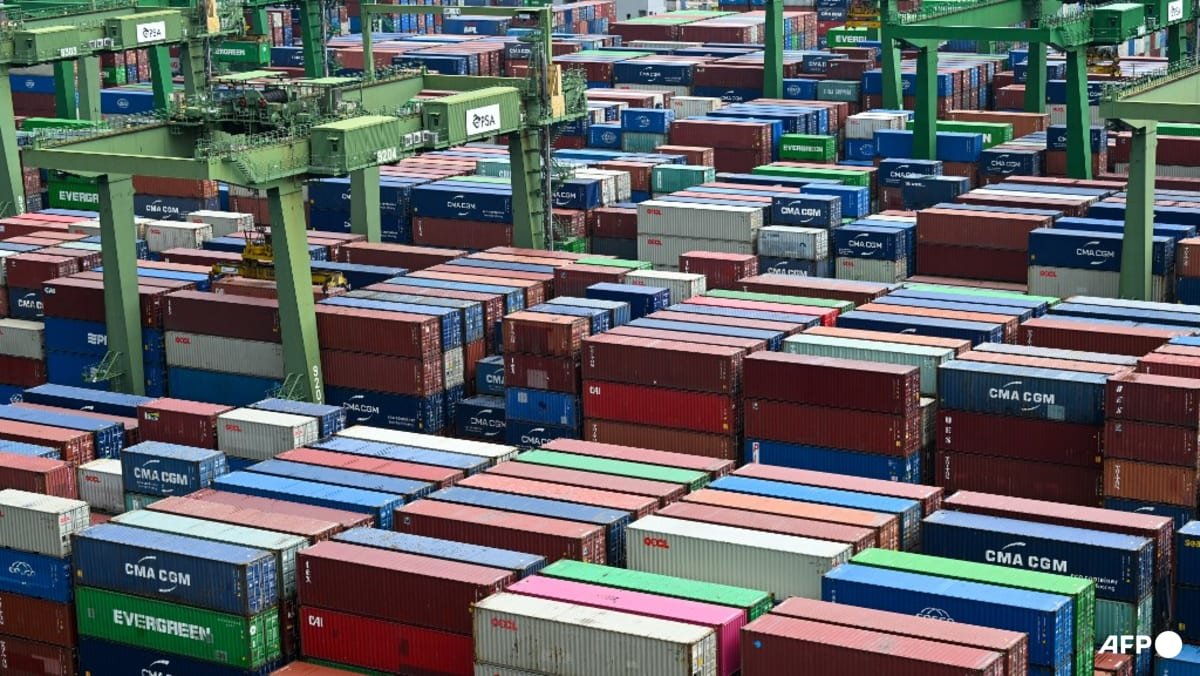
View of containers at the Pasir Panjang port terminal in Singapore on Jun 1, 2026. (File photo: AFP/Roslan Rahman)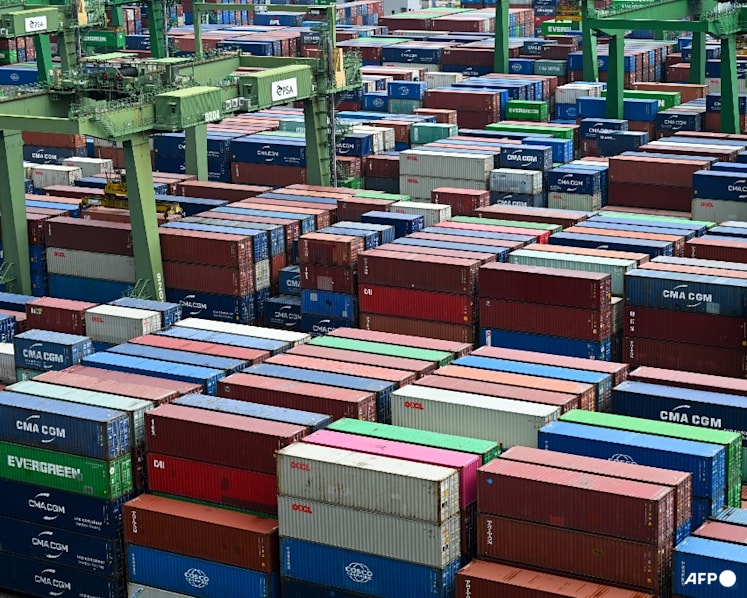
New: You can now listen to articles.

This audio is generated by an AI tool.


Read a summary of this article on FAST.
Get bite-sized news via a new
cards interface. Give it a try.
Click here to return to FAST
Tap here to return to FAST
FAST
SINGAPORE: While the immediate hit from proposed United States tariffs may be limited, analysts warn that the move could signal a deeper shift toward higher trade barriers in the global economy, which could hurt small, open economies like Singapore over time.
Their comments come after the Office of the United States Trade Representative (USTR) on Wednesday (Nov 25) proposed a maximum potential tariff rate of 20 per cent, net of existing Section 301 tariffs, on Singapore’s exports to the US – alongside similar actions targeting 13 other markets including China, Malaysia, Vietnam and Japan.
But analysts stressed that the 20 per cent tariff on Singapore is a proposal that is still subject to public consultation.
“This is still a proposed measure rather than a done deal,” said Ms Selena Ling, chief economist at OCBC, who added that she would not overstate the macroeconomic impact for this reason.
The bigger question is whether higher tariffs and trade barriers are becoming a more permanent feature of the global economy.

Guess Word
Crack the word, one row at a time

Buzzword
Create words using the given letters

Mini Sudoku
Tiny puzzle, mighty brain teaser

Mini Crossword
Small grid, big challenge

Word Search
Spot as many words as you can
“More broadly, it is another reminder that even comprehensive trade agreements cannot entirely insulate countries from a more interventionist global trade environment,” she said.
As a major trade, logistics and financial hub, anything that slows regional trade and investment in the global environment will eventually “wash back” onto Singapore, said Ms Ling.
Businesses would have to adjust to the new normal of prolonged policy uncertainty by reorganising supply chains around tariffs, national-security considerations and competing economic blocs, which reduces efficiency.
On Thursday, Singapore’s Ministry of Energy, Trade and Industry (METI) said it is disappointed with the proposed actions against Singapore.
The USTR had released a report on investigations into the country’s acts, policies and practices related to structural excess capacity and production in specific manufacturing sectors.
It added that the tariff rate could be adjusted to 10 per cent if Singapore reaches an agreement or addresses the concerns raised.
METI said the findings did not take the structure of Singapore’s economy into account.
“Singapore’s global trade surplus is a reflection of our outward- and market-oriented economy as well as our status as a trusted business and trading hub,” it said in a statement.
WHAT THE PROPOSED TARIFFS ACTUALLY AFFECT
Giving their early take on the USTR’s proposal, analysts told CNA that the tariffs could have a limited short-term impact on the Singapore economy, since the measures are still not set in stone.
Ms Ling noted that the US has explicitly provided a pathway to a 10 per cent tariff if an agreement is reached, suggesting that there is “genuine room for negotiation”.
“I would therefore regard 20 per cent as an upper proposed rate rather than a foregone conclusion,” said Ms Ling.
Mr Chris Hampden, senior vice president at global procurement and supply chain consultancy Proxima, said Singapore’s direct tariff exposure may be narrower than the headline suggests.
He noted that semiconductors and pharmaceuticals were previously excluded from broad country tariffs.
Certain electronics, aerospace products and energy products have also been excluded previously.
Singapore’s exports to the US that are affected by tariffs currently in place are worth about S$9.4 billion (US$7.3 billion), Deputy Prime Minister Gan Kim Yong told reporters on Thursday.
With the latest proposed tariffs, the effective tariff rate on Singapore would be raised from 7.8 per cent to 10.3 per cent, he added.
Timeline of US tariffs on Singapore goods
Apr 5, 2025: Trump’s Liberation Day tariffs take effect. Singapore goods are subjected to a 10 per cent baseline tax.
Singapore’s response: Set up a new task force to help businesses and workers and said it would not impose retaliatory tariffs on the US.
Aug 7, 2025: Revised US reciprocal tariffs take effect globally. Singapore’s 10 per cent levy rate remains unchanged.
Feb 20, 2026: The Supreme Court of the United States strikes down Trump’s reciprocal tariffs. On the same day, the US president announces a 10 per cent tariff on all US imports for 150 days, starting from Feb 24. It expired on Jul 24, 2026.
Jul 24, 2026: The US imposes a 12.5 per cent tariff on a range of Singapore’s exports following a US Section 301 investigation into 60 trading partners over their alleged failure to enforce bans on imports of goods produced with forced labour.
Section 301 is designed to address unfair foreign practices affecting US commerce, and may be used to respond to “unjustifiable, unreasonable, or discriminatory foreign government practices that burden or restrict US commerce”, according to the US Trade Representative (USTR) website.
About one-third of Singapore’s domestic exports to the US would be affected by the tariffs, according to the Ministry of Energy, Trade and Industry.
Singapore’s response: Maintained that it does not condone forced labour and has a comprehensive framework to tackle such practices domestically. It said it would continue to engage the USTR on the tariffs.
Nov 25, 2026: The US proposes new tariffs on 14 major trading partners, including Singapore. The USTR proposed tariffs of up to 20 per cent on goods from Singapore, excluding certain products, taking into account existing Section 301 levies.
The USTR added that it may adjust the tariff rate to 10 per cent if Singapore and Washington reach a reciprocal trade agreement or conclude other negotiations addressing the findings of the investigation.
Singapore’s response: METI said it would continue engaging the USTR and submit further comments during the upcoming public consultation period for the proposed tariffs.
Collapse
Expand
Mr Hampden said electronic components, specialty chemicals, healthcare products and some precision-engineered parts may potentially be exposed this time.
“The final exposure will depend on the product annexes and precise US tariff classifications,” he said.
That view was echoed by Ms Lee Yen Nee, senior country risk analyst at BMI, which is owned by Fitch Solutions.
She noted that the proposal contains a number of product exclusions.
“That said, these will cushion the impact, not eliminate it. Singapore remains one of the more vulnerable economies in Asia to rising trade barriers given its heavy dependence on trade,” she said.
IS A 10% TARIFF POSSIBLE?
It might be difficult for Singapore to negotiate the tariff rate down to 10 per cent, said Ms Lee of BMI.
The US is concerned about policies that have helped Singapore to attract investment and build manufacturing industries despite having a very small domestic market, she said.
Singapore would have to weigh the benefits of a lower US tariff with potentially weakening policies that have been central to its growth model, she added.
“There is also a question of principle,” Ms Lee said. “Making concessions under the threat of tariffs would sit uneasily with Singapore’s long-standing support for a rules-based trading system.”
Ms Yue of Oxford Economics struck a more positive tone. She expects tariffs to come down eventually, though the timing and final rate remain uncertain.
“The Trump administration has shown a willingness to use tariffs as negotiating leverage, so the outcome will depend on how far Singapore can address US concerns around manufacturing capacity, industrial policies and trade practices,” she said.

Mr Gan, who is also minister for energy, trade and industry (trade), said Singapore has always been very principled in its negotiations with trading partners like the US, while keeping Singapore’s interests at the centre of discussions.
The final figure may land somewhere between 10 per cent and 20 per cent, he added.
“We also have to bear in mind that whatever agreement we arrive (at) or we achieve with the US, there will be give and take, there will be compromises, there will be trade-offs that we will need to be prepared to accept,” said Mr Gan.
Speaking to journalists on Thursday, Mr Gan also defended Singapore’s Central Provident Fund scheme, which the US claimed contributed to structural excess capacity because savings promotion depresses consumption and boosts the country’s current account surplus.
He said the CPF system is important, given Singapore’s ageing society and lack of natural resources, and that the government encourages local consumption through other schemes such as Community Development Council vouchers.

COMPARISONS WITH LIBERATION DAY TARIFFS
Looking at the latest round of proposed levies alongside the Trump administration’s past tariffs, Ms Yue of Oxford Economics said the latest move signals a continuation of the US’ desire to use tariffs as a tool to pressure trading partners and address what it sees as unfair trade practices.
But the tariffs differ in their legal basis and rationale, she said. Last April’s tariffs, also known as the Liberation Day tariffs, were broad-based reciprocal measures, whereas the latest proposal follows an investigation into alleged excess manufacturing capacity and industrial policies.
The US argues that Singapore’s large manufacturing footprint and its role in global supply chains contribute to excess global manufacturing capacity, she said.
“However, this is contested, particularly given Singapore’s persistent bilateral trade deficit with the US,” she added.
For Singapore, another difference is that the proposed tariff rate this time is higher than its neighbours.
The maximum rate for Malaysia, Indonesia and Thailand is 18 per cent, while Japan, South Korea and Taiwan are facing a tariff of up to 15 per cent.
Last April, Singapore had a relative tariff advantage over regional competitors.
When the tariff is finalised, it will raise the cost of Singapore exports into the US, and potentially squeeze exporters’ margins, said OCBC’s Ms Ling.
Manufacturing industries with significant US market exposure would be the most exposed, she added.


Mr Hampden of Proxima noted that the 20 per cent figure is a proposed ceiling, not an additional 20 percentage points on top of Singapore’s existing 12.5 per cent tariff.
For goods already subject to the 12.5 per cent tariffs, there could be an additional 7.5 percentage points added, taking the combined rate to 20 per cent. Goods that are not subject to tariffs could face a larger increase, depending on the final product exemptions.
Businesses should model the proposed rates as scenarios rather than assume that 20 per cent is the final outcome, he said.
Singapore’s bigger challenge is to navigate the increasingly fragmented global trading environment, where protectionism and geopolitical tensions increasingly shape trade and investment decisions, said Ms Yue.
Singapore is exposed to this, as a highly trade-dependent economy, she noted.
But OCBC’s Ms Ling noted that there could be upsides.
“Fragmentation can create opportunities for Singapore as a trusted, well-connected and politically stable business hub,” she said.
“(That) arguably becomes more valuable when the external environment is less predictable.”
Source: CNA/an(nj)
Sign up for our newsletters

Get the CNA app
Stay updated with notifications for breaking news and our best stories
Get WhatsApp alerts
Join our channel for the top reads for the day on your preferred chat app

Get bite-sized news via a new
cards interface. Give it a try.
Click here to return to FAST
Tap here to return to FAST
FAST