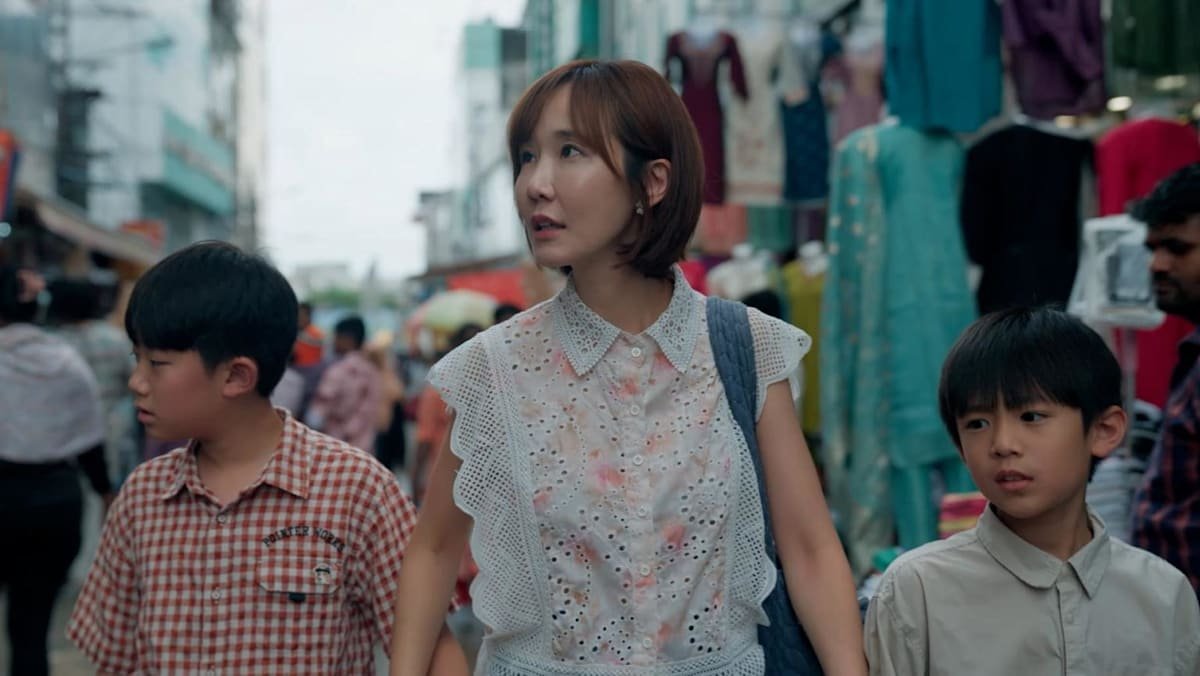
How Chennai became home for South Korean mum who bargains in Tamil and other Koreans
South Koreans are Chennai’s largest expat community. The series, The New Locals, follows three of them as they navigate culture shocks, friendships and belonging.
Um Jung-ae, the South Korean content creator behind Wonny Brothers, picked up Tamil to shop smarter in Chennai.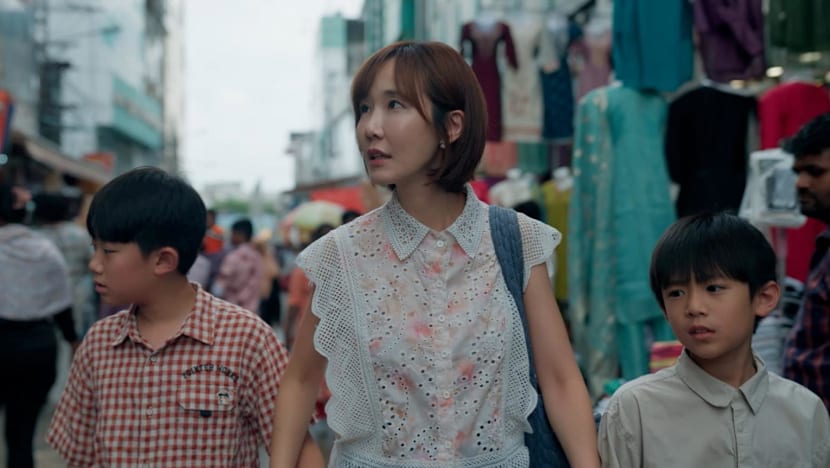
New: You can now listen to articles.

This audio is generated by an AI tool.

Read a summary of this article on FAST.
Get bite-sized news via a new
cards interface. Give it a try.
Click here to return to FAST
Tap here to return to FAST
FAST
CHENNAI: Um Jung-ae may look like a foreigner amid the bustle of T Nagar (or Thyagaraya Nagar), one of Chennai’s busiest shopping districts. But inside a saree shop, she does not sound like one.
“I like it very much! Can you reduce the price?” the 40-year-old asked a shopkeeper in Tamil.
Her love for shopping was what first pushed her to learn the language. When she realised some local shopkeepers could not fully understand English, she turned to an Indian friend for the Tamil word for “discount”.
“That’s where I started learning Tamil little by little,” she recounted.

Guess Word
Crack the word, one row at a time

Buzzword
Create words using the given letters

Mini Sudoku
Tiny puzzle, mighty brain teaser

Mini Crossword
Small grid, big challenge

Word Search
Spot as many words as you can
Before moving to India last year for her husband’s work, she had not imagined Chennai would be the way it was. “Many people (may) think that India is a crowded, dirty and dangerous place,” she said.
“But when I came here, there were as many beautiful and clean places as South Korea, and there were many beautiful cities. And people said (the locals) weren’t kind, but there were more … warm people than in South Korea.”
The city has since entered her life in many ways, notably through her children’s stomachs.
She had never eaten dosa before moving to India. Now her two sons ask for the South Indian staple once or twice a week. She has even learnt to make it at home, though only after about 10 failed attempts and a friend’s help.
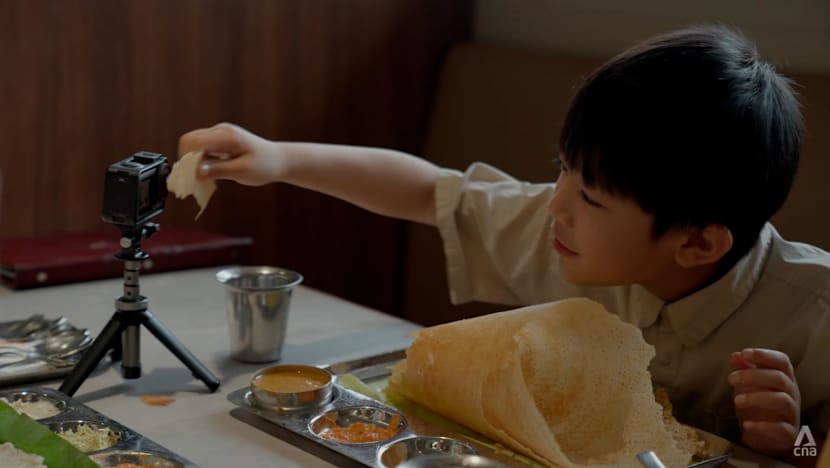
She once joked online that her elder son enjoyed dosa so much he might have been Indian in a past life.
The joke found an audience. Today, she is a Chennai-based influencer with nearly 70,000 followers on Instagram (@wonny_brothers) and 24,000 on YouTube, where she shares her family’s life in India — from shopping trips and dosa-making to outings with local friends.
One of them is Shah. She had come across videos of Um’s sons enjoying Indian food, reached out, introduced the family to more local dishes and made videos together.
“We became closer to our family members and our children,” Um said. “Now we’re almost like family in India.”
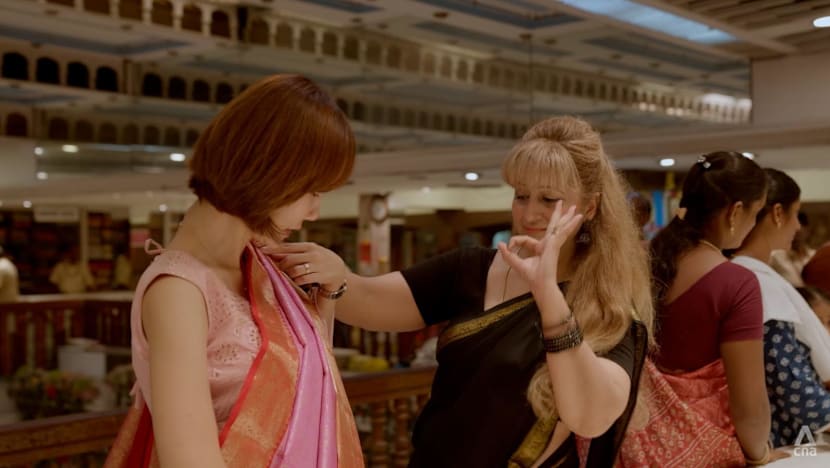
In many ways, she has become one of Chennai’s new locals. And she is not alone in that. A new season of The New Locals returns with migrants who have not only moved abroad but made another country their home.
In Chennai, the series follows three South Koreans: Um; finance manager Ernie Park, who has lived in the city for about 10 years; and Kim Hyun-gan, a housewife and Korean language tutor who moved to Chennai in 2012.
WATCH: Life as a Korean in Chennai: dosa, Tamil and finding home (22:55)
LEARNING TO BELONG
At first, Chennai took some getting used to. For Um, it was the traffic. In South Korea, drivers rarely honk unless there is danger, she said. In Chennai, the sound seemed constant.
“When I first arrived in India, I was shocked by the honking,” she said. “Then I realised that it’s a notification to the other (drivers). It’s (out of) consideration for (their) safety.”
The roads also had their own rhythms, where cows could be seen sleeping or wandering as vehicles made their way around them.
“I thought, ‘Why wouldn’t people press the horn when they see cows?’” she said. “I realised that they really respected cows.”
Park’s first culture shock, meanwhile, came at the dining table. Although he had heard that many Indians ate with their hands, seeing it every day was still new to him.
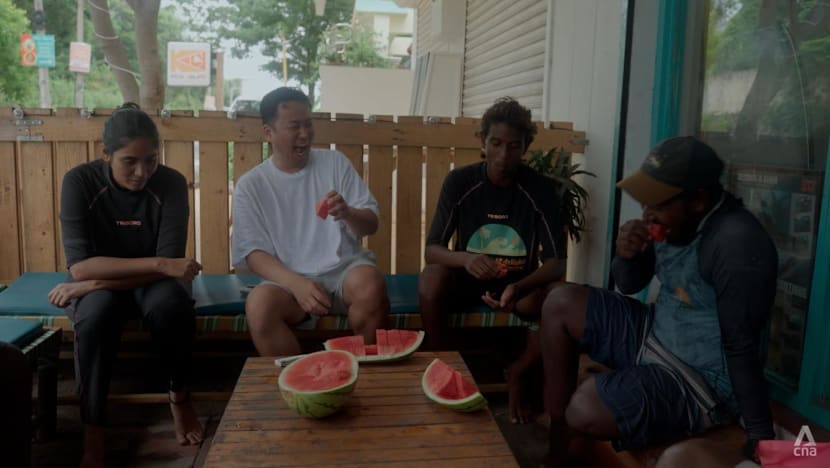
In South Korea, people may use their hands for finger food or snacks, but not typically for main meals, said the 40-year-old.
Then there was the heat. Kim, 56, said: “It’s summer all year round, so I don’t know how time flies.”
But beyond the traffic, meals and weather, the hardest adjustment was perhaps learning how to build a life in a city they did not yet know where they belonged.
For Park, moving to Chennai was a “big task”. He knew little about the city before arriving and was not naturally outgoing. In his first year, he mostly kept to other South Koreans.
That changed after a fellow Korean introduced him to surfing. The more he went to the beach, the more it helped him break the ice with Indian surfers, who later drew him to city hangouts, festivals and music gigs.
One of them was Vicky, a surfing instructor who became a close friend. “He has such a nice human character,” Vicky said. “When we go to the beach, I find the same craziness in him.”
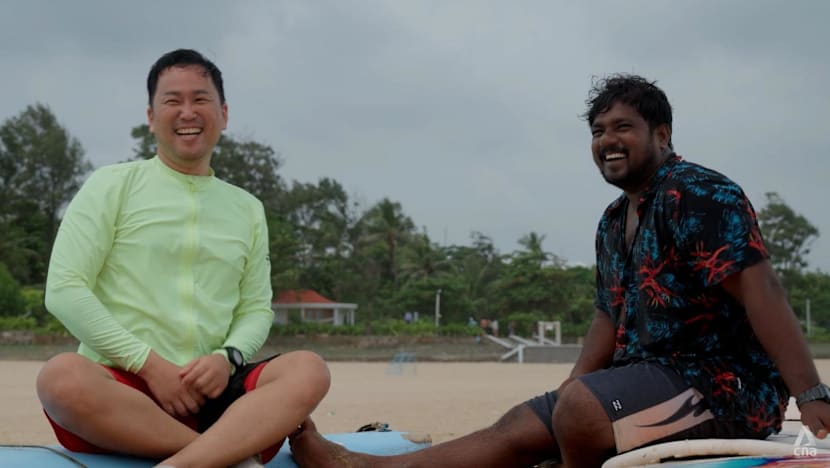
Park came to see that making friends required taking the first step too, which he said is not the typical Korean instinct.
“When I tried to open (up), they also were welcoming,” he said. “(As) time went by, we got happier and crazier.”
Kim also found belonging through sport, making friends on the badminton court with the local regulars.
“We get along well, just as we do with the other Indians here. There’s no difference,” said one of her badminton buddies, who described Kim as a “very nice person”.
That sense of belonging mattered even more after Kim’s children returned to South Korea. Having spent years supporting them, she felt the loss of that role deeply.
“I felt like I was made redundant,” she shared. “I felt like I was useless.”
But she eventually channelled that nurturing instinct into tutoring locals in the Korean language. They have made steady progress, she said.
“I think (Indians) have a great ability in languages,” she observed. “They speak a lot of languages. I was surprised that they learnt Tamil, English and other dialects. So they learnt Korean so much faster than I thought (they would).”
A NEW HOME
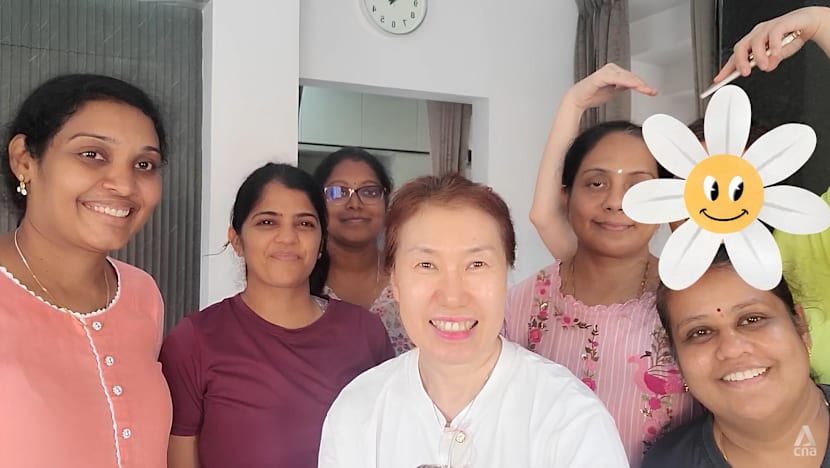
As Chennai became home, Um, Park and Kim began helping others cut across cultures as they once did. More often than not, it started with food.
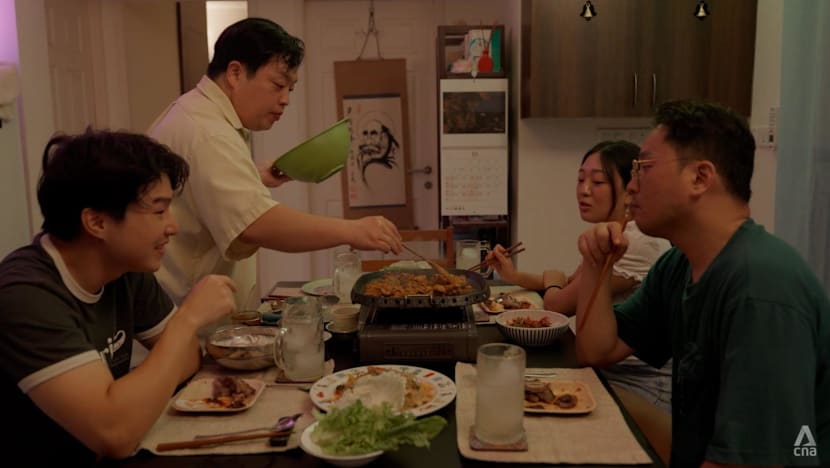
Among his South Korean friends in Chennai, Park is known as the organiser. At his gatherings, he grills Korean dishes such as pork belly and galbi (short ribs) but also serves tandoori chicken adapted for Korean palates.
“My friends who are living in Chennai can’t eat Indian food,” he said. “That’s why I try to introduce Indian dishes to my Korean friends but (made to) their taste.”
Similarly, Kim and her friends once cooked chapattis, tteokbokki (rice cake) and gimbap (seaweed rice rolls) together for a house party.
“It was really fun,” she recalled. “I thought foreigners couldn’t eat (tteokbokki) because of the texture, but they said the rice cakes were delicious.”
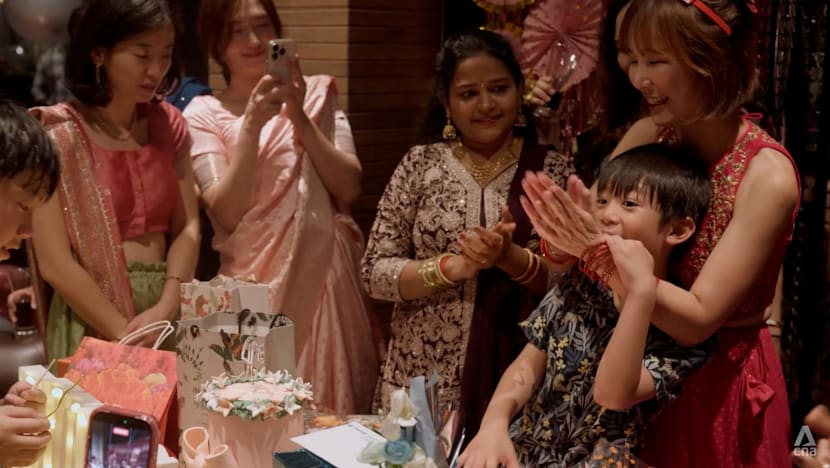
Um’s 40th birthday celebration this year also brought both worlds together: South Korean friends, Indian friends and the family she built around herself in Chennai.
“I thought it’d be a good (opportunity) to celebrate my birthday and to get along with everyone,” she said.
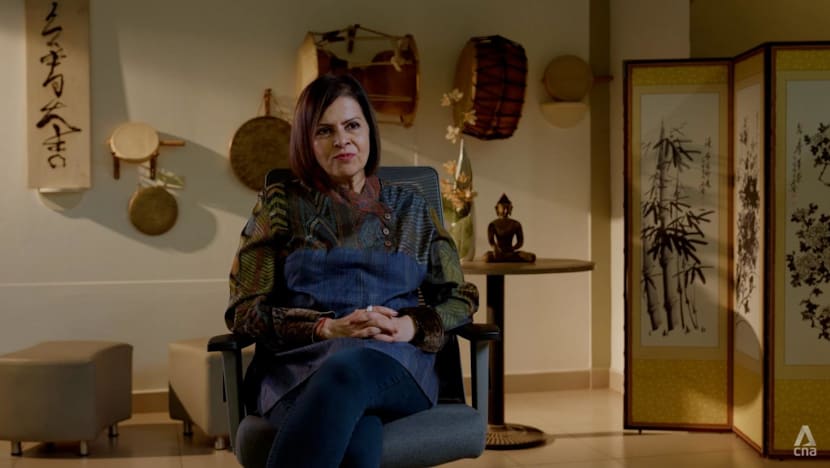
Across Chennai, that same exchange has also taken shape in the form of the Indo-Korean Cultural and Information Centre, which was established in 2006 to strengthen ties between India and South Korea.
Through language classes, cultural programmes and performances, it serves as a meeting point for locals and expatriates.
Rathi Jafer, the centre’s director, said its goal was to promote “a meaningful dialogue” between two cultures that may appear different but share many similarities.
The South Korean community has become Chennai’s largest expatriate community, with its own shops, restaurants and support networks, she pointed out.
“Our job, I think, is to make them feel as comfortable as possible, as integrated as possible — making … lasting friendships between people here and those from Korea who are now pretty much residents of Chennai.”
For Um, Park and Kim, those connections have helped turn the city into home. Um still misses her family during holidays such as Pongal and Deepavali, but her friends in Chennai have made the distance feel smaller.
“My friends here are so nice to me. Many people love us,” she said. “Thus, I feel like I’m in my second home.”
Park’s local friends even joke about how much he has adapted. “My Indian friends always tell me, ‘You’re Indian, you’re not Korean. We have to check your passport,’” he said.
His sense of belonging is, in fact, strongest whenever he returns from South Korea. “(At the) Chennai arrival hall, there’s a welcoming board: ‘Welcome (to) Chennai,’” he highlighted.
And each time, the thought comes naturally: “Oh God, I’m home.”
Watch this episode of The New Locals here.


Source: CNA/fl(dp)
Sign up for our newsletters

Get the CNA app
Stay updated with notifications for breaking news and our best stories
Get WhatsApp alerts
Join our channel for the top reads for the day on your preferred chat app

Get bite-sized news via a new
cards interface. Give it a try.
Click here to return to FAST
Tap here to return to FAST
FAST