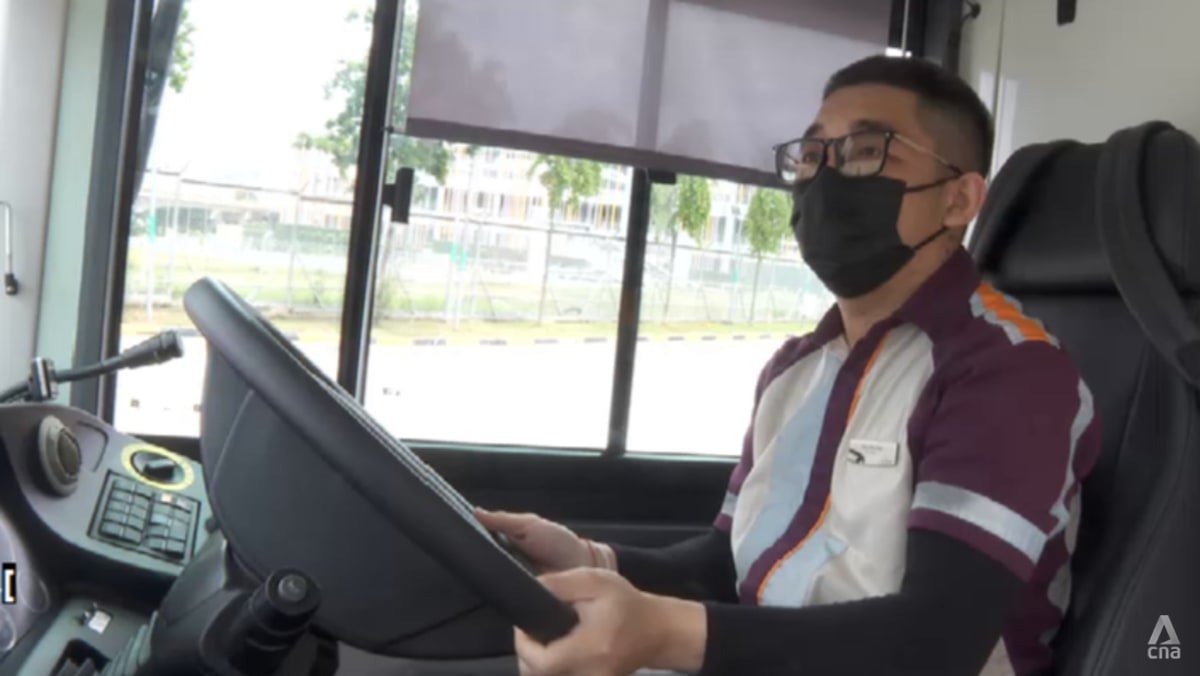
Abuse of bus captains on the rise as union looks to expand mental wellness support
The National Transport Workers’ Union says it is exploring more counselling and mental health support for bus drivers facing verbal abuse, physical attacks and online harassment.
SBS Transit bus captain Chooi Mun Sing said a roadside confrontation that was later shared online caused him emotional and mental distress.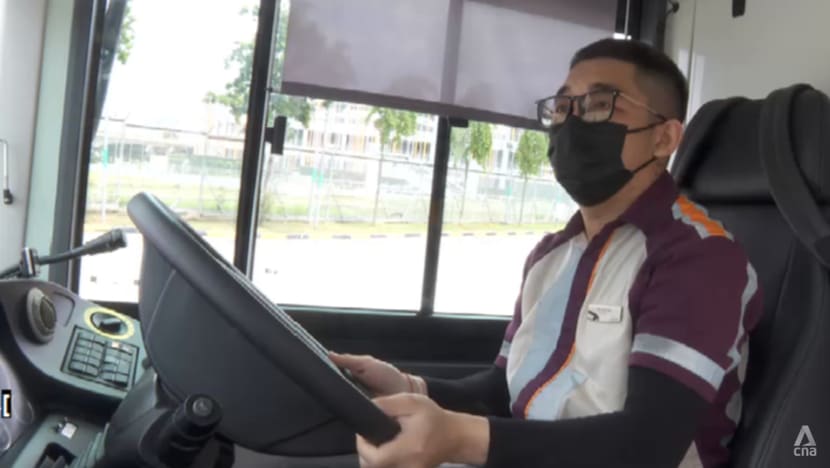
New: You can now listen to articles.

This audio is generated by an AI tool.


Read a summary of this article on FAST.
Get bite-sized news via a new
cards interface. Give it a try.
Click here to return to FAST
Tap here to return to FAST
FAST
SINGAPORE: The union representing Singapore’s public transport workers is looking to strengthen mental wellness and counselling support for bus captains who face abuse on the job.
This comes amid a rise in reported cases of physical abuse against bus captains, as well as concerns over online harassment targeting transport workers.
According to the Land Transport Authority (LTA), 35 cases of physical abuse against bus captains were reported in 2025 – up from 26 cases in 2024.
As of April, 10 cases have already been recorded this year.
EMOTIONAL AND MENTAL DISTRESS
For SBS Transit bus captain Chooi Mun Sing, one recent encounter left a lasting impact.
In late March, he was driving service 88 near Ang Mo Kio Hub when he noticed a lorry and a motorcycle had stopped within a bus stop zone, blocking access for his vehicle.
“I alerted them that they were blocking the way, and they started spewing vulgarities at me,” he told CNA.
“I was completely shocked. I didn’t know what to do.”
Mr Chooi reported the incident to his supervisor and later lodged a police report. But his ordeal did not end there.
Videos of the confrontation were subsequently shared online, which he said caused further emotional and mental distress. The experience was so unsettling that he considered changing his service route.

Guess Word
Crack the word, one row at a time

Buzzword
Create words using the given letters

Mini Sudoku
Tiny puzzle, mighty brain teaser

Mini Crossword
Small grid, big challenge

Word Search
Spot as many words as you can
ONLINE HARASSMENT A CONCERN
The National Transport Workers’ Union (NTWU) said it has become increasingly concerned about abuse directed at public transport workers.
“We have observed of late that there have been quite a number of abuse cases targeted at our bus captains and public transport workers,” said NTWU executive secretary and National Trades Union Congress (NTUC) assistant secretary-general Yeo Wan Ling.
“Some of them are physical abuse, and some of them are online abuse, or online cyberbullying, or doxxing.
“This is something that cannot be tolerated, and we hope to let our commuters know that having a good public transport journey is one of mutual respect,” she added.
Singapore’s Protection from Harassment Act (POHA) provides protection against harassment, stalking, cyberbullying and doxxing, which is the publication of personal information intended to cause distress or facilitate harassment.
In a parliamentary reply earlier this year, the Ministry of Transport said that from 2021 to 2025, an average of about 60 cases were reported annually under POHA involving public transport workers who were harassed by commuters while performing their duties.
The ministry does not track how many of those cases specifically involve allegations of online harassment.
ABUSE CAN STEM FROM MINOR DISPUTES
Transport operators told CNA that incidents of abuse against its employees are not uncommon.
SBS Transit sees about two to three cases every week, according to its head of bus operations Bernard Goh.
“These cases range from abuse – physical and verbal – and some altercations between passengers on board and drivers on the roads,” he said.
“Such cases can arise from as minor as payment of fares, eating on board (and) passengers who missed their stops.”
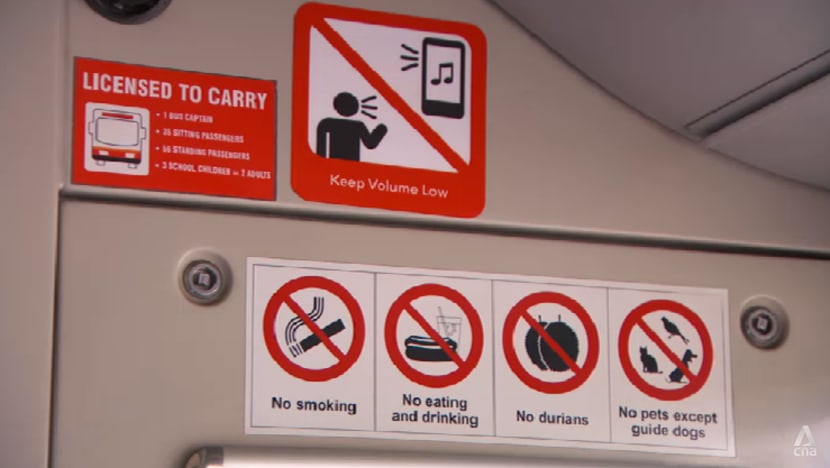
To prepare staff for such situations, bus captains undergo training in conflict management and de-escalation techniques before they begin working.
They are also taught to keep a safe distance from aggressive individuals and not further aggravate them, Mr Goh added.
If a confrontation escalates and affects other passengers, bus captains can alert their Operations Control Centre, which assesses whether police assistance is needed or whether mobile traffic inspectors should be deployed.
Every SBS Transit bus is also equipped with at least 12 CCTV cameras, allowing operators to review cases, Mr Goh said.
Following such encounters, supervisors assess the driver’s well-being and can refer affected staff for professional counselling. The company also funds counselling sessions and, where necessary, legal costs.

UNION CALLS FOR GREATER RESPECT AND SUPPORT
NTWU said it works closely with public transport operators whenever abuse cases occur, including accompanying workers when police reports are made and helping them with legal support.
“One of the other things that (NTWU) is also looking at is to beef up the amount of mental wellness support that we can have for bus captains or transport workers who are going through a period of cyberbullying and where they feel mentally stressed,” Ms Yeo added.
“We are also looking at providing, for instance, counselling help, and this I think will enhance the type of assistance that they will get beyond what they’re getting with their employers.”
Apart from support measures, NTWU is advocating for greater public awareness and education on treating transport workers with respect.
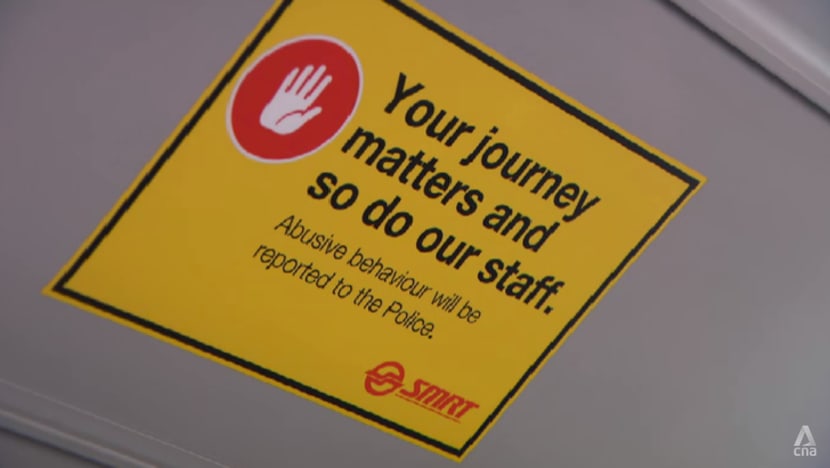
Ms Yeo said the union has been discussing possible public campaigns with the Public Transport Council to promote kindness towards frontline transport staff.
Singapore already marks an annual Public Transport Workers’ Appreciation Day. Initiatives such as Caring Commuter Week also seek to promote a more gracious and considerate public transport culture.
Ms Yeo said she hopes messages about kindness and respect towards public transport workers can become a year-round reminder for commuters.
Source: CNA/mp(lt)
Sign up for our newsletters

Get the CNA app
Stay updated with notifications for breaking news and our best stories
Get WhatsApp alerts
Join our channel for the top reads for the day on your preferred chat app

Get bite-sized news via a new
cards interface. Give it a try.
Click here to return to FAST
Tap here to return to FAST
FAST
About The Author