As RTS Link nears opening, JB faces test of making its car-dependent centre more walkable
Transport experts say Johor Bahru’s city centre lacks a connected pedestrian network, while authorities explore solutions and exchange ideas with global firms including Zaha Hadid Architects.
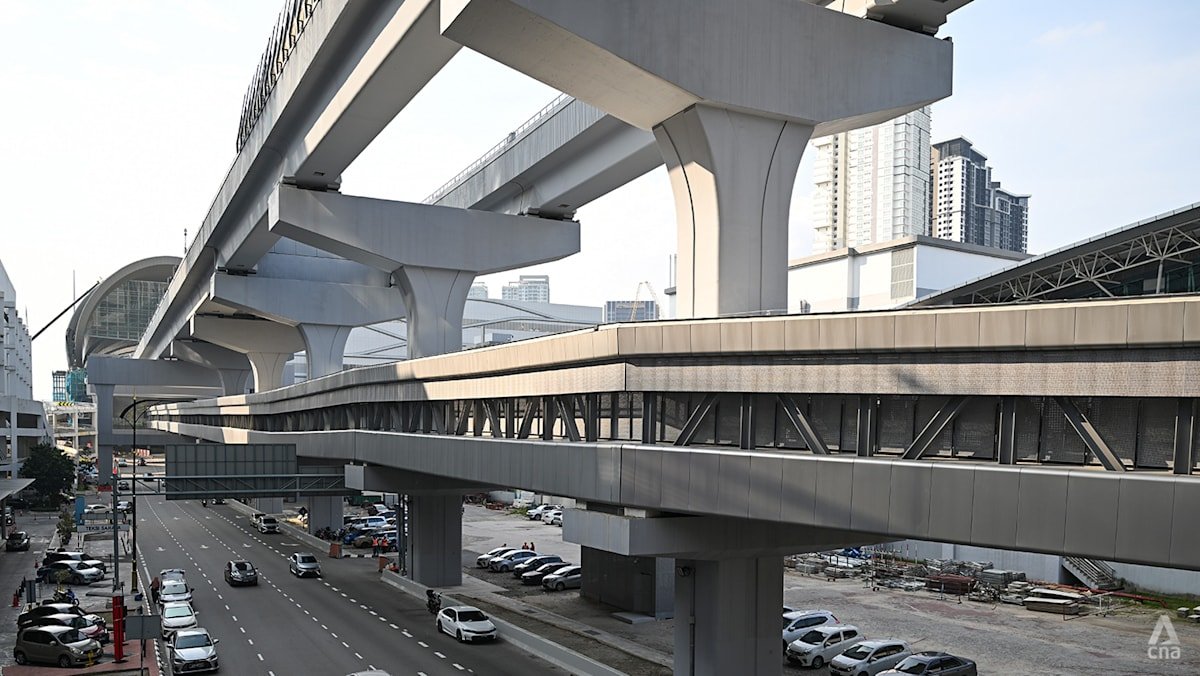
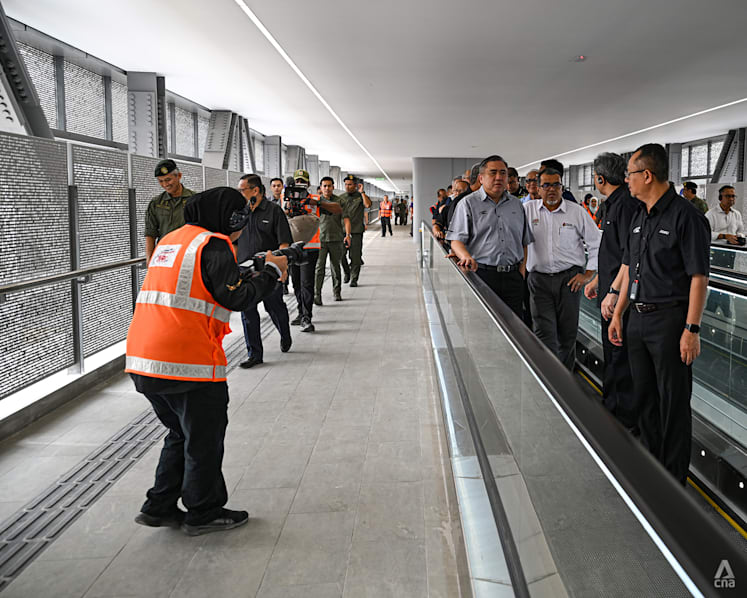
A pedestrian overhead bridge connecting RTS Link Bukit Chagar station to nearby amenities.
(Photo: CNA/Zamzahuri Abas)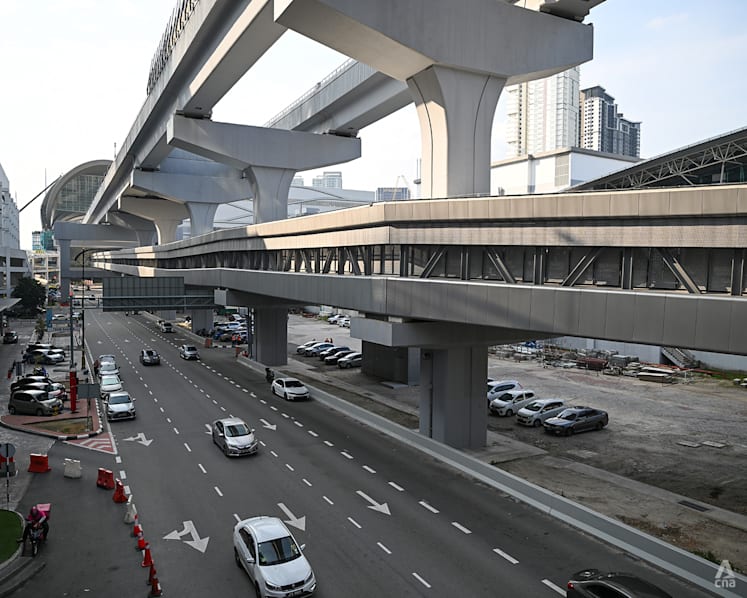
New: You can now listen to articles.

This audio is generated by an AI tool.

Read a summary of this article on FAST.
Get bite-sized news via a new
cards interface. Give it a try.
Click here to return to FAST
Tap here to return to FAST
FAST
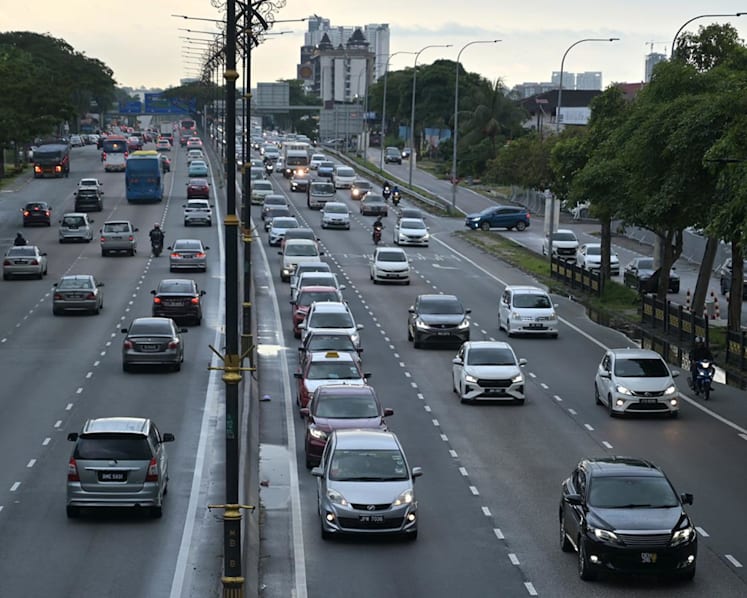
JOHOR BAHRU: On a typical afternoon, the streets of Johor Bahru’s central business district are a hive of activity: office workers rushing out for lunch, tourists moving between malls and, most prominently, cars and motorcycles weaving through packed streets.
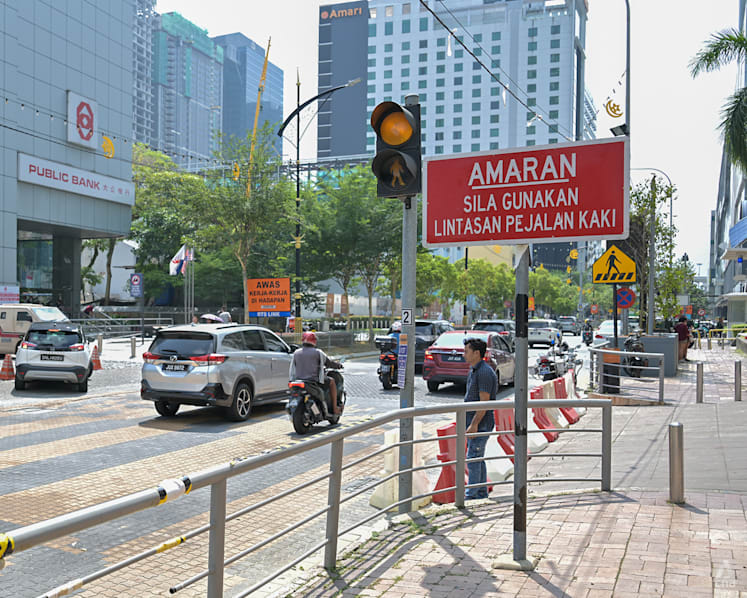
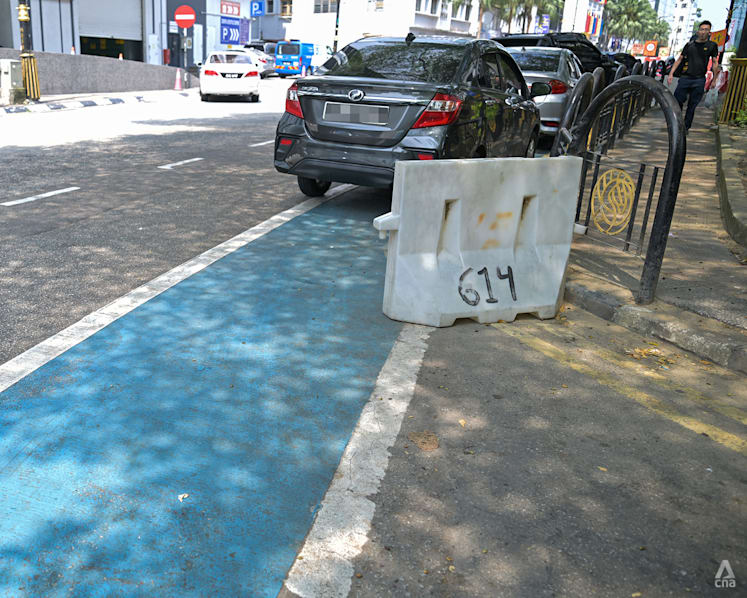
Some stretches of pedestrian walkways and bicycle lanes – part of efforts to create a more car-lite city centre – are pockmarked with potholes or obstructed by haphazardly parked vehicles.
Elsewhere, pockets of prime land in the heart of the central business district (CBD) sit vacant and neglected, some strewn with rubbish.
Along the refurbished Sungai Segget canal a short walk from the popular Johor Bahru City Square mall, Malaysian Johnson Anthony told CNA recently that walking around central Johor Bahru has become more pleasant in recent years, but remains far from “what it should be”.

Guess Word
Crack the word, one row at a time

Buzzword
Create words using the given letters

Mini Sudoku
Tiny puzzle, mighty brain teaser

Mini Crossword
Small grid, big challenge

Word Search
Spot as many words as you can
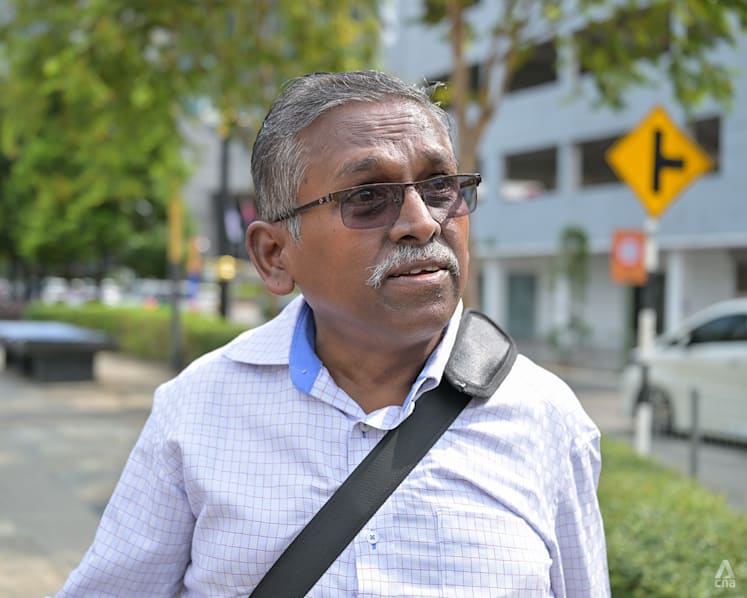
“It’s cleaner now than before, but there are ways to make it more comfortable and convenient for pedestrians,” said the 71-year-old security officer, who works in Singapore and was visiting Johor Bahru on his day off.
“There’s still too many cars,” added Anthony, who said he had struggled to cross a road at a traffic light that morning because vehicles did not stop.
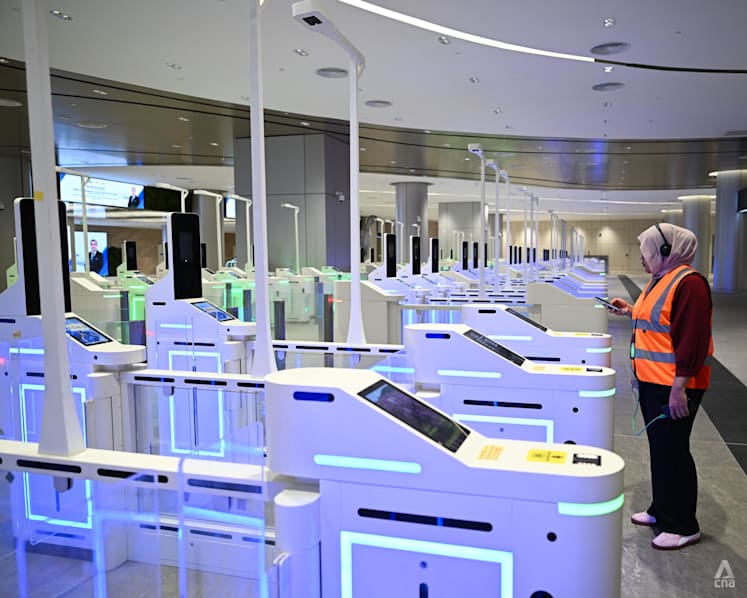
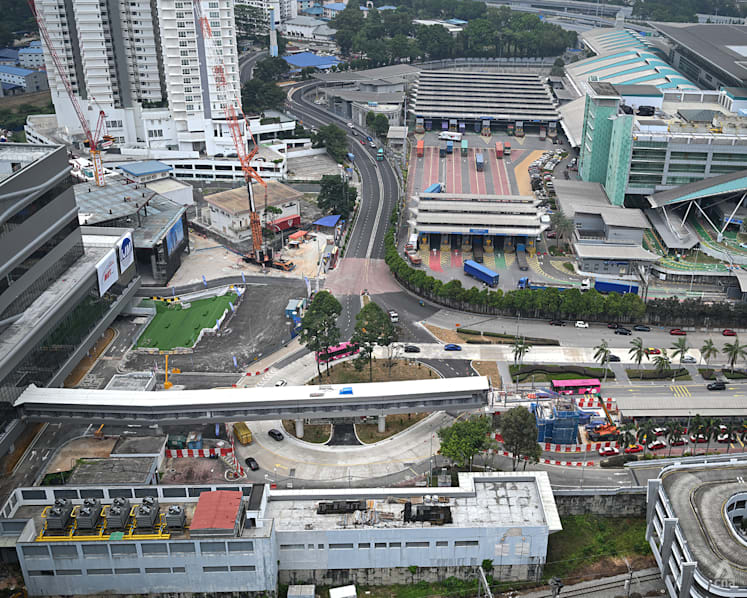
Anthony, like many in Johor Bahru, is keenly anticipating the opening of the Johor Bahru-Singapore Rapid Transit System (RTS) Link and, with it, an elevated pedestrian walkway connecting the Bukit Chagar station with other transport nodes, including taxi stands and a bus bay, as well as nearby malls such as Johor Bahru City Square and Komtar JBCC.
Johor Bahru’s CBD, gazetted as the Ibrahim International Business District (IIBD), will encompass 101ha in the state’s southern economic region, roughly the size of 141 standard-sized football fields.
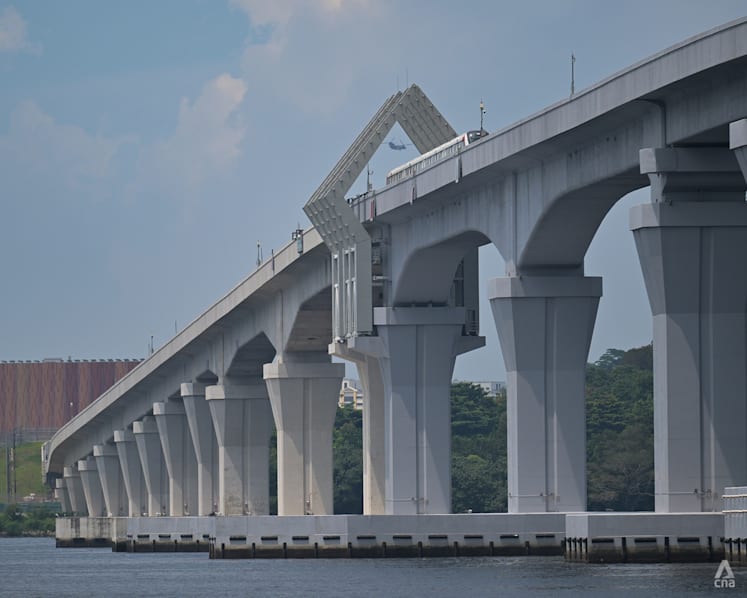
It is set to become an increasingly important part of the city’s development story, with the RTS Link expected to begin service in January 2027 and the Johor-Singapore Special Economic Zone (JS-SEZ) expected to draw more companies, workers and visitors.
But urban planning experts told CNA that the proposed pedestrian linkway and the city centre’s existing street layout have shortcomings, particularly the lack of a continuous and comfortable pedestrian network and the area’s continued dependence on vehicles.
Still, experts are optimistic that authorities recognise these challenges and are looking for solutions, including potentially from overseas experts.
One sign, they said, was a seminar in July involving internationally renowned Zaha Hadid Architects, where representatives from the global firm spoke on how to improve Johor Bahru’s city centre urban systems.
In June 2025, the Johor state government reiterated plans to transform IIBD into a “world-class business hub” and raise its economic value from RM208 million (US$51.46 million) to RM21 billion by 2040, with plans encompassing shopping districts, work centres and integrated public transport systems.
Architect Chau Loon Wai told CNA the renewed focus on the city centre was welcome, after years of development on Johor Bahru’s outskirts had contributed to the “hollowing out” of its traditional core.
Chau said that infrastructures such as highways connecting incoming motorists from Singapore had led to the CBD being bypassed, causing Johor Bahru to lose its “spatial centrality”. But the RTS Link will soon bring the focus back to the IIBD, he said,
“We have no choice but to bring the focus back to the centre and address the tensions that come with it,” said the senior lecturer at Universiti Teknologi Malaysia’s Faculty of Built Environment and Surveying.
CALLS FOR BETTER PEDESTRIAN, CYCLING NETWORK
Urban planning and transport experts whom CNA spoke to said Johor Bahru’s city centre was largely designed around cars, pointing to the amount of land devoted to car parks and the network of roads cutting between shophouses and other buildings.
The result is a built environment where getting around without a vehicle can be difficult. Transport expert Muhammad Zaly Shah described walking in Johor Bahru’s city centre as “unforgiving”.
“One pothole, one blocked crossing, one lane of parked cars, and the entire trip (can) fail,” said Zaly, a professor of transportation and logistics at Johor’s Universiti Teknologi Malaysia.
With the RTS Link and JS-SEZ expected to bring more people into the city centre, making walking a viable alternative to driving will become increasingly important, he said.
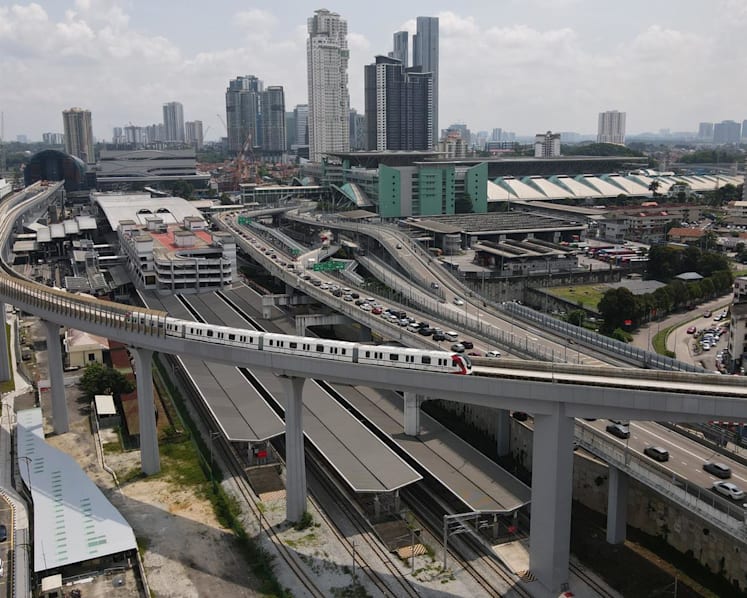
The RTS Link alone will have the capacity to carry up to 10,000 passengers per hour in each direction once operational.
(Photo: CNA/Zamzahuri Abas)
“This is not anti-car. The arithmetic is simple. What the RTS and SEZ will bring in will make it impossible for everyone to travel within the CBD by car. Therefore, walking has to be a viable option,” Zali added.
Doing so, he stressed, would require firm policies and consistent enforcement, including keeping designated lanes clear during stipulated hours and clearly setting out which government agencies are responsible for enforcing the rules.
Architect Chau agreed that a shift towards active mobility was necessary, and said Johor authorities recognise the need for change.
“Authorities are aware of the importance of promoting active mobility, to reduce congestion, make people healthier both bodily and mentally, and to (switch) to public transport.”
But transforming a city centre built around cars will not be straightforward, Chau acknowledged, given decades of infrastructure devoted to highways, roads and car parks.
“Once you put them in place, it’s not simply something you can redo,” he added.
For cyclists, the limitations of the existing infrastructure have long been apparent.
Avid cyclist Wong Chien Yee, who cycles across the city from his home in Taman Perling twice a week, told CNA that he avoids IIBD because of persistent congestion and bicycle lanes that are frequently obstructed by parked cars and construction works.
“It’s a waste because ideally I’d love to cycle through the waterfront area (along Danga Bay) and cut into town, but it’s just not safe, not feasible,” said the 36-year-old.
“I think ahead of the RTS Link launch, they should consider proper paths for pedestrians and cyclists in the city. There will be less pollution and the place (will be) more pleasant,” added the small business owner.
WILL THE NEW WALKWAY BE SUFFICIENT?
Experts said that an elevated walkway announced by Transport Minister Anthony Loke on Aug 18 is a strong start, but stressed that a wider pedestrian network will eventually be needed.
The 450m-long main spine will connect passengers from the RTS Link’s Bukit Chagar station to JB Sentral and transport options including buses, taxis and Keretapi Tanah Melayu trains, as well as nearby malls.
There are also plans to extend the walkway across Jalan Tun Abdul Razak to Coronation Square, but work on this has not begun.
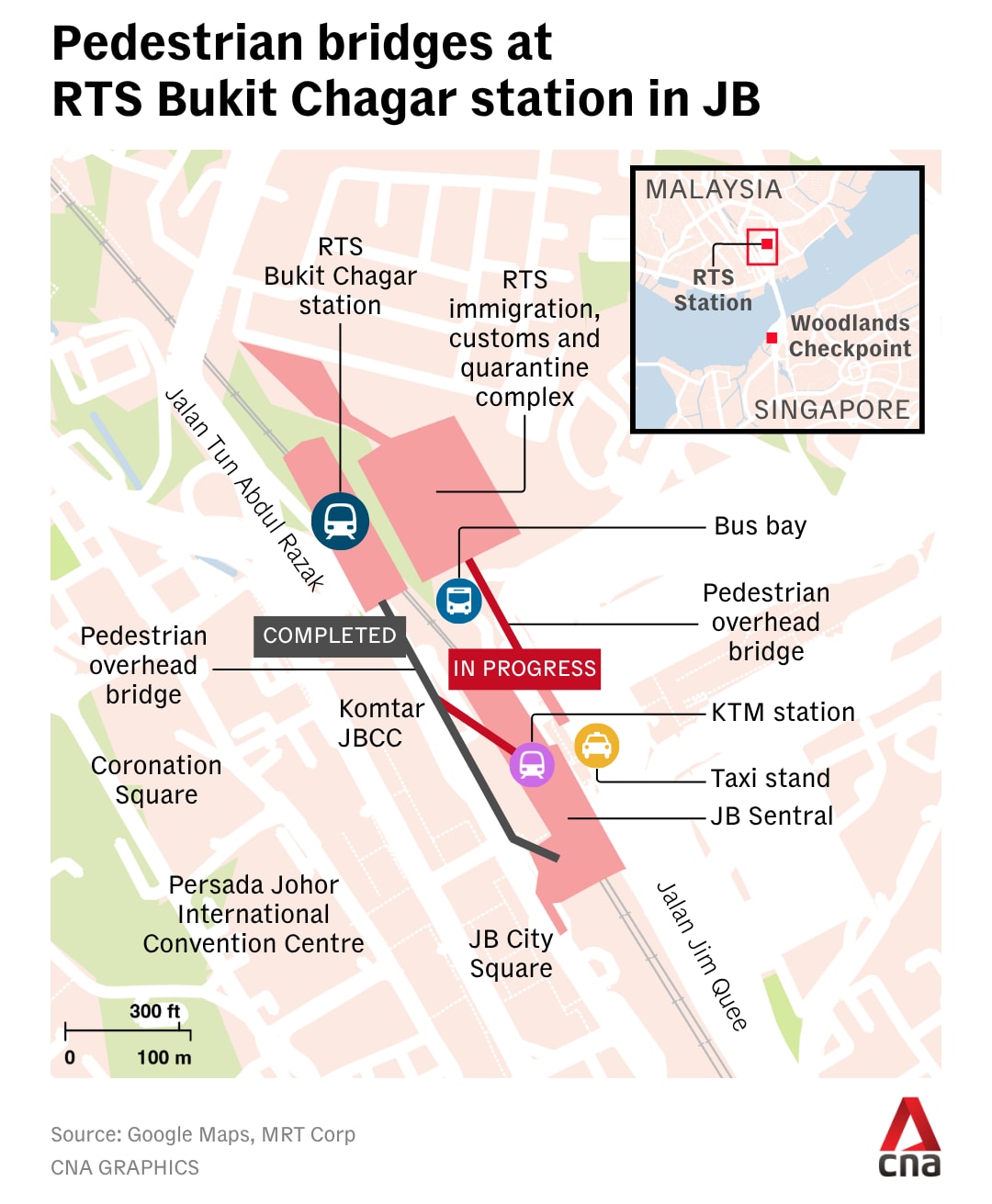
Transport expert Zaly said the walkway will be crucial in dispersing passengers from Bukit Chagar, particularly as an anticipated public train-bus system connecting the station to other parts of Johor Bahru will not be ready when the RTS Link opens.
“The true capacity of the station is determined by the sidewalk leading out of it. A protected, direct path for pedestrians from Bukit Chagar to JB Sentral and the surrounding areas is also a part of the transit system,” he said.
But Zaly cautioned that the walkway cannot function in isolation.
“Projects succeed only if they connect. A spine needs ribbons, crossings, side streets and sheltered parts that provide access to destinations,” he said.
Zaly pointed to pedestrian networks in Singapore, Kuala Lumpur, Bangkok and Hong Kong as examples Johor Bahru could learn from.
These include Singapore’s underground links connecting malls, offices and MRT stations, and Kuala Lumpur’s roughly 1.2km covered walkway between the Kuala Lumpur Convention Centre and Pavilion Kuala Lumpur shopping centre in Bukit Bintang.
“They demonstrate that in our climate people will walk when the route provides protection from sun, is direct, is integrated with their current location(s), and includes enough economic activity to support it,” he said.
Johor could also draw lessons from how such infrastructure is funded, Zaly said, with property developers in some cities contributing to pedestrian links as part of broader transit and development plans.
“The potential exists to convert voluntary compliance (of building linkways in JB) into mandatory regulations,” he added.
Building a more comprehensive pedestrian network in Johor Bahru, however, could be complicated by pockets of vacant or abandoned land in the city centre.
CNA observed two such plots near Coronation Square, alongside rows of shophouses, where ownership was not immediately clear. One plot was roughly half the size of a football field while the other was the size of a basketball court.
Architect Chau said government agencies, particularly the Johor Bahru City Council, would need to identify and work with landowners if pedestrian paths and linkways are to cut through such areas.
“The government agencies have to be proactive in engaging and collaborating with the landowners. It’s not a zero-sum-game, everyone stands to win if there’s a very good development master plan,” he said.
GLOBAL EXPERTISE FOR JB’S NEXT CHAPTER?
The awareness that Johor Bahru’s city centre requires redevelopment for a better pedestrian and cycling network is not a new phenomenon.
In 2015, the state investment arm of the Johor government, Johor Corporation (J Corp), announced a master plan to foster “ideological shift and multi-level changes” within IIBD and increase the area’s gross development value to roughly RM25 billion.
A gross development value refers to the estimated value that a property or development is expected to have once it is completed and either sold or rented out.
This master plan had included building an area with a green space network – which ultimately led to the rejuvenation of the Sungai Segget corridor, a 4.3km waterway which has been refurbished into a sprawling canal walkway in 2023.
The project to refurbish the Sungai Segget facade was led by the Iskandar Regional Development Authority (IRDA), a statutory board established by the Malaysian federal government to redevelop southern Johor.
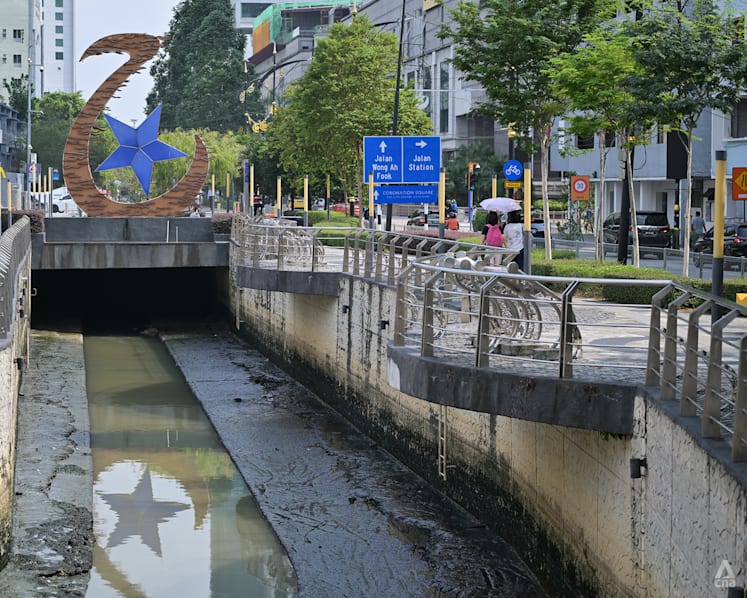
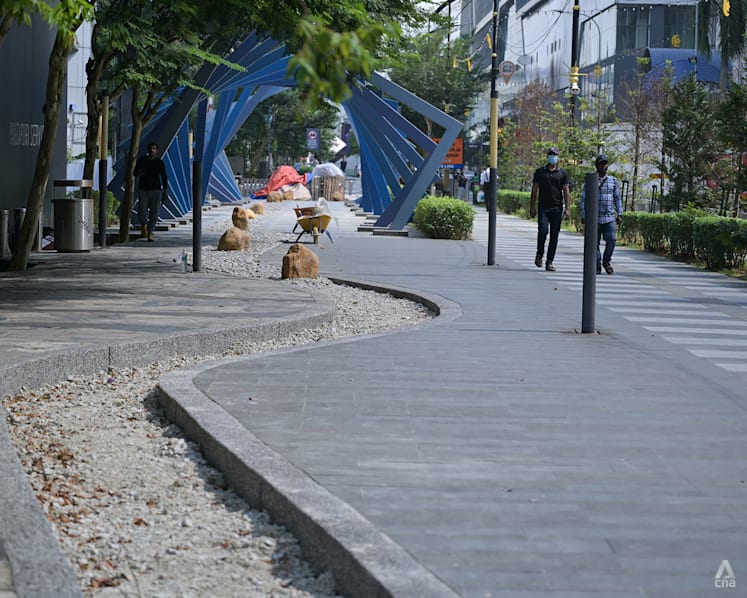
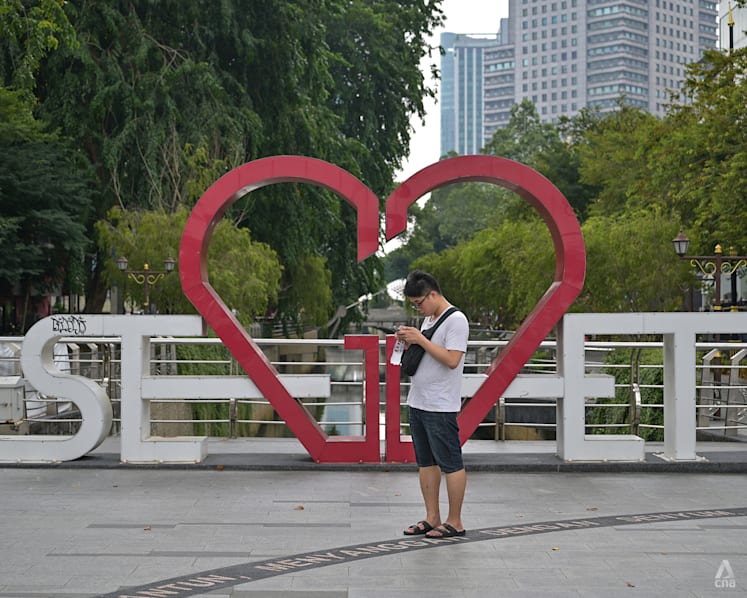
Experts told CNA that while there has been some positive work to develop the 2015 master plan, some parts of it have not been realised and implemented well – including ensuring connected pedestrian walkways and cycle lanes, as envisioned by IRDA.
But the observers noted that with the RTS Link’s imminent launch and JS-SEZ coming to fruition, there is more political will to press on with developing IIBD in the short term.
For instance on Aug 17, Deputy Prime Minister Ahmad Zahid Hamidi met with representatives of the Johor state government to discuss plans to ease traffic congestion in the Johor Bahru city centre.
He highlighted that the government’s approach is to centre such plans on an integrated, efficient public transport system.
Also, last month, J Corp’s think-tank Cerebrum launched a joint seminar with executives from Zaha Hadid Architects to exchange ideas with potential investors on plans to boost Johor Bahru’s CBD urban systems.
Attendees included representatives from the state-owned investment arms of Singapore and Malaysia – Temasek Holdings and Khazanah Nasional respectively – according to J Corp.
Zaha Hadid Architects is a global architecture and design firm headquartered in London renowned for its avant-garde approach. Some of its more popular projects in Asia include the Sheikh Zayed Bridge in Abu Dhabi, the Z8 Tower in Beijing and the Heydar Aliyev Center in Azerbaijan.
Singapore’s one-north district is master planned by the firm, which is also currently working on the development of the Discovery City in Johor. The 582-acre mixed-use development sits within Johor’s Ibrahim Technopolis in Sedenak, an industrial town around 50km north of Johor Bahru.
During the seminar in July, Zaha Hadid Architects’ director Filippo Innocenti unveiled some ideas on how the firm can replicate some of its projects in other countries in Johor Bahru’s CBD.
When asked how the company could apply these to Johor Bahru, Innocenti said: “The most important aspect is how to integrate JB’s vehicular viability into a more pedestrian-friendly environment.”
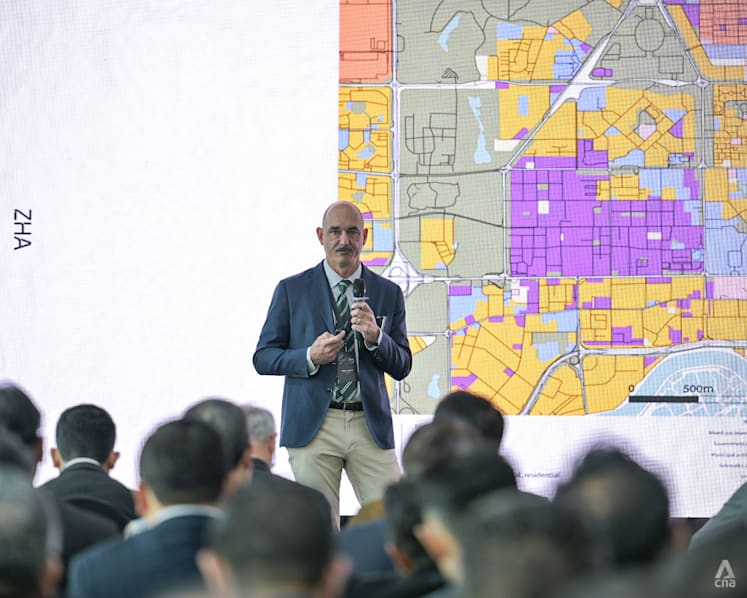
Without going into specifics, he added this can be done by adding a layer of walkable and liveable environment in IIBD. However, there is no confirmed announcement that the firm has been engaged officially to work on any IIBD-related projects.
In response to CNA queries, Cerebrum head Umar Zakir Abdul Hamid said that Zaha Hadid Architects’ participation at the seminar was “an organic, non-binding collaboration centred around the exchange of ideas, perspectives and insights” on Johor Bahru’s urban systems.
He added that Cerebrum was “not in a position to comment” on appointments or commercial arrangements related to J Corp.
The architect Chau told CNA that if indeed Zaha Hadid Architects will be engaged to rejuvenate Johor Bahru’s CBD, it will be a boost for investment given that the firm is a big name in the industry.
“These are crowd-pullers and investment-pullers,” he said, pointing out how the firm has a design philosophy of integrating pedestrian-friendly designs and bringing people to the street level around their buildings.
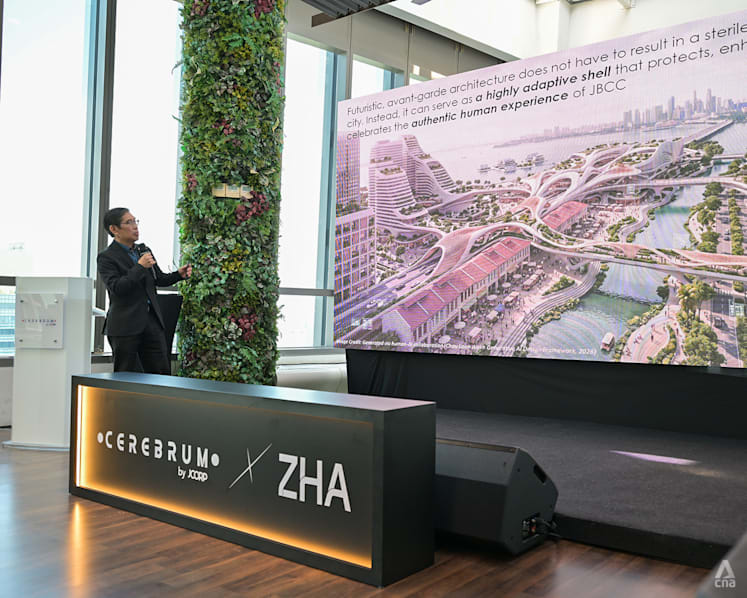
Chau himself gave a presentation at the seminar where he showed some AI-generated illustrations on how Zaha Hadid Architects could one day redevelop Johor Bahru’s CBD, while staying consistent to its avant-garde philosophy.
“This could be a good opportunity to have world class architecture built in Johor Bahru we can be proud of, as the city is an international gateway to Malaysia and Singapore,” he added.
Source: CNA/am(as)
Sign up for our newsletters

Get the CNA app
Stay updated with notifications for breaking news and our best stories
Get WhatsApp alerts
Join our channel for the top reads for the day on your preferred chat app

Get bite-sized news via a new
cards interface. Give it a try.
Click here to return to FAST
Tap here to return to FAST
FAST
About The Author