Asian governments push back, seek deals after Trump’s new tariff salvo
Singapore says it is “very disappointed”, Japan calls the proposed duties “regrettable”, while other economies are looking to existing or ongoing trade negotiations to limit the impact.
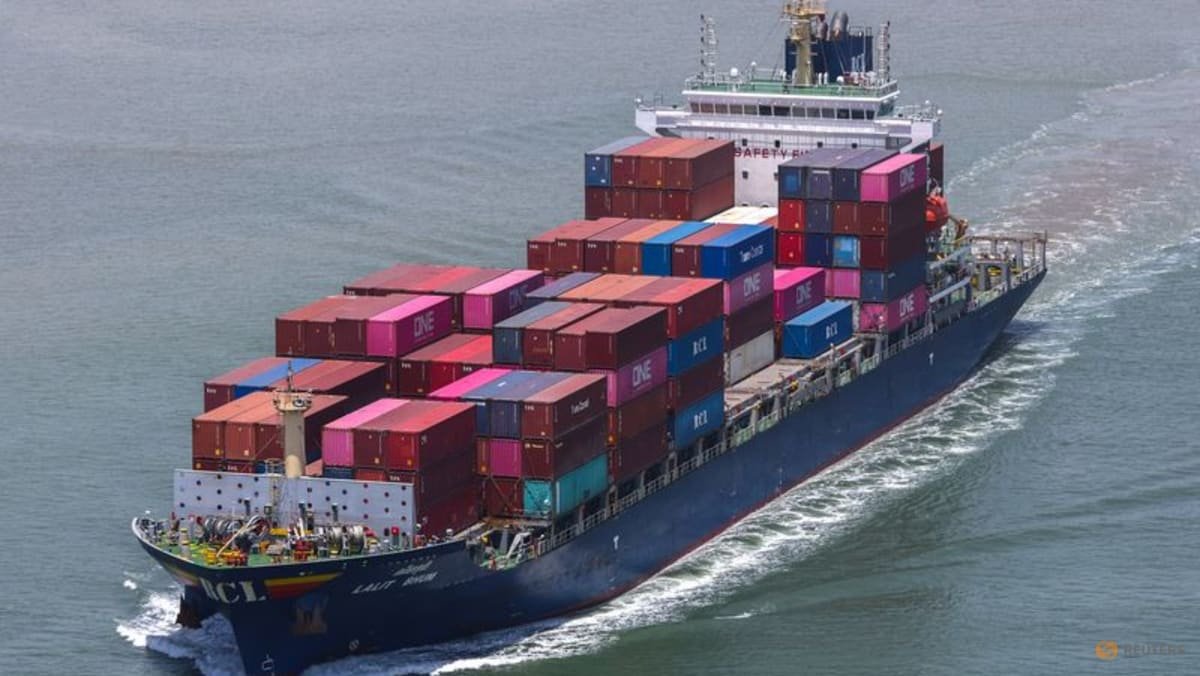
File photo. A container ship is seen near the Hai Phong International Container Terminal in Vietnam, Apr 16, 2025. (Photo: Reuters/Athit Perawongmetha)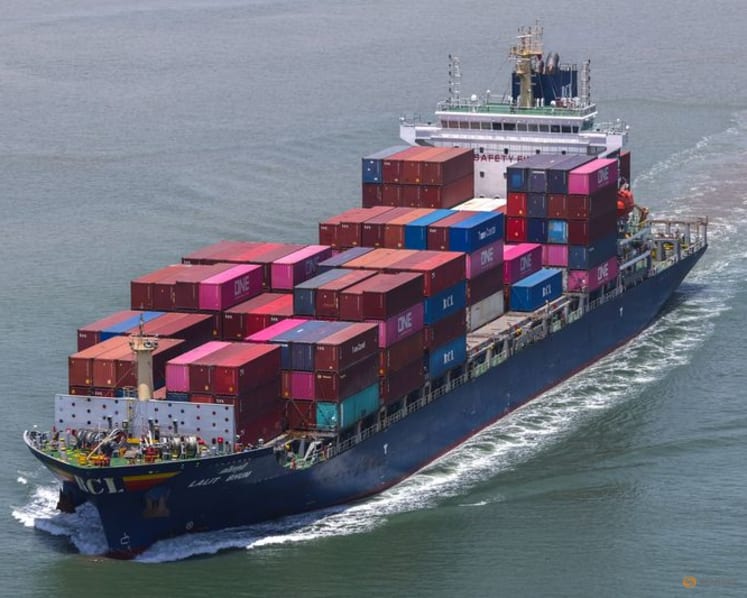
Read a summary of this article on FAST.
Get bite-sized news via a new
cards interface. Give it a try.
Click here to return to FAST
Tap here to return to FAST
FAST
SINGAPORE: Asian trading partners pushed back against US President Donald Trump’s latest tariff salvo on Thursday (Nov 26), with Singapore saying it was “very disappointed” by the proposed duties and Japan calling the move “regrettable”.
South Korea said it would hold further talks with Washington to safeguard its interests, while Vietnam sought to quickly conclude a trade deal and Taiwan expressed confidence its previously agreed 15 per cent tariff rate would hold.
China and India have also rejected Washington’s claims over excess industrial capacity.
The responses came after the Trump administration proposed new tariffs on 14 major trading partners, including some of Asia’s biggest economies and manufacturing hubs.

Guess Word
Crack the word, one row at a time

Buzzword
Create words using the given letters

Mini Sudoku
Tiny puzzle, mighty brain teaser

Mini Crossword
Small grid, big challenge

Word Search
Spot as many words as you can
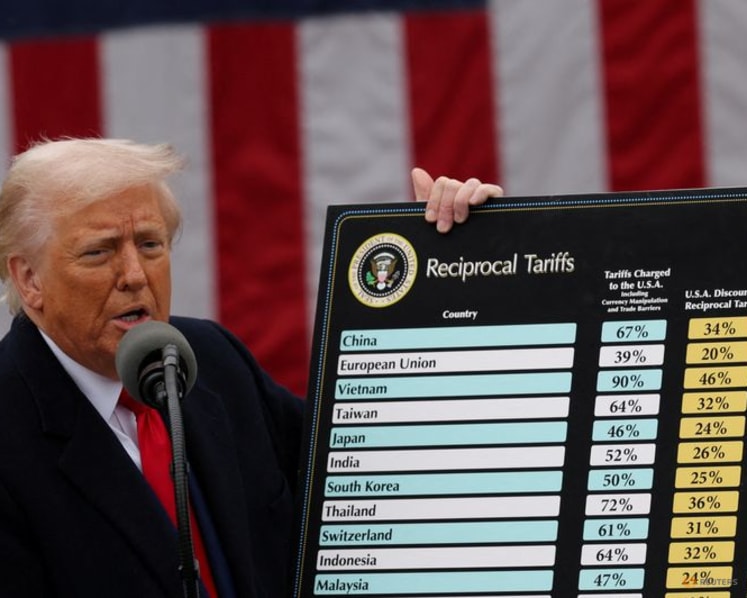
The US Trade Representative (USTR) proposed headline tariff rates of between 20 per cent and 40 per cent to counter what Washington described as excess industrial capacity and other market-distorting practices that undermine US manufacturing.
But the actual duties could be capped at lower rates under trade agreements already concluded or still being negotiated with Washington.
US Trade Representative Jamieson Greer said the tariffs would not take effect until after a Jan 25 public hearing.
SINGAPORE “VERY DISAPPOINTED”
Singapore said it disagreed with the USTR’s findings and was “very disappointed” with the proposed actions.
The Ministry of Energy, Trade and Industry (METI) said the findings did not take into account the structure of Singapore’s outward- and market-oriented economy.
“Singapore’s economic policies do not protect our domestic market or subsidise manufacturing for export,” the ministry said.
METI said it had actively engaged the USTR throughout the investigation and “thoroughly addressed its queries and concerns”.
Singapore will submit further comments during the upcoming public consultation period and continue engaging Washington, including urging the USTR to reconsider its proposed measures and exploring ways to reduce the tariff.
The USTR has proposed tariffs of up to 20 per cent on Singapore goods, with exemptions for certain products.
CHINA REJECTS “OVERCAPACITY” AS POLITICAL PRETEXT
China rejected Washington’s allegation that it was a source of excess industrial capacity, but stopped short of threatening retaliation.
“The so-called issue of ‘industrial overcapacity’ does not really exist and should not be used as a pretext for political manipulation,” a spokesperson for China’s embassy in Washington said.
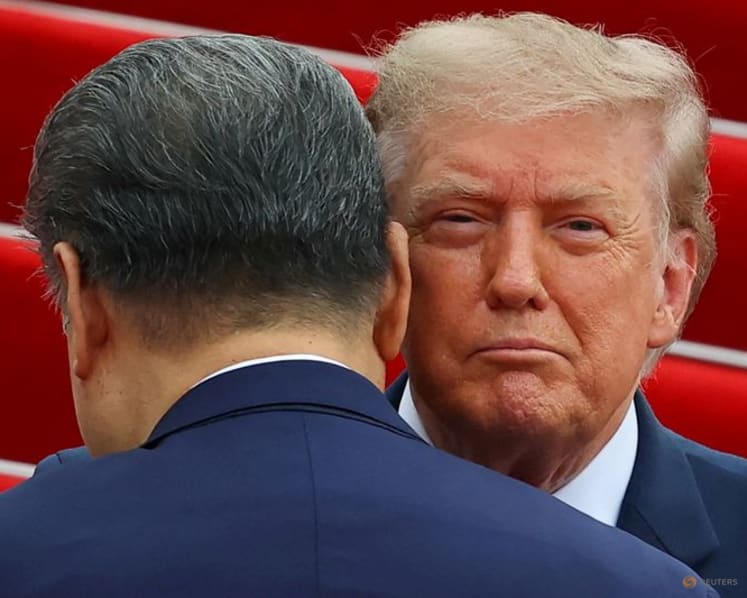
The spokesperson urged both sides to jointly deliver on agreements reached between Trump and Chinese President Xi Jinping.
Under the excess factory capacity probe, USTR said China would face the highest capped rate of 20 per cent, which would be added to duties of roughly 25 per cent imposed during Trump’s first term.
That rate would comply with a US-China trade truce that expires on Jan 10. But if the truce unravels, China’s rate would rise to 40 per cent, the USTR said.
JAPAN CALLS TARIFF PROPOSAL ‘REGRETTABLE’
Japan on Thursday called Washington’s proposed tariffs “regrettable” and rejected the US assertion that it had structural excess manufacturing capacity.
“Japan does not have any non-market policy practices or structural excess production capacity,” said Japan’s top government spokesman Minoru Kihara.
“It is regrettable that a proposed measure targeting Japan has been announced in spite of this.”
VIETNAM PUSHES FOR TRADE DEAL
Vietnam said it was working to finalise a trade deal with the United States, vowed to act on “overcapacity” and to tighten forced labour regulations in an effort to avoid Washington’s proposed new tariffs.
The ministry said it would participate fully in the next stages of the USTR investigation, including registering for and attending the public hearing, presenting its views and responding to questions from US officials.
The US is Vietnam’s largest export market; the US’ trade deficit with Vietnam is the largest that it has with any partner.
Vietnam has yet to conclude its trade negotiations with Washington.
Under the USTR proposal, Vietnamese goods would face a capped tariff rate of 20 per cent if an agreement is reached. The rate could rise to 35 per cent if negotiations fail.
Vietnam said it had made commitments under a framework trade agreement in October 2025 and made reforms to address US concerns.
“At the same time, efforts will be made to prevent the risk of overcapacity, curb illegal circumvention and transshipment, combat origin fraud, and effectively enforce regulations prohibiting the import of goods produced using forced labour,” it said.
Vietnam and the US meanwhile “are working toward finalising negotiations for a reciprocal, fair, and balanced trade agreement as soon as possible”.
Taken together, “these factors will serve as a crucial basis for the United States to consider applying a tariff rate lower than the maximum level proposed in the preliminary findings”.
INDIA REJECTS EXCESS CAPACITY CLAIM
India said on Wednesday it was examining the USTR notice and reiterated that it did not have structural excess capacity in any sector.
New Delhi said it had engaged constructively throughout the US investigation and argued that trade-related concerns should be addressed through its ongoing negotiations with Washington for a bilateral trade agreement.
“India remains committed to working closely with the United States towards the early conclusion” of the agreement, its trade ministry said.
Under the latest US proposal, Indian imports would face tariffs of up to 25 per cent, but Greer said the rate would be capped at 17 per cent if the two sides strike a trade deal.
New Delhi and Washington agreed to a framework for a trade deal in February, which brought down a punitive tariff on most Indian goods from 50 per cent to 18 per cent. The higher rate had been imposed in August 2025 after an earlier round of negotiations collapsed.
Subsequently, the Supreme Court invalidated Trump’s use of emergency powers to impose sweeping tariffs globally, leading to a 10 per cent baseline rate.
But a final trade deal between two of the world’s biggest economies remains elusive.
Washington has cited India’s industrial expansion policies, inadequate labour protections, market access barriers and failure to address global excess capacity among practices it says disadvantage US producers.
TAIWAN CONFIDENT 15% RATE WILL HOLD
Taiwan said it was confident Washington would maintain the 15 per cent tariff rate previously agreed between the two sides.
Taiwan and the US signed an investment cooperation memorandum of understanding in January and an Agreement on Reciprocal Trade in February.
Those arrangements secured preferential treatment for semiconductors and other technology products, which account for more than 70 per cent of Taiwan’s exports to the US.
Based on communications between Taipei and Washington, Taiwan’s government said it is confident that both sides will maintain the previously agreed-upon 15 per cent.
“The US has one main goal, which is to rebuild the legal basis for its reciprocal tariff policy. It is not to change the content of the agreements themselves,” Taiwan Vice Premier Cheng Li-chiun, who has led trade talks with Washington, told reporters.
“Both sides have repeatedly said they hope to maintain the content of the agreements. So the agreement as a whole will not change and will not be renegotiated,” she added.
Separate Section 232 tariffs on semiconductors and their derivatives have not yet been announced, but Taiwan has already secured most-favoured treatment in advance through the MOU, Cheng said.
Taiwan is home to TSMC, the world’s largest contract chipmaker, which is investing US$265 billion to build new factories in the US.
Under January’s deal with the US, Taiwanese companies will invest US$250 billion to boost production of semiconductors, energy and artificial intelligence in the US, while Taiwan will also guarantee an additional US$250 billion in credit to facilitate further investment.
Taiwan is also investing US$4.4 billion in a new liquefied natural gas project in Alaska that Trump has championed, though details remain to be ironed out.

SOUTH KOREA SEEKS FURTHER TALKS
South Korea said it would hold further consultations with Washington to safeguard its national interests, while arguing that its manufacturing sector was an integral part of US supply chains.
Seoul’s Industry Ministry said it had stressed during consultations before the announcement that the issue of excess industrial capacity did not apply to South Korea.
The USTR proposed a capped tariff rate of 15 per cent on South Korean goods, including existing most-favoured-nation duties.
However, the rate could rise to 25 per cent depending on the outcome of follow-up consultations and progress in implementing existing trade agreements.
South Korea and the US reached a trade agreement last year to lower tariffs on South Korean exports from 25 per cent in exchange for a combined US$350 billion investment package.
THAILAND SAYS RATE IN LINE WITH EARLIER TALKS
Thailand said Washington’s proposed tariff of up to 18 per cent on Thai goods was in line with previous negotiations between the two sides.
The commerce ministry said the proposed rate would help Thai products remain competitive in the US, Thailand’s biggest export market.
Source: Agencies/aj
Sign up for our newsletters

Get the CNA app
Stay updated with notifications for breaking news and our best stories
Get WhatsApp alerts
Join our channel for the top reads for the day on your preferred chat app

Get bite-sized news via a new
cards interface. Give it a try.
Click here to return to FAST
Tap here to return to FAST
FAST