At least S$185,000 lost to phishing scams involving hotel bookings since January
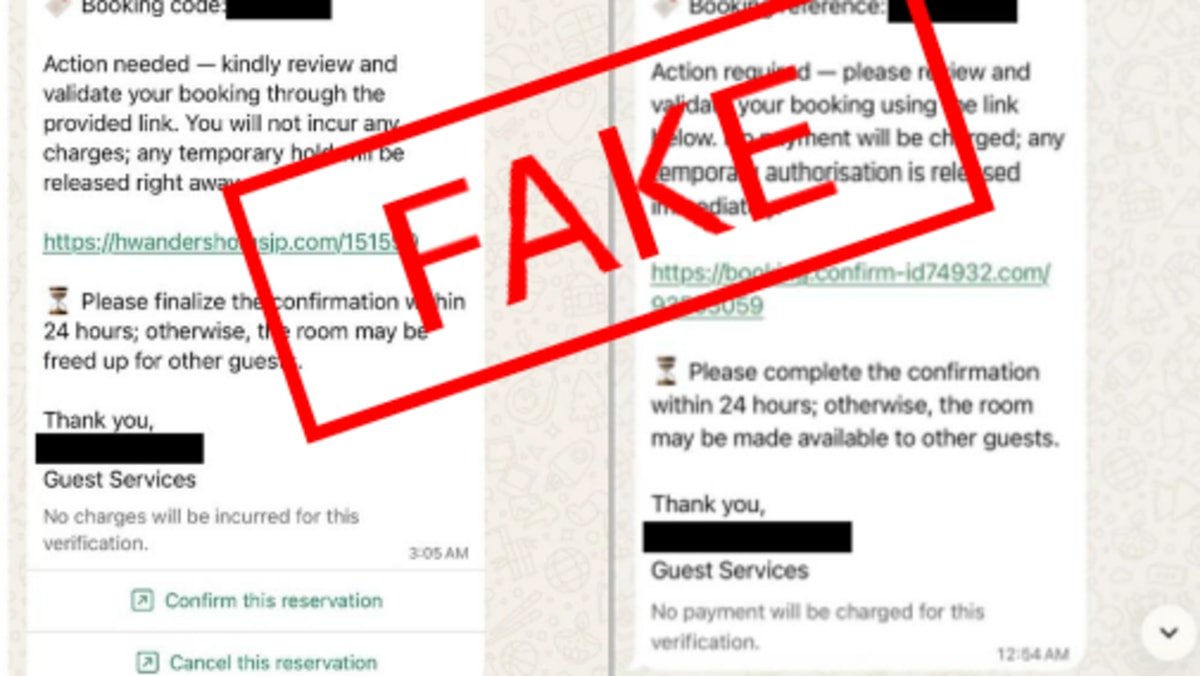
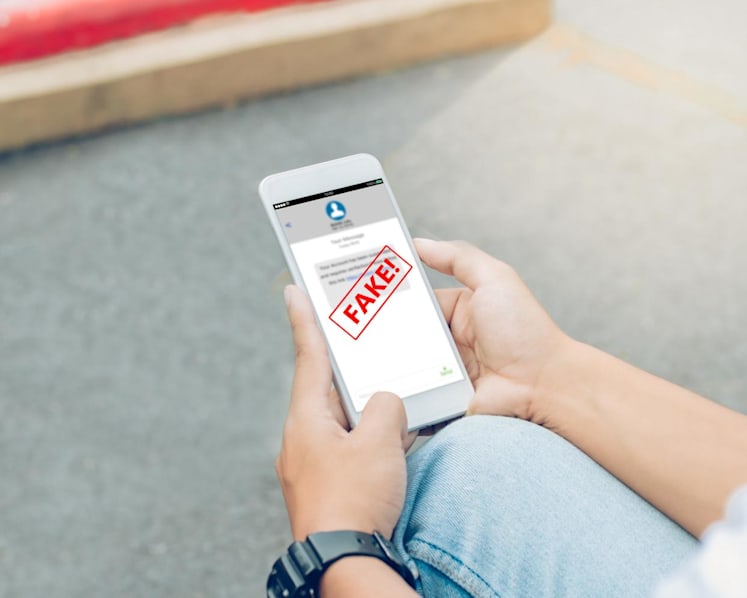
In some cases, the messages contain legitimate details of the victims’ hotel reservations, making the scam appear more convincing, police say.
Example of a fraudulent hotel booking message. (Image: Singapore Police Force)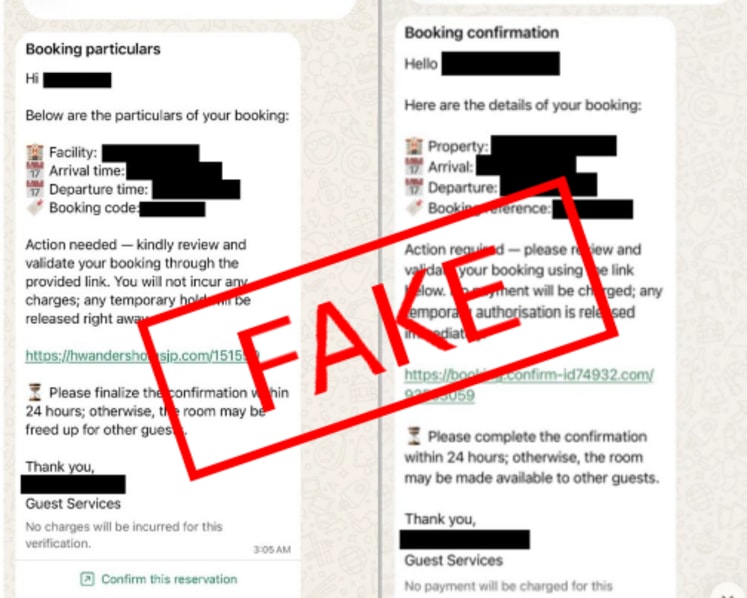
New: You can now listen to articles.

This audio is generated by an AI tool.
Read a summary of this article on FAST.
Get bite-sized news via a new
cards interface. Give it a try.
Click here to return to FAST
Tap here to return to FAST
FAST
SINGAPORE: At least 148 cases of phishing scams involving hotels and hotel booking platforms have been reported since January, with victims losing at least S$185,000 (US$144,700) in total, the police said on Friday (Oct 9).
The Singapore Police Force (SPF) warned of a surge in such scams, in which fraudsters impersonate hotels or accommodation booking platforms and contact victims mainly through WhatsApp or email.
Victims are typically told that they need to verify their card details or confirm an upcoming accommodation booking.
In some cases, the messages contain legitimate details of the victims’ hotel reservations, making the scam appear more convincing, police said.

Guess Word
Crack the word, one row at a time

Buzzword
Create words using the given letters

Mini Sudoku
Tiny puzzle, mighty brain teaser

Mini Crossword
Small grid, big challenge

Word Search
Spot as many words as you can
Victims are then directed to a phishing link and told that they need to enter their card details to secure or confirm their reservations. They may also be assured that no money will be deducted.
Many realise that they have been scammed only after discovering unauthorised transactions on their cards or after contacting the hotel directly to check on their bookings.
Police advised travellers who receive messages about their reservations to verify the information directly with the hotel using official contact details published on its website.
Members of the public should also avoid clicking links in unsolicited messages and should be alert to signs that a website may be fraudulent.
Police reminded the public not to disclose personal information, bank or card details, or one-time passwords to others.
They also recommended using safeguards such as two-factor or multifactor authentication, setting limits for internet banking transactions and using banks’ Money Lock features to prevent a portion of savings from being transferred digitally.
Those who suspect that they have fallen victim to a scam should report fraudulent transactions to their bank immediately and inform the authorities.
Members of the public can also use the ScamShield app or call the 24-hour ScamShield Helpline at 1799 to check suspicious messages or transactions.
Source: CNA/gs
Sign up for our newsletters

Get the CNA app
Stay updated with notifications for breaking news and our best stories
Get WhatsApp alerts
Join our channel for the top reads for the day on your preferred chat app

Get bite-sized news via a new
cards interface. Give it a try.
Click here to return to FAST
Tap here to return to FAST
FAST