At the most expensive World Cup, wealthier fans find ways to pay
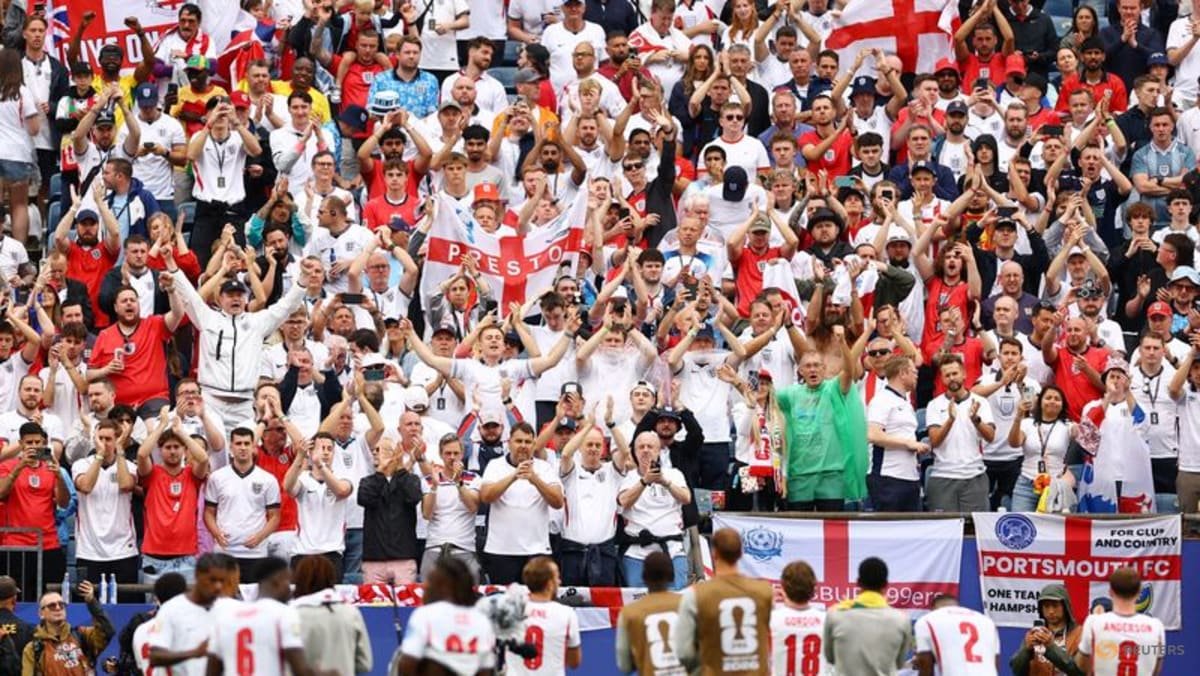
Soccer Football – FIFA World Cup 2026 – Group L – England v Ghana – Boston Stadium, Foxborough, Massachusetts, U.S. – June 23, 2026 England fans applaud the players after the match REUTERS/Peter Cziborra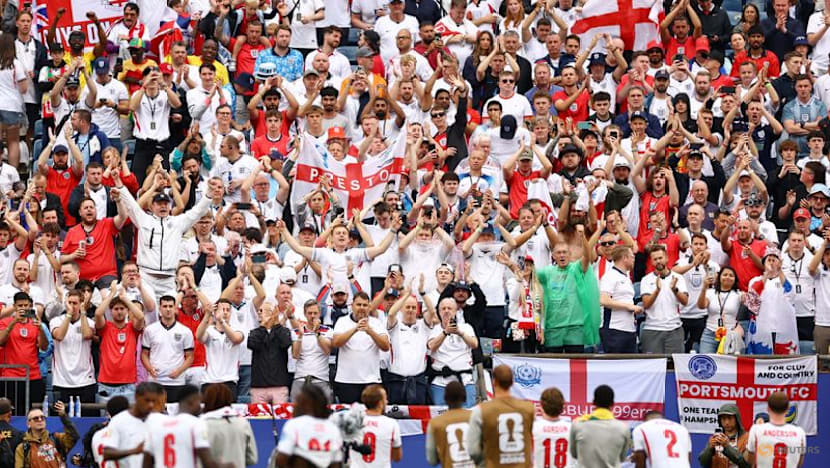
Read a summary of this article on FAST.
Get bite-sized news via a new
cards interface. Give it a try.
Click here to return to FAST
Tap here to return to FAST
FAST
BOSTON, June 27 : In 1978, a pair of Scotland fans with little money hitched a lift on a ship across the Atlantic to Argentina, repainting it as they went to pay their way, in the ultimate World Cup budget journey featured in a BBC television documentary.
For decades, low-income supporters have taken buses and trains or hitchhiked to see their heroes.
Thousands of people from across South America found a way to make the Brazil World Cup in 2014 affordable by travelling and sleeping in camper vans.
This year, spiralling prices for tickets and accommodation alike have pushed the tournament further than ever into the hands of those with higher incomes.

Guess Word
Crack the word, one row at a time

Buzzword
Create words using the given letters

Mini Sudoku
Tiny puzzle, mighty brain teaser

Mini Crossword
Small grid, big challenge

Word Search
Spot as many words as you can
“You’ve got to pay to play,” said Mike Gill, a British real estate developer based in Canada who was supporting England against Ghana near Boston on Tuesday. “It’s extortionate but people are paying the prices, so what are you going to do?”
Greg Connor, owner of an automotive repair business in Oklahoma, said he spent $9,600 for four tickets for his family to see France play Norway on Friday.
“It’s insane,” Connor said. “We were considering going to five or six games, but we’re just going to the one.”
DYNAMIC PRICING, HIGH-INCOME FANS
Official prices for group-stage games this year were initially set at up to $575 a ticket. At the 2022 World Cup the most expensive group match ticket was $220.
But the dynamic pricing system adopted by tournament organiser FIFA this year, which lets prices move with demand, has pushed first-round resale tickets above $1,000, with later rounds higher still.
On Friday, the average lowest ticket price for upcoming matches was $1,600 on secondary resale websites, according to Ticketdata, a price-tracking website.
Renato Perez, who lives in the Galapagos Islands in Ecuador, said he spent around $22,000 for tickets, travel, accommodation and other expenses for his family of five to see Ecuador beat Germany in New Jersey on Thursday.
“But it’s worth every cent,” Perez said. “I would do it all over again.”
The leap in prices is reshaping the profile of World Cup ticketholders.
Of more than 50 people who spoke to Reuters at several stadiums during the group phase, around 30 were in higher-paying jobs with sales, finance and real estate featuring heavily. Four others were business owners, three were engineers and two were doctors while, among typically less well-paid professions, two were electricians and two were nurses.
For Americans, accustomed to the impact of dynamic pricing for concerts as well as sports events, the high costs are no surprise.
Colleen Cheesman, a partner with a consulting firm attending England’s match against Ghana, said she had been prepared to pay up to $3,000 for a ticket only to be offered seats for $420 each by friends who bought them in an early FIFA lottery sale.
“We got six and brought our friends,” she said. “They’re so cheap. You can’t even see a concert for that these days.”
For other fans attending the tournament, the cost has been a stretch.
Caroline Dowie, an Australian who owns a house-clearing business in Adelaide, said she and her husband paid $4,000 for four tickets, excluding travel and accommodation costs.
Some worry about the changing audiences, both at the World Cup and in domestic games, at the expense of those who traditionally represented the bedrock of support.
“The World Cups are blown out of proportion — the costs, everything else,” Paraguay coach Gustavo Alfaro said. “The essence of football is lost. And football can’t be a business, it has to be football.”
A FIFA spokesperson said the organisation had offered 130,000 tickets for matches across the tournament at $60 each. The broader pricing strategy reflected market practices for major sporting and entertainment events across the host countries and income generated will be reinvested in football development, the spokesperson said.
However, the low-cost offer — announced in December after an outcry over the pricing plans — is a fraction of the roughly 7 million total number of World Cup tickets and is smaller than the 400,000 cut-price tickets offered during the Brazil 2014 World Cup, where students got in for as little as $15.
Despite the surge in pricing, demand is high as fans try to get in on the action. On Thursday, total ticket sales for the tournament hit a record of 3.6 million.
$1.5 MILLION TICKETS
For the wealthiest, money really does seem to be no object.
Knightsbridge Circle, a luxury concierge firm, offered a $4 million hospitality package including six front-row seats on the halfway line at the World Cup final and pitch access during the trophy ceremony. It sold in less than 24 hours. An additional two seats, with pitchside access for the ceremony, are on sale for $1.5 million each.
Stefan Szymanski, professor of sport management at the University of Michigan, said the rise of World Cup ticket prices reflected the unrivalled appeal of the sport in much of the world and its growth in newer markets such as the United States.
“Although this was already the world’s most popular sport 30-40 years ago, that popularity has actually grown even further, and particularly amongst affluent people,” Szymanski said.
“We will watch this, we will be glued to it (and) people will pay huge prices to go to the games,” he said. “And then once it’s over, Americans will forget about it immediately and get into the NFL and all the other things with the World Series coming up.”
(Additional reporting by Nicholas P. Brown, Amy Tennery, Laura Gottesdiener, Natalia Siniawski, Janina Nuno, Bhargav Acharya, Frank Pingue, Martin Petty, Ian Ransom, Vitalii Yalahuzian, Kurt Hall and Philip O’Connor; Writing by William Schomberg; Editing by Hugh Lawson)
Source: Reuters
Sign up for our newsletters

Get the CNA app
Stay updated with notifications for breaking news and our best stories
Get WhatsApp alerts
Join our channel for the top reads for the day on your preferred chat app

Get bite-sized news via a new
cards interface. Give it a try.
Click here to return to FAST
Tap here to return to FAST
FAST
About The Author