
Beyond Beijing and Shanghai: Why more foreign tourists are venturing into rural China
With improved infrastructure and accessibility, China’s countryside is becoming a popular choice among foreign travellers after a slower pace of travel.
Tourists visiting Xitou Village in Longquan city in Zhejiang province, China. (Photo: Longquan Wangou Taoxichuan)
New: You can now listen to articles.

This audio is generated by an AI tool.

Read a summary of this article on FAST.
Get bite-sized news via a new
cards interface. Give it a try.
Click here to return to FAST
Tap here to return to FAST
FAST
SINGAPORE: When Ruveena D Souza, 37, decided to extend her stay in China by two weeks last November, she did not stick to the country’s usual tourist trail.
Beijing, Xi’an and Chengdu had been on her itinerary – but so was Xingping, a small town in southern China’s Guilin city, known for its dramatic karst scenery and the Yellow Cloth Shoal, a stretch of the Li River depicted on the 20 yuan note.
D Souza spent two days in Xingping, riding a bamboo raft down the Yulong river and visiting Xingping Ancient Town, where she explored coffee shops and checked out local vendors selling wooden toys.
The town was “very laid-back”, she said – a far cry from the bustling crowds in Beijing.

Guess Word
Crack the word, one row at a time

Buzzword
Create words using the given letters

Mini Sudoku
Tiny puzzle, mighty brain teaser

Mini Crossword
Small grid, big challenge

Word Search
Spot as many words as you can
The locals were also “really nice”, she said.
“They were really curious about us, because I don’t think there are a lot of tourists from India,” she added.
“They would approach us and ask where we were from.”
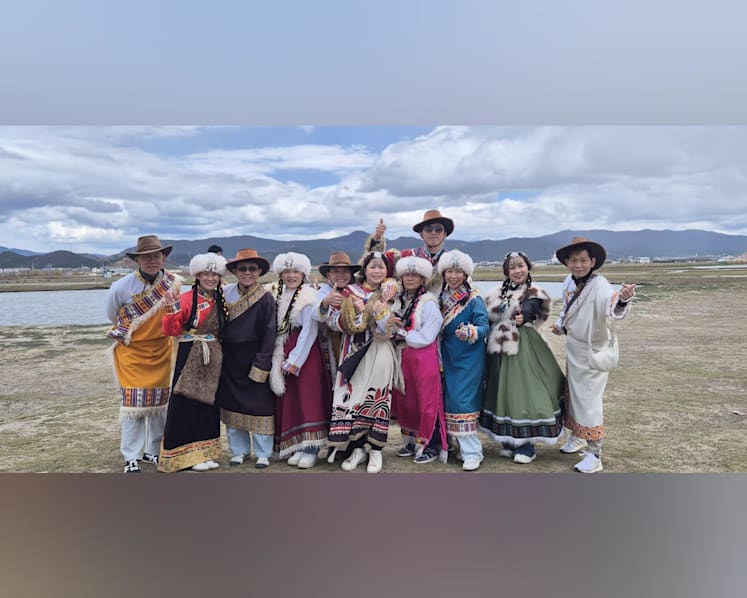
Singaporean Chleo Lee visited Yunnan province with her family earlier this year in April.
They joined a 10-day guided tour, exploring villages and various scenic sights in Shangri-La, Dali and Lijiang.
It was not Lee’s first time in China, having previously visited cities like Chengdu, Chongqing and Zhangjiajie as well as Beijing and Guangzhou.
Her parents’ interest in Yunnan was piqued after watching travel videos about the region, especially videos from content creators visiting various scenic spots.
Family friends had also shared their own tips and experiences visiting Yunnan and Dali, Lee said.
GROWING INTEREST IN RURAL CHINA
China welcomed nearly 23 million foreign visitors in the first half of 2026, statistics released by the National Immigration Authority (NIA) in July showed – up 20.4 per cent from the same period a year earlier.
As international travel to the country grows, there are signs that some visitors are looking beyond its traditional tourist hubs.
A 2025 report by travel agency Trip.com found that inbound bookings at its affiliated rural retreats had risen 50 per cent year-on-year.
“Visiting the Chinese countryside” was emerging as a new choice for foreign tourists, the agency said – with Australia, Germany, Malaysia, Singapore and the United States among the biggest sources of visitors.
The trend also comes amid a broader rural tourism boom among domestic tourists. Around 793 million visits to rural destinations were recorded in the first quarter of 2026, up 12.2 per cent year-on-year, according to Ministry of Culture and Tourism estimates cited by Xinhua.
Rural tourism revenue also rose 10.9 per cent to 457 billion yuan (US$63.5 billion) over the same period.
Chinese media outlets have also reported a growing appetite among foreign visitors for trips beyond major cities and into the countryside, where they are drawn by natural landscapes, traditional culture and hands-on experiences.


In a Jul 3 report, state-affiliated news outlet China Daily noted that more foreign tourists were opting to visit smaller cities, counties and rural towns that “offered a more immersive experience of everyday Chinese life”.
They are visiting lesser-known destinations, the report said – “places with strong local character, lower commercialisation and closer access to daily life”.
The trend was also being amplified by creators on social media platforms such as TikTok and Xiaohongshu, it added.
Rural China is “emerging as a runway online hit”, the state-owned People’s Daily tabloid said in a report published on Jun 4.
It noted that “growing numbers of overseas content creators” were shifting away from iconic mainstream tourist landmarks like Beijing’s Great Wall and Shanghai’s Bund – travelling instead to “remote terraced fields, centuries-old hamlets and working farmsteads” across the Chinese countryside.
“International visitors are gaining a clearer path to connect with and truly understand China,” the report said.
“With China’s increasingly accessible entry policies and upgraded services, more international visitors are expected to explore the country’s countryside for themselves, to see with their own eyes and experience the vivid vitality of Chinese modernisation.”
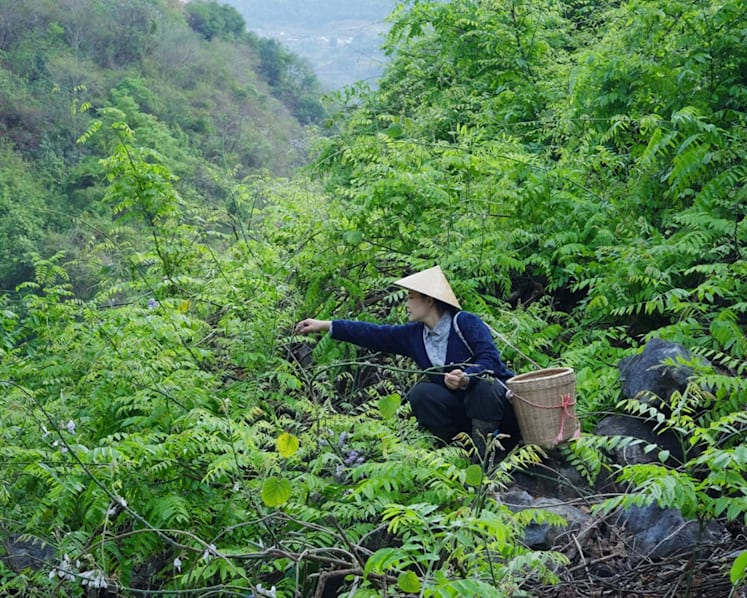
Tourism academics said the country’s rural revitalisation scheme has helped make villages more accessible and attractive – although challenges like language barriers, transport links and China’s vast digital ecosystem remain obstacles for many foreign tourists.
Wu Maoying, a professor from Zhejiang University, told CNA that the strategy had greatly improved village infrastructure and accessibility to once remote areas.
“The expansion of high-speed rail and upgraded rural roads have placed many villages within a few hours of major cities,” said Wu, also an associate tourism and hospitality management professor.
The appeal of the Chinese countryside also lies in its rurality, she said, adding that foreign tourists, especially well-travelled ones, “are increasingly seeking ‘slow travel’ experiences”.
“In contrast to the sensory overload of China’s megacities, the Chinese countryside offers a tranquil escape,” Wu added.
02:14 Min
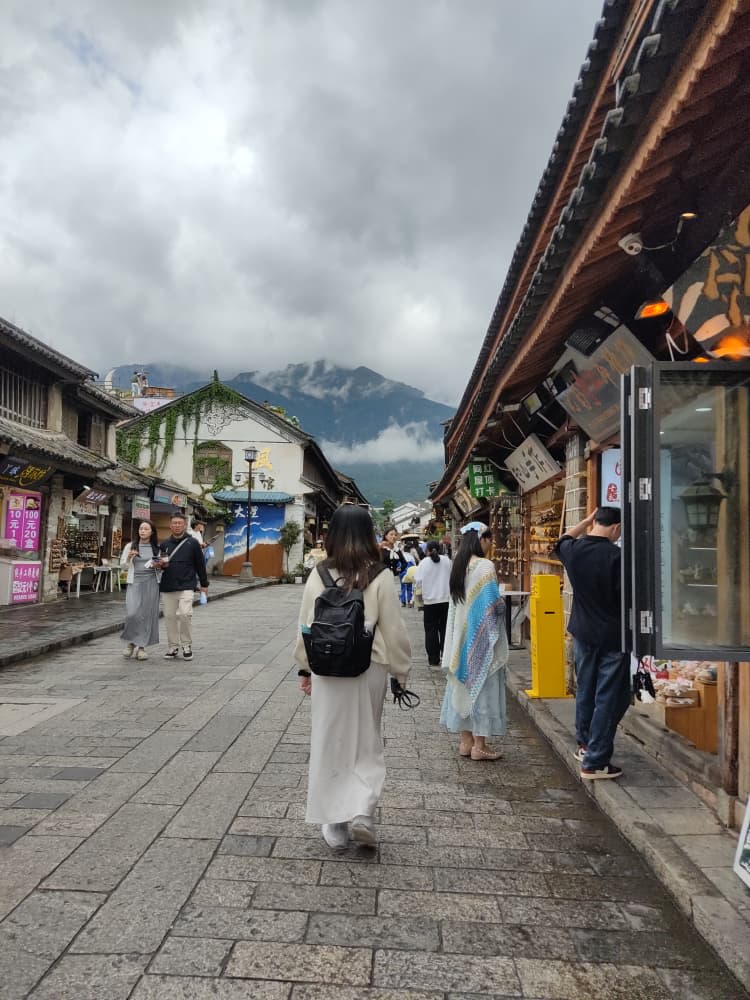
Lok Li Wen, a tourist from Singapore who visited Dali, a historic scenic city in Yunnan province famous for its traditional Bai ethnic culture and mild weather, said it was “slower paced” as compared to megacities like Shanghai and Suzhou.
“My friends and I could just sit in a cafe for a few hours before heading off to our next destination,” she said.
Quan Na, an associate professor from Guilin Tourism University, said cultural experiences in the Chinese countryside are “unparalleled”.
Activities like learning pottery from local artisans, cooking family recipes, or joining centuries-old festivals are “living traditions”, said Quan.
“Tourists don’t just observe – they participate,” she added.
Wu from Zhejiang University told CNA that a defining feature of rural tourism is the “genuine hospitality of local residents”, as rural hosts, who often run family guest houses, offer personal warmth and openness.
“(This allows) visitors to experience the ‘real China’ through shared meals and everyday interactions, fostering a sense of cultural exchange that is harder to find in anonymous city hotels.”
Lee, who travelled to Yunnan with her family, attended a banquet held at Lugu Lake by the Mosuo people, a local ethnic minority group.
There, tourists attended an outdoor bonfire party, where the men and women gathered to sing and dance.
The tour also included a hotpot banquet held in a village in Shangri-La.
“There were other activities and performances, and you even got to give the local villagers garlands,” she said.

For D Souza from India, China may be synonymous with its megacities and towering skyscrapers, but she was also keen to experience a different side of the country.
“You (often) think of China as big cities and skyscrapers but we wanted to see the other side as well,” she said.
“We wanted to tick off the usual tourist checklist of the famous places, but also have that laid-back (experience) that’s more relaxing with fewer crowds,” she added.
She most enjoyed also meeting the friendly locals in Xingping, who struck up conversations and took pictures with her.
“They were really curious why we were there,” she said.
“We basically had a whole conversation.”
LANGUAGE BARRIERS AND OTHER CHALLENGES
However, venturing into the Chinese countryside can come with its own set of challenges – from navigating language barriers and reaching remote areas, to making payments in places where foreign credit cards may not be readily accepted.
“If we didn’t have our tour guide, we wouldn’t know how to travel to these places,” said Lee, who visited Yunnan with her family.
While her family speaks the language, Chinese spoken by the guides was a little more advanced and also mixed with the local dialect.
It got a bit “confusing” at times, she said.

Language barriers were a big challenge for D Souza when she visited rural China.
“We had to use a translation app as most people don’t know English,” she said.
She also had to download a slew of Chinese chat and pay apps.
“(We) had to download AMaps, Didi, Alipay, WeChat … and many of these apps are not available on the Apple App or Play Store in India,” she said, adding that VPNs also did not work all the time in China.
ADAPTING TO FOREIGN TOURISTS
Many of China’s most authentic cultural destinations remain remote, said Wu from Zhejiang University, often leaving foreign visitors with more accessible and commercialised sites as their main options.
Still, the growing influx of foreign tourists into rural China presents new opportunities for local communities and businesses, Wu said.
The challenge, however, will be helping smaller operators adapt their services to the needs of international visitors.
Major travel platforms such as Trip.com Group could help bridge that gap, she added, by offering rural businesses incentives and support to become more international-friendly.
This could include giving greater visibility to listings that accept foreign credit cards, provide bilingual services or offer certified cultural experiences.
“By embedding these criteria into search rankings, badges, or promotional campaigns, the platform can nudge thousands of small rural businesses toward international readiness,” Wu said.
Such an approach could allow growing demand from foreign travellers to drive improvements from the ground up.
“This creates a market-driven pathway where inbound tourist demand, channelled through the platform, directly pulls rural suppliers to upgrade their service standards,” she said.


Without improvements, however, the novelty of exploring rural China could quickly give way to frustration.
“Without targeted training, better translation tools and upgraded facilities, these challenges risk turning curiosity into disappointment, ultimately limiting the long-term growth of rural tourism in China,” said Quan from Guilin Tourism University.
Another issue is that many rural tourism offerings are designed primarily with domestic travellers in mind, Quan said.
This can mean overlooking experiences that may appeal more to foreign visitors – such as hands-on farming, local storytelling or quiet walks through villages – in favour of commercial performances that some may find inauthentic.
Local governments could play a key role in addressing such teething problems, she added.
Among the measures Quan suggested were installing bilingual signs at major attractions and transport hubs, and introducing apps with multilingual audio guides and real-time translation tools.
Making payments easier would also help.
Quan called for wider acceptance of international credit cards at shops and homestays, as well as multilingual hotlines and basic English training for local medical staff to better support foreign visitors during emergencies.
“With these targeted measures, local governments can significantly smooth the travel experience, turning initial frustrations into lasting positive memories,” she added.
Source: CNA/lk(ht)
Sign up for our newsletters

Get the CNA app
Stay updated with notifications for breaking news and our best stories
Get WhatsApp alerts
Join our channel for the top reads for the day on your preferred chat app

Get bite-sized news via a new
cards interface. Give it a try.
Click here to return to FAST
Tap here to return to FAST
FAST