Birdwatcher found human skull near cemetery, coroner’s court returns open verdict
The birdwatcher initially thought the skull he found in a forested area behind the Hindu cemetery belonged to an animal.
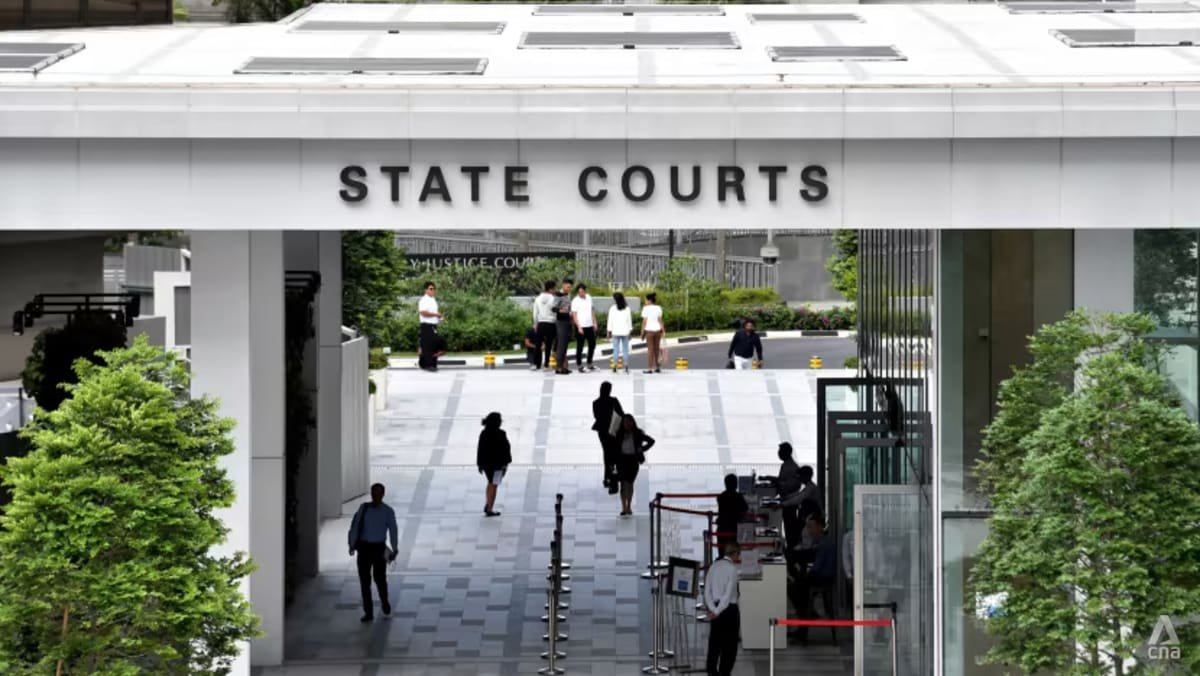
File photo of the State Courts in Singapore.
New: You can now listen to articles.

This audio is generated by an AI tool.

Read a summary of this article on FAST.
Get bite-sized news via a new
cards interface. Give it a try.
Click here to return to FAST
Tap here to return to FAST
FAST
SINGAPORE: A human skull and other bones found by a birdwatcher in a forested area near a cemetery are still unidentified, with a coroner on Tuesday (Nov 3) returning an open verdict on how the person died.
The precise date and location of the death could not be determined, and there was a substantial number of missing bones, with the cause of death unascertained, said Coroner Chay Yuen Fatt.
However, the available skeletal features indicated that the deceased was a man in his late 70s or 80s, the court heard.
THE CASE
The remains were discovered on Mar 8 this year in a forested area behind the Hindu cemetery in Choa Chu Kang, which is managed by the National Environment Agency (NEA).

Guess Word
Crack the word, one row at a time

Buzzword
Create words using the given letters

Mini Sudoku
Tiny puzzle, mighty brain teaser

Mini Crossword
Small grid, big challenge

Word Search
Spot as many words as you can
A member of the public who said he cycled regularly to the cemetery to birdwatch saw the skull and initially thought it belonged to an animal.
However, on closer inspection, he believed it was human.
The man went to NEA’s office and told the staff members there that he had found a human skull.
An NEA senior executive went to the incident location and found other bones that he believed to be human remains.
He called the police and an investigation officer surveyed the area.
It was on a forested slope adjacent to the Hindu cemetery, with no direct footpath access, the court heard.
A thorough combing of the area revealed no tents or other items to suggest human habitation.
A pathologist who attended the scene said that there was wildlife in the area and that animals typically consume smaller bone fragments.
She told the police to obtain the bones that were found within a certain radius. These remains were transferred to the Health Sciences Authority’s mortuary.
An autopsy found that the bones were believed to belong to a man in his late 70s to his 80s.
However, large sets of bones were missing, including his ribs and leg bones. Thus, no comment could be made on ancestry or race.
There was also no sign of injury. The remains were estimated to have been exposed for more than six months and up to two years before the autopsy was conducted in March.
Based on the above, the cause of death was recorded as “unascertained”.
The police do not suspect foul play, the court heard.
On questioning by the coroner, the investigation officer said other items were recovered from the scene, such as clothing, a bag, glasses, a speaker and a power bank.
However, no DNA profile was found on the tested items. The items were also waterlogged, due to consistent rainfall in that area.
The coroner returned an open verdict, saying there were no injuries or open signs of disease that could explain the death, given the extensive decomposition and the number of missing bones.
Source: CNA/ll
Sign up for our newsletters

Get the CNA app
Stay updated with notifications for breaking news and our best stories
Get WhatsApp alerts
Join our channel for the top reads for the day on your preferred chat app

Get bite-sized news via a new
cards interface. Give it a try.
Click here to return to FAST
Tap here to return to FAST
FAST